Lighting Solutions — Every Type of Light, One Complete Guide
Profile lights have changed how modern homes, shops and offices are lit. Instead of visible bulbs and tube lights, a slim aluminium channel hides the LED strip and produces one clean, continuous line of light — in ceiling coves, under kitchen cabinets, along staircases, behind TV panels and across building facades.
Below is every type of light we supply and install — ceiling lights, spotlights, track lights, wall lights, outdoor lights and every profile design — each with its picture, its sizes and its quality details, plus the connectors, drivers (adapters), controllers and strip types that complete the system. This is the full A-to-Z, so you can plan your lighting with complete information before you talk to us.
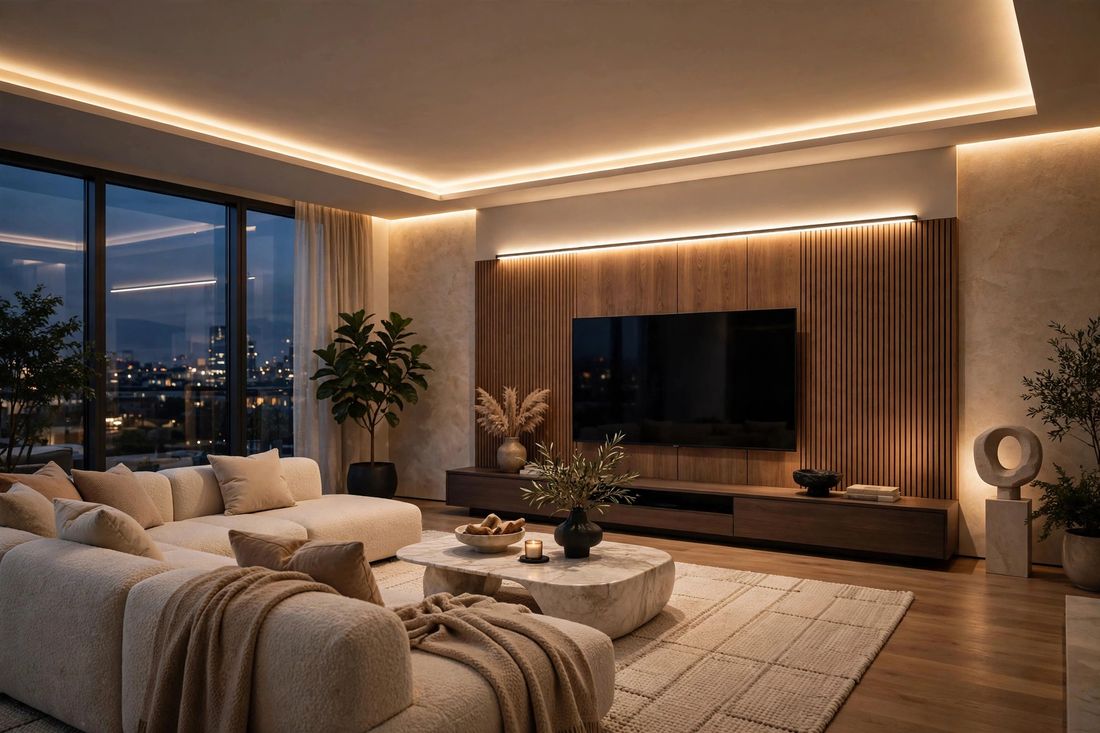
What Exactly Is a Profile Light?
A profile light is a system of four parts working together:
- Aluminium profile (channel): an extruded aluminium bar that holds the strip, protects it from dust and damage, and — most importantly — works as a heat sink. A strip fixed inside an aluminium profile runs noticeably cooler and typically lasts far longer (30,000–50,000 hours) than the same strip stuck directly onto wood or plastic.
- LED strip: the flexible circuit board carrying the LEDs — 12V DC, 24V DC or 220V AC (compared in detail below), in single colours, tunable white, RGB and RGBW.
- Diffuser cover: a polycarbonate cover that clicks over the profile and spreads the light. Opal (milky) diffusers hide the individual LED dots and give that famous seamless line of light.
- Driver / power supply: low-voltage strips (12V and 24V) run from an LED driver that converts mains power to safe DC. 220V strips connect to mains directly through a rectifier lead.
Every Type of Light — Not Just Profiles
Lighting Solutions means every kind of light, not profile lights alone. Below is the complete range we supply and install — each type with its own picture and its own detail, the same way the profile section works further down. Profiles are one family in this range; ceiling lights, spotlights and the rest stand beside them, and most real projects combine several types: panels for general light, spots for focus, profiles for the lines, and outdoor lights to finish the building.
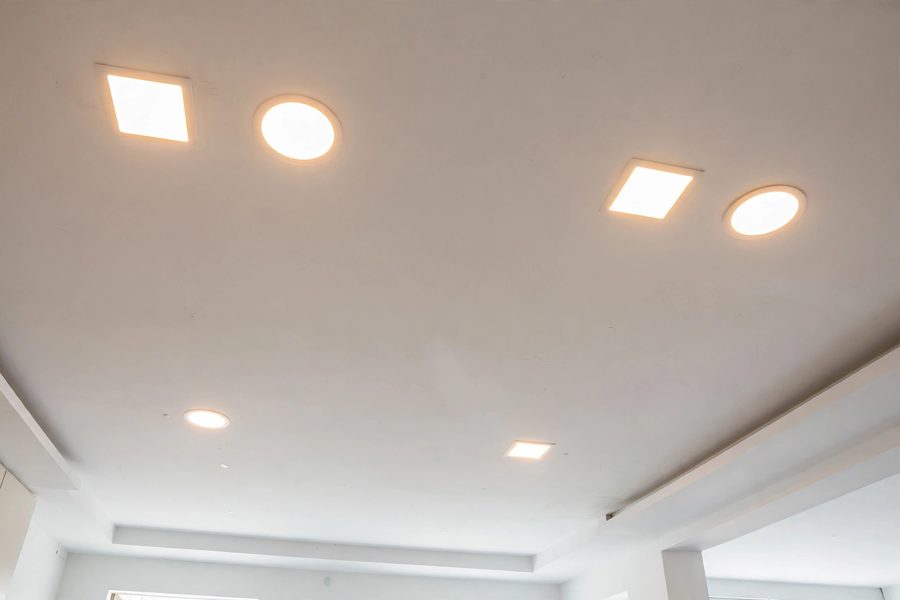
Ceiling Panel Lights (Recessed)
The standard main light of modern rooms and offices: slim LED panels that sit inside the false ceiling, completely flush. Round panels come in 3, 4, 6 and 8 inch cut-outs; square panels in 6×6, 12×12 and 24×24 inch, plus 2×2 ft ceiling panels for offices. Even, wide, shadow-free light for whole rooms.
6W – 48W3000K · 4000K · 6500KQuality check: a back-lit panel with a quality separate driver outlasts cheap edge-lit panels, whose diffusers yellow at the edges within a couple of years.
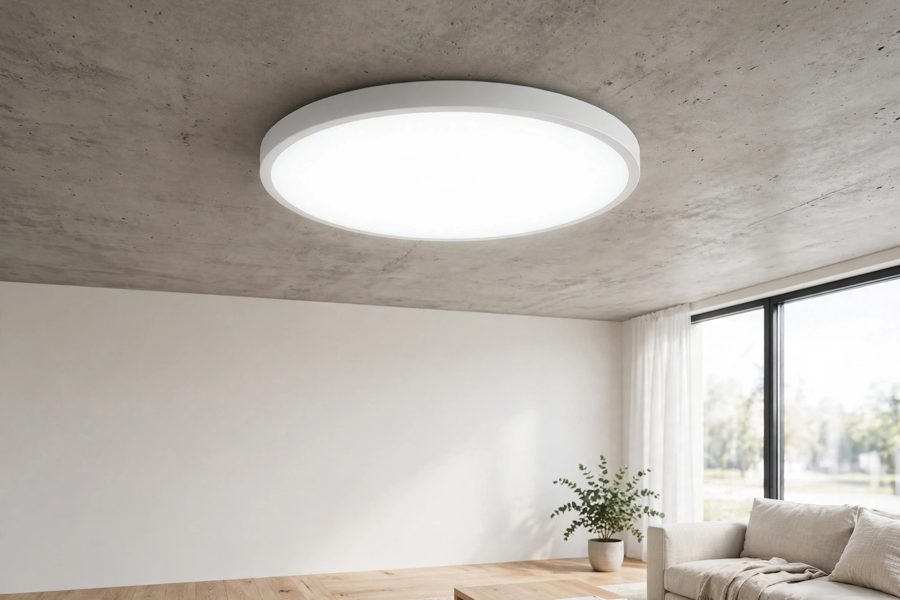
Surface Ceiling Lights
For solid concrete ceilings where there is no false ceiling to recess into: surface panels and surface downlights screw straight onto the ceiling slab — no cutting, no groove. Round and square designs, also the right choice for low ceilings, stores and basements.
6W – 36WRound & squareQuality check: the mounting plate and body should be metal or quality ABS that does not yellow; a visible cheap driver box beside the light is a sign of a low-grade unit.
COB Spotlights & Downlights
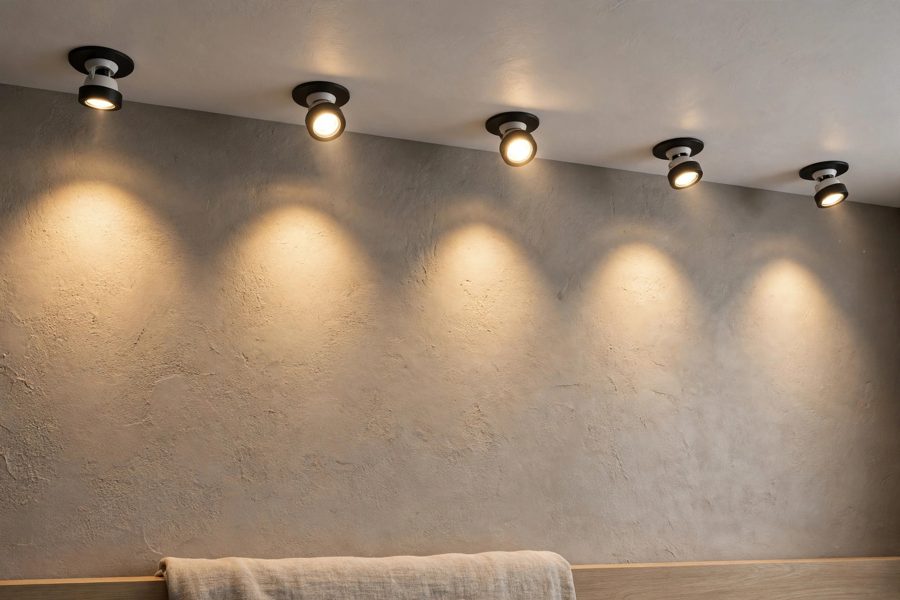
Focused light, not flood: a single COB chip behind a lens or reflector throws a controlled beam onto TV walls, artwork, display shelves and worktops. Fixed downlights point straight down; adjustable (tilt) spots aim where you want. Beam angle decides everything — narrow 15–24° for drama and displays, 36–60° for general accent lighting. (This is the spotlight FIXTURE family — the COB strip light for profile lines has its own section below.)
5W – 30WBeam 15° · 24° · 36° · 60°Quality check: a deep-set, anti-glare reflector: you should see the glow, not the chip. High CRI (90+) versions make artwork, food and fabrics show their true colours.
Track Lights
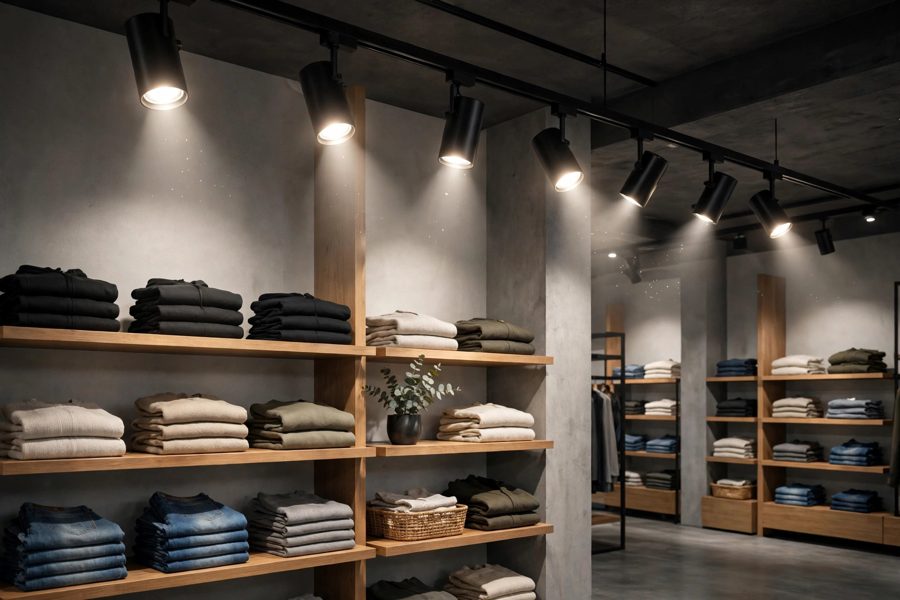
A powered rail on the ceiling into which spotlight heads clip anywhere along its length — slide them, aim them, add or remove heads any time. The standard for shops, showrooms, galleries and restaurants, and increasingly for living-room feature walls. (The magnetic track in the profiles section below is its premium 48V cousin, where the modules click in magnetically.)
10W – 35W per head1 m · 1.5 m · 2 m railsQuality check: genuine copper conductors inside the rail and heads that lock firmly — loose heads that droop or flicker are the classic cheap-track failure.
Pendant & Chandelier Lights
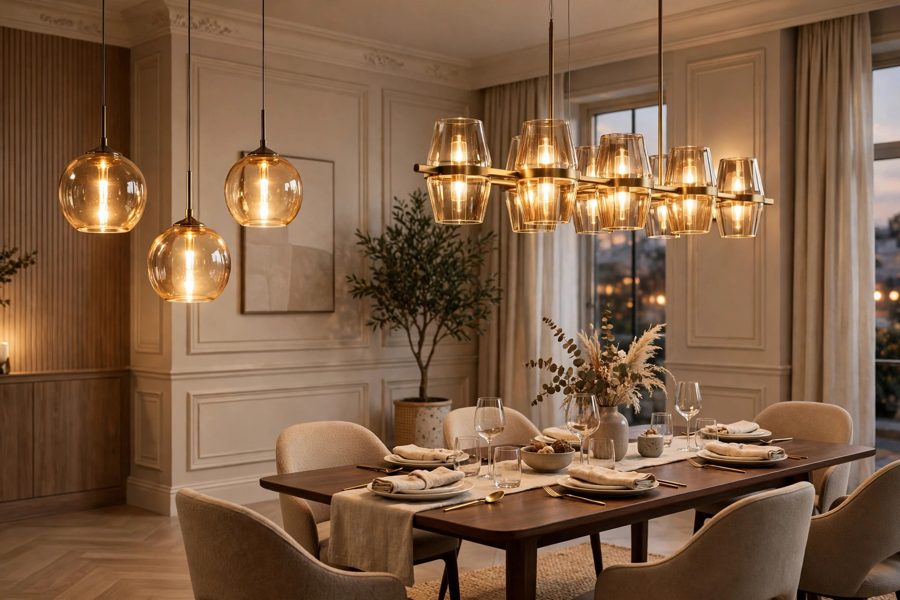
The decorative centre of a room: single pendants over counters and bedsides, rows over dining tables and kitchen islands, and multi-light chandeliers for stairwells, double-height lobbies and drawing rooms. Heights are set to the table and ceiling, and most designs take standard E27/GU10 LED lamps or have integrated LED modules — so the decorative range is almost unlimited.
Single · row · chandelierHeight-adjustable dropsQuality check: ceiling canopy and cable quality matter more than the shade — a chandelier is heavy, and its fixing must go into structure, not just plaster.
Wall Lights & Sconces
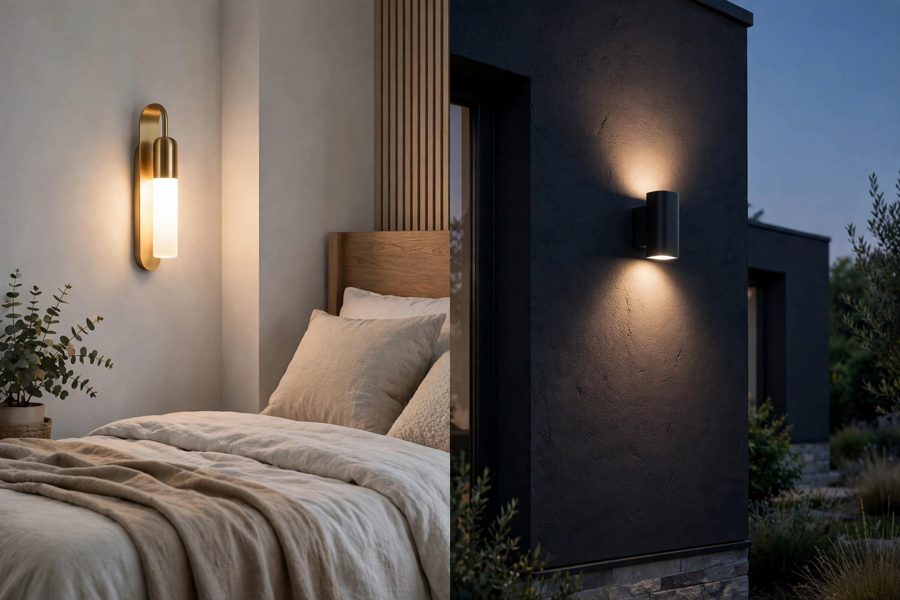
Two families in one: indoor sconces for bedsides, corridors, staircases and dressing areas — soft light at eye level that makes a room feel finished; and outdoor wall lights, including the popular up-down design that washes a facade with two cones of light, for gates, porches and boundary walls.
5W – 24WOutdoor: IP65 sealedQuality check: for outdoor pieces, sealed construction and a powder-coated body that will not rust or fade; indoor sconces should hide the lamp from direct view — no glare at eye level.
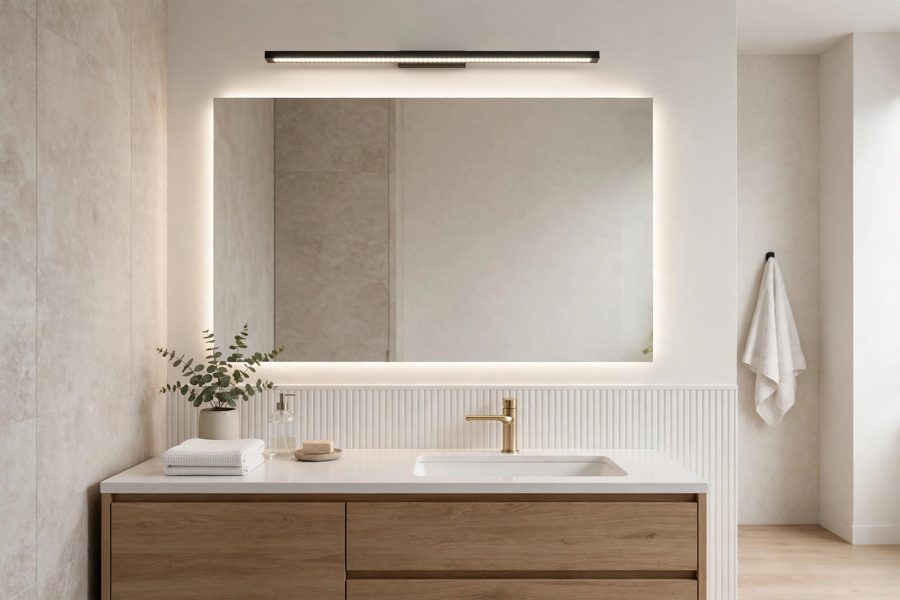
Mirror & Vanity Lights
Bathroom and dressing-table lighting done properly: backlit LED mirrors, slim bar lights above the mirror, and side sconces that light the FACE evenly from both sides instead of casting shadows from one ceiling light. Bathroom-rated (IP44) fittings only, in natural white with high CRI so skin tones and makeup look true.
IP44 bathroom-safeBacklit · bar · sconceQuality check: even, shadow-free light on the face is the whole point — one bright light directly overhead is the common mistake this family fixes.
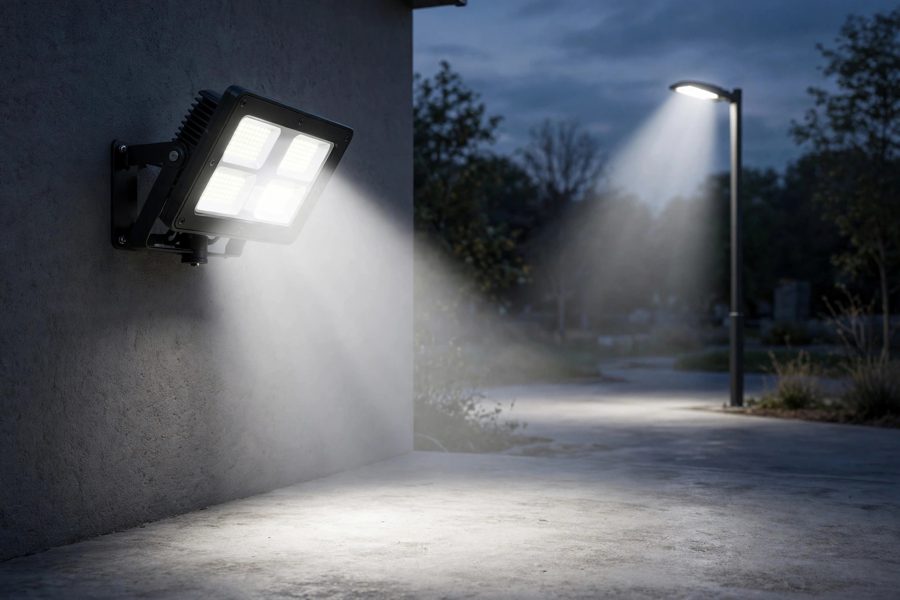
Flood Lights & Street Lights
Serious outdoor light: LED flood lights for yards, parking areas, building facades, warehouses and grounds — wide, powerful beams in sealed IP65/IP66 bodies, with motion-sensor and photocell (dusk-to-dawn) versions. LED street lights on poles cover streets, housing-society roads and large compounds with focused, low-glare output.
Flood 10W – 200WStreet 30W – 150W · IP65/IP66Quality check: a real aluminium heat-sink body with some weight to it, and a proper surge protector — outdoor lights die from voltage surges far more often than from age.
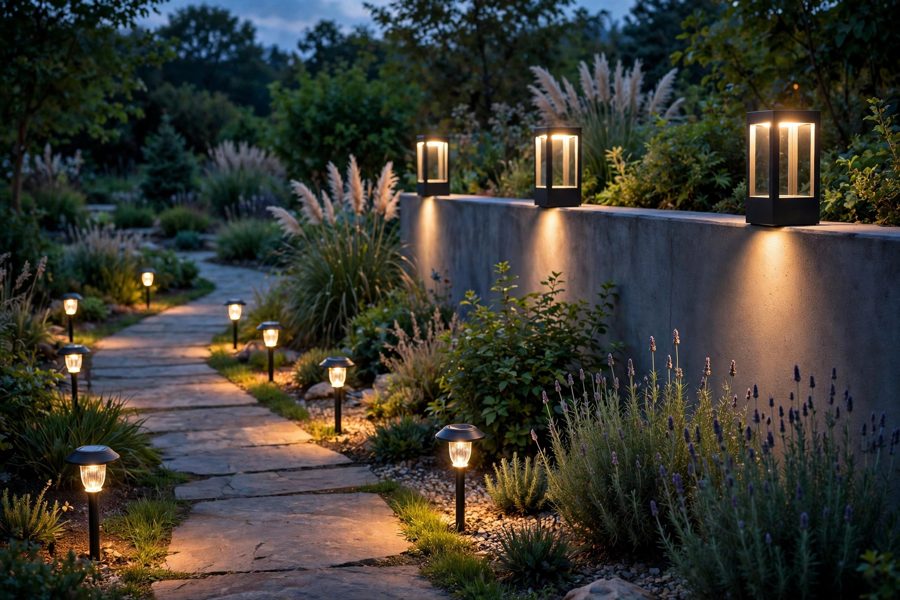
Garden & Solar Outdoor Lights
The finishing layer outdoors: solar path and spike lights along walkways and lawns (no wiring at all — they charge by day and glow from dusk), pillar and gate lights on boundary walls, and bollard lights for driveways and gardens. Mains versions wire into the outdoor circuit with daylight sensors; solar versions go anywhere the sun reaches.
Solar & mains versionsDusk-to-dawn sensorQuality check: for solar lights, panel size and battery capacity decide everything — a generous panel and a replaceable battery separate a light that lasts years from one that fades in months.
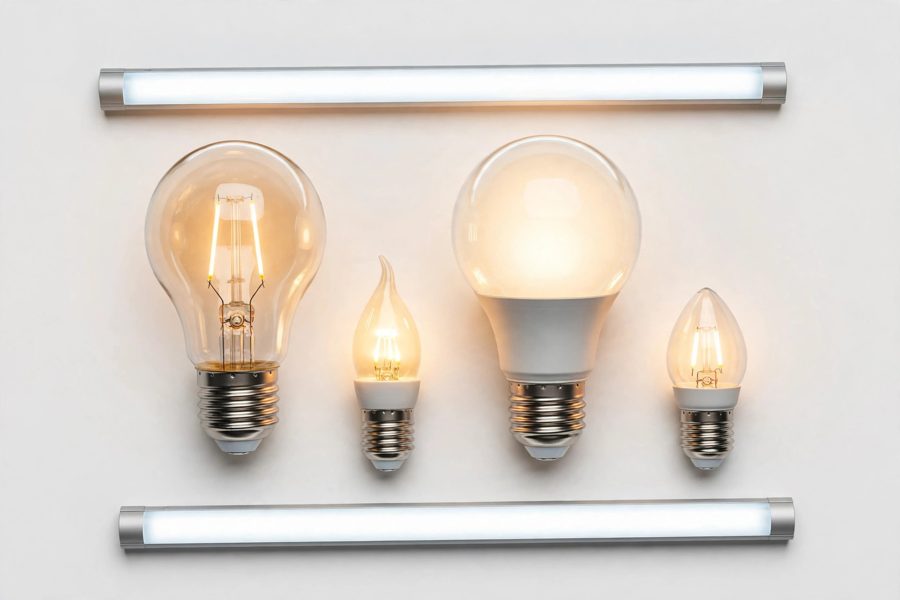
LED Bulbs & Tube Lights
The everyday replacements that still light most homes: LED bulbs in B22 (pin) and E27 (screw) holders from 3W to 20W+, and LED tube/batten lights in 2 ft and 4 ft for kitchens, stores, garages and work areas. Simple to fit, but the quality spread is huge — honest wattage, real brightness (lumens) and colour consistency are what we select for.
Bulbs 3W – 20W+Tubes 2 ft · 4 ftQuality check: judge by lumens, not watts — a quality 12W bulb outshines a cheap '20W' one; and one brand throughout a room keeps the colour of light consistent.
Profile Designs — Every Type, With Pictures
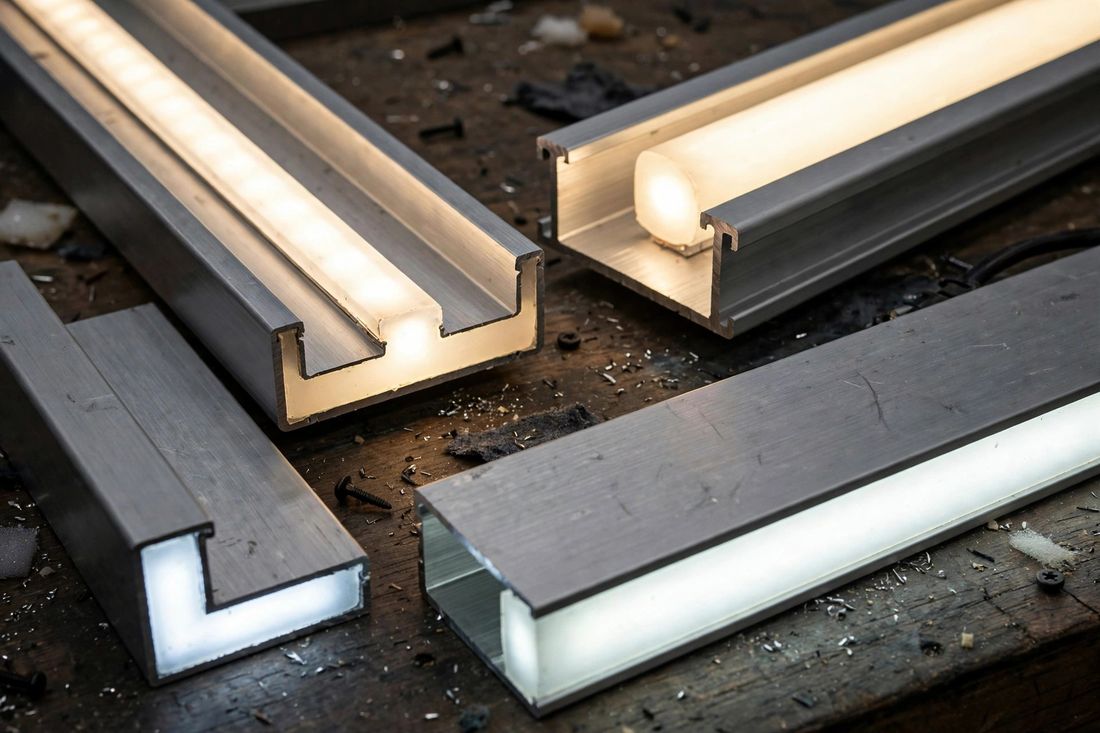
Every design below is shown the same way: FIRST the channel piece itself — its actual shape, flat, flanged, angled or heavy-duty — and WITH it, its detail: what it is, where it is used, its sizes and its quality points. Installed pictures follow in the gallery after this section. All profiles are 6063-grade aluminium with an anodised finish unless stated, sold in 1 m, 2 m and 3 m bars and cut to your exact size.
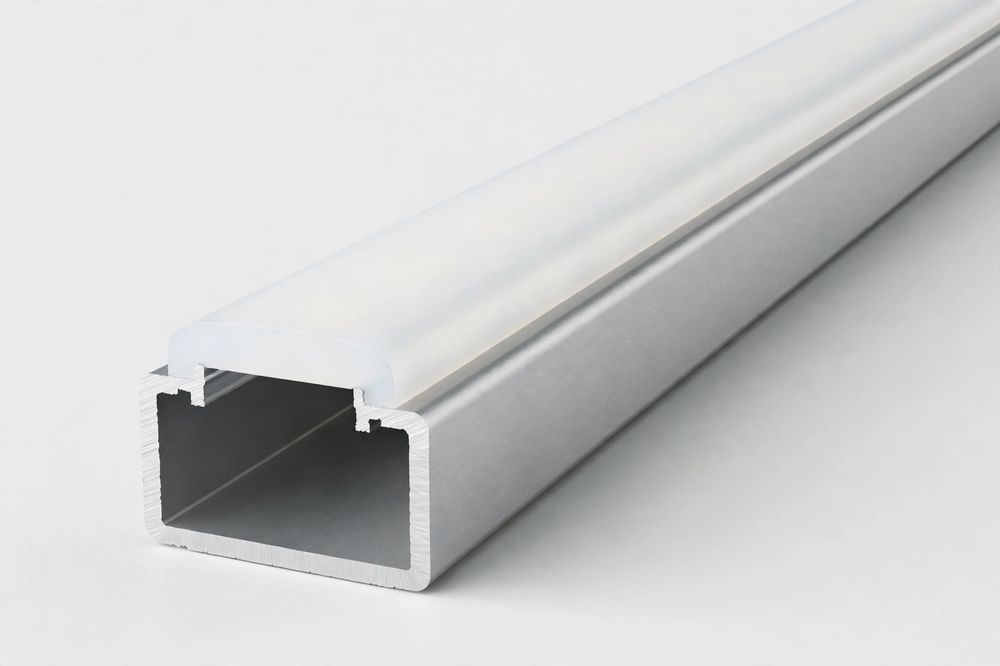
Surface-Mounted U Profile
The most widely used design. Screwed or clipped directly onto ceilings, walls, cabinets and shelves — no groove cutting, so it suits finished rooms. The channel is a simple flat U: a flat base (the heat sink) with two low side walls that grip the diffuser.
13×7 · 17×8 · 20×10 mmDeep: 23×10 · 30×10 · 35×12Quality check: wall thickness around 1 mm, clean anodising, diffuser clicks in firmly without rattling.
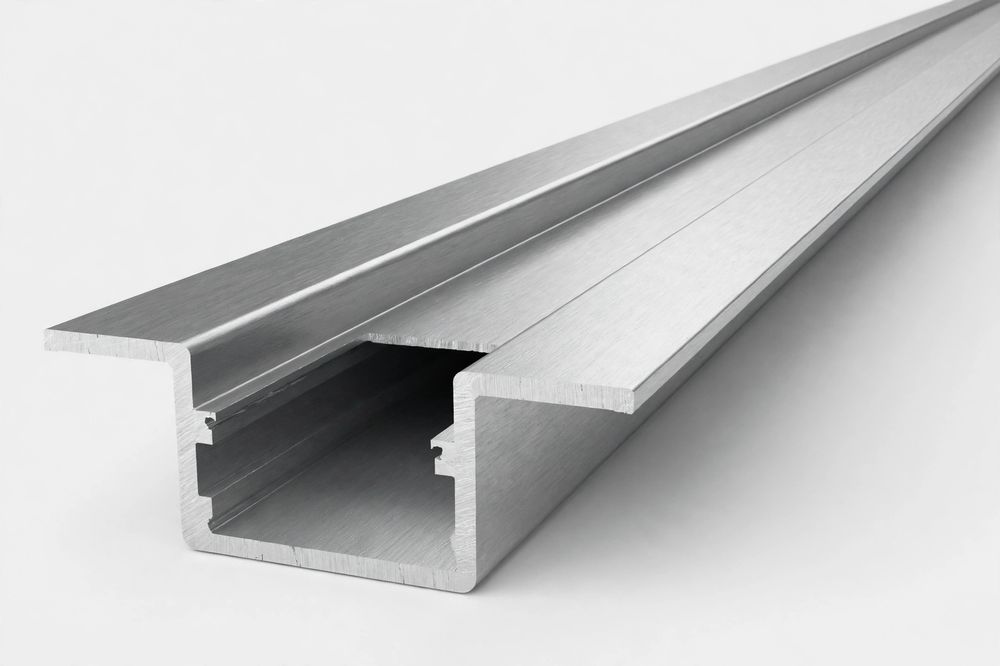
Recessed Profile (with Flange)
Sits inside a groove cut into gypsum, wood or panels. Look at the picture: the channel has a thin FLANGE (flat wings) along both top edges — that flange covers the cut edges of the groove, so in the ceiling only the diffuser line shows.
Groove 17.5×7 mmFlange ≈23 mm · also 25×12Quality check: the flange must be wide enough to hide an imperfect cut; spring clips hold the channel tight in the groove.
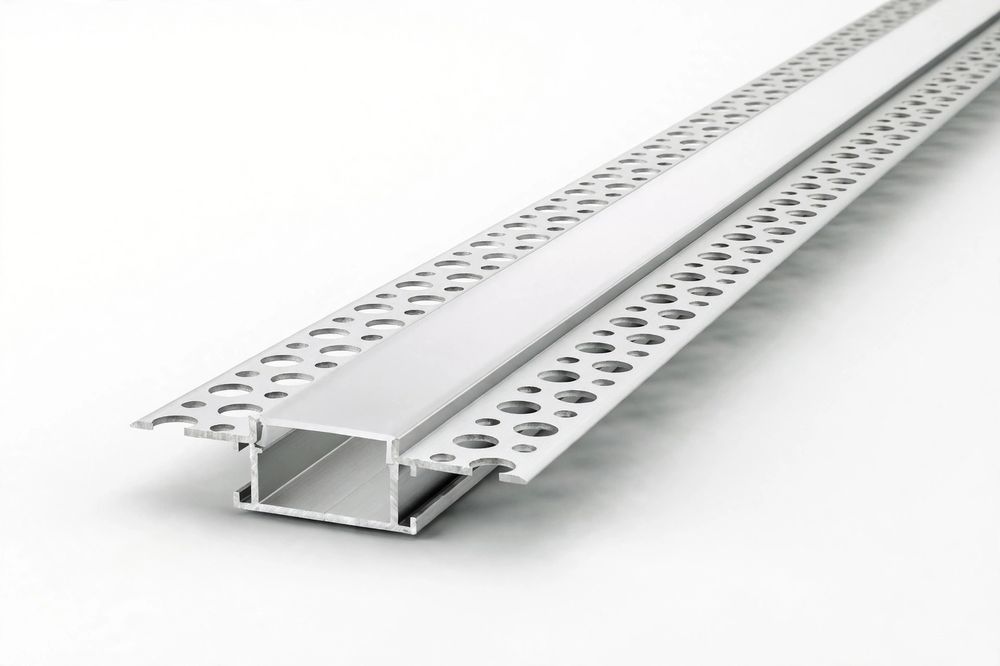
Plaster-In (Trimless) Profile
Fixed before plastering and finished flush, so light appears to come out of the ceiling itself — zero visible metal. The picture shows its secret: wide perforated wings on both sides that the plaster grips, locking the channel into the ceiling skin.
56×17 · 66×13 mmVisible opening ≈13–25 mmQuality check: perforated plaster wings for a crack-free joint; must be planned before ceiling finishing starts.
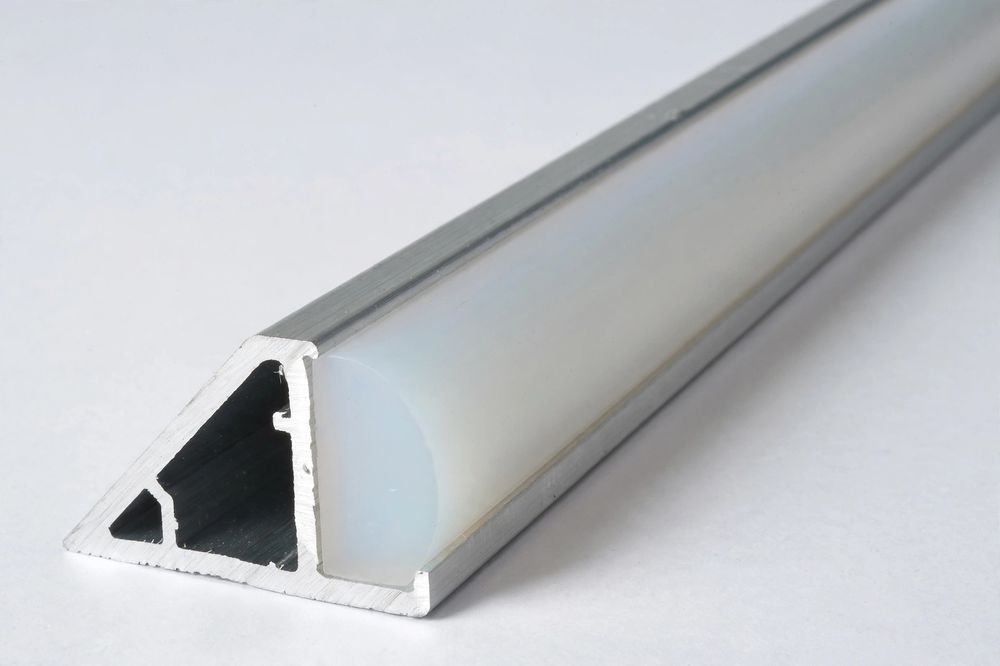
Corner Profile (45°)
An angled channel for 90° corners — under-cabinet front edges, wall-to-ceiling corners, shelf fronts. Its triangular body aims the strip at 45°, throwing light diagonally across the work surface instead of straight into your eyes.
10×10 · 16×16 · 20×20 mmBest seller: 16×16Quality check: the angled diffuser face should be opal for a soft, glare-free wash on the worktop.
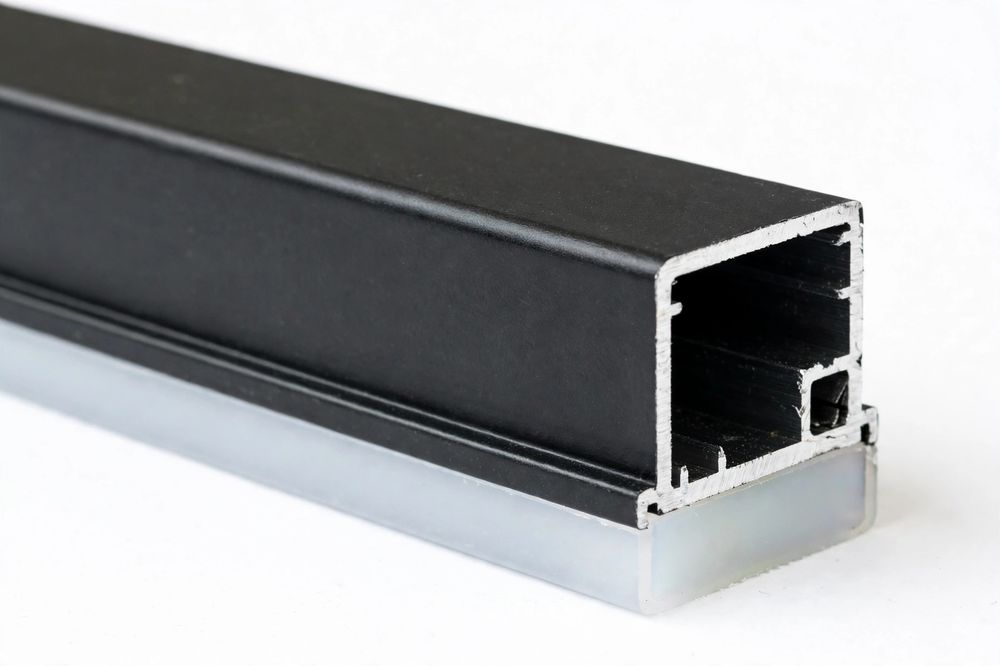
Pendant / Hanging Linear Profile
Wide square or rectangular tube profiles suspended on steel wires or rods — the long straight lights over dining tables, kitchen islands, office desks and counters. Wide bodies (50 mm and up) hide the driver inside the tube itself.
35×35 · 50×35 mm75×35 · 100×35 (driver inside)Quality check: rigid body that will not bow over long spans; adjustable suspension kit included.
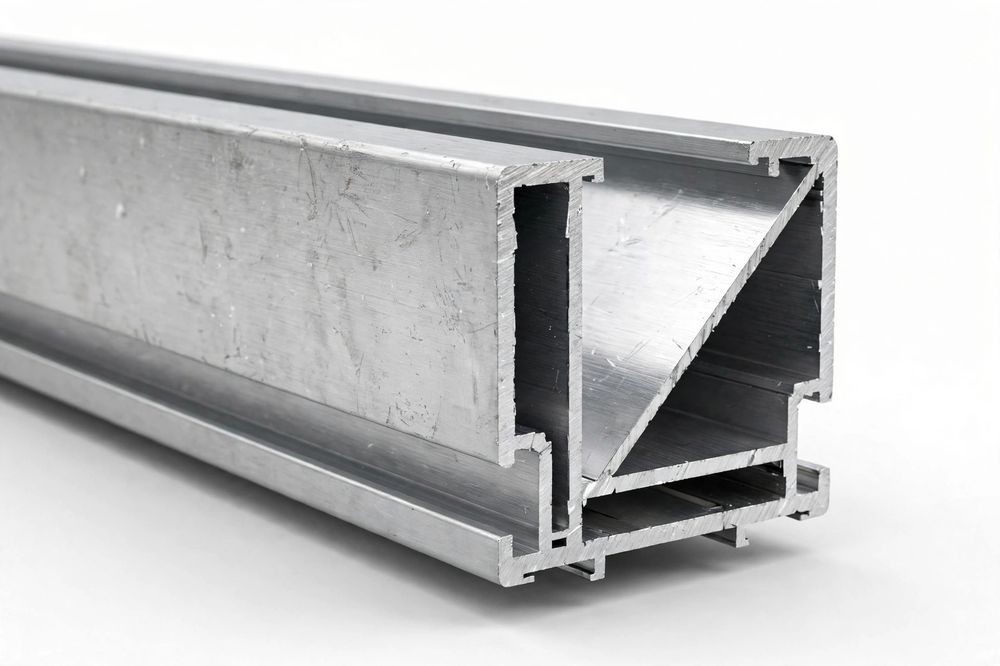
Wall Washer Profile
Positioned at the top or bottom of a wall to graze light across textured stone, cladding, brick or artwork. The channel's inner face is angled like a reflector — that asymmetric shape is what throws the light along the wall instead of into the room.
Surface or recessed3000K warm recommendedQuality check: narrow, controlled beam placement — a few centimetres of offset changes the whole effect.
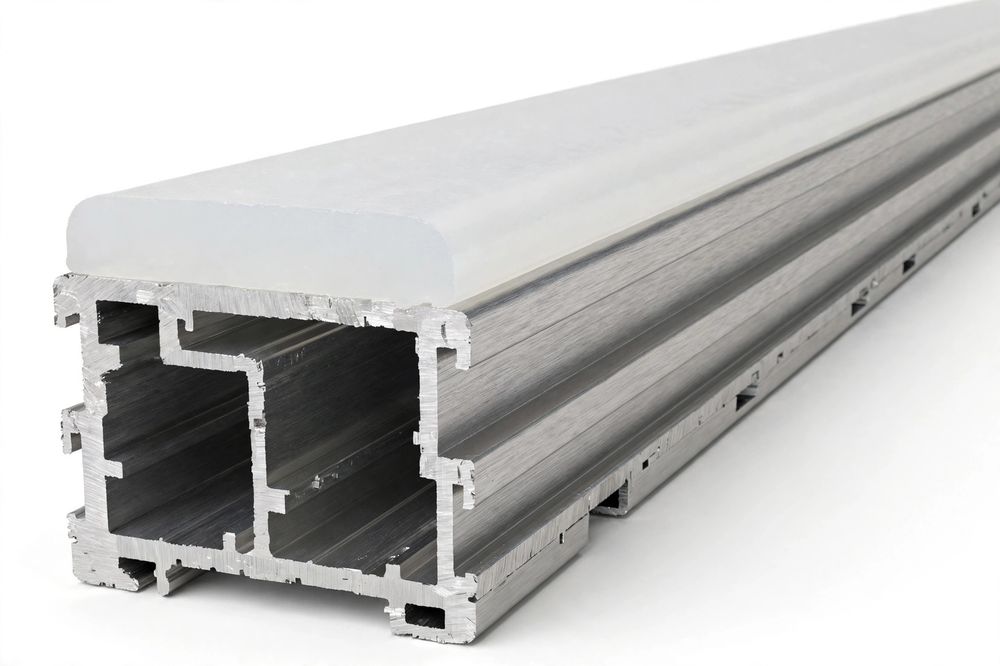
Floor / Walk-Over Profile
A heavy-duty channel with extra thick walls and a tough diffuser, built to be stepped on. For floor guide lines, step edges, driveways and outdoor paths. Compare its picture with the slim profiles above — the chunky walls are the whole point of this design.
≈24×12 mm heavy-dutySealed IP65 versionsQuality check: this is the one profile where cheap copies fail — insist on thick walls and a load-rated diffuser.
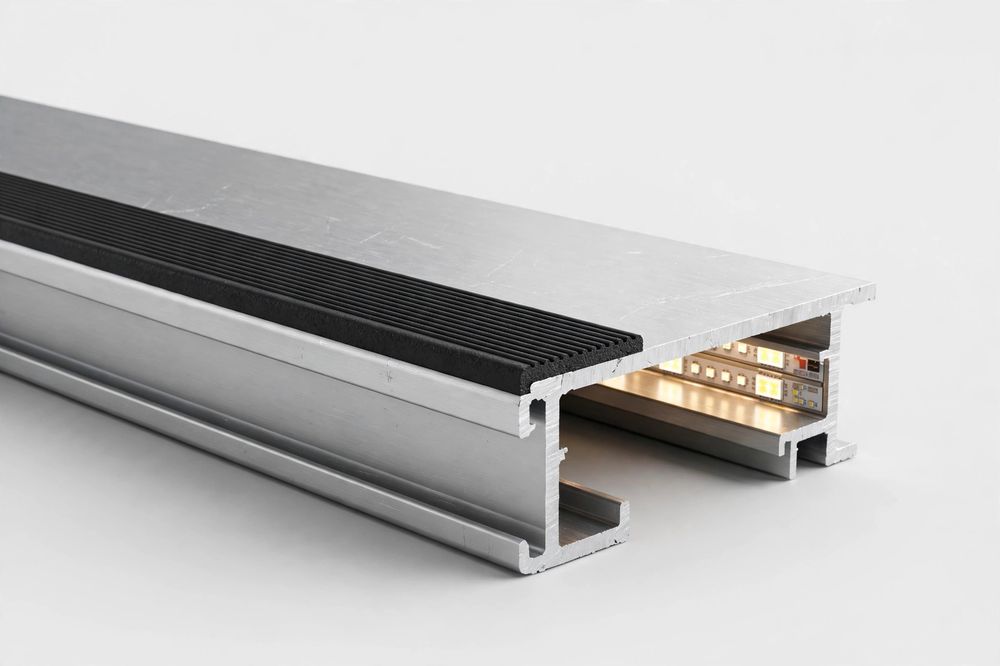
Staircase Profile
Step-nosing profiles that sit on the front edge of each step: the picture shows the black anti-slip rubber insert along the nosing and the light slot beneath it. Beautiful — and a genuine safety feature at night, usually with a motion sensor.
≈60×20 mm with anti-slip insertSensor-readyQuality check: anti-slip ribbing on the nosing and a diffuser that cannot pop out under foot pressure.
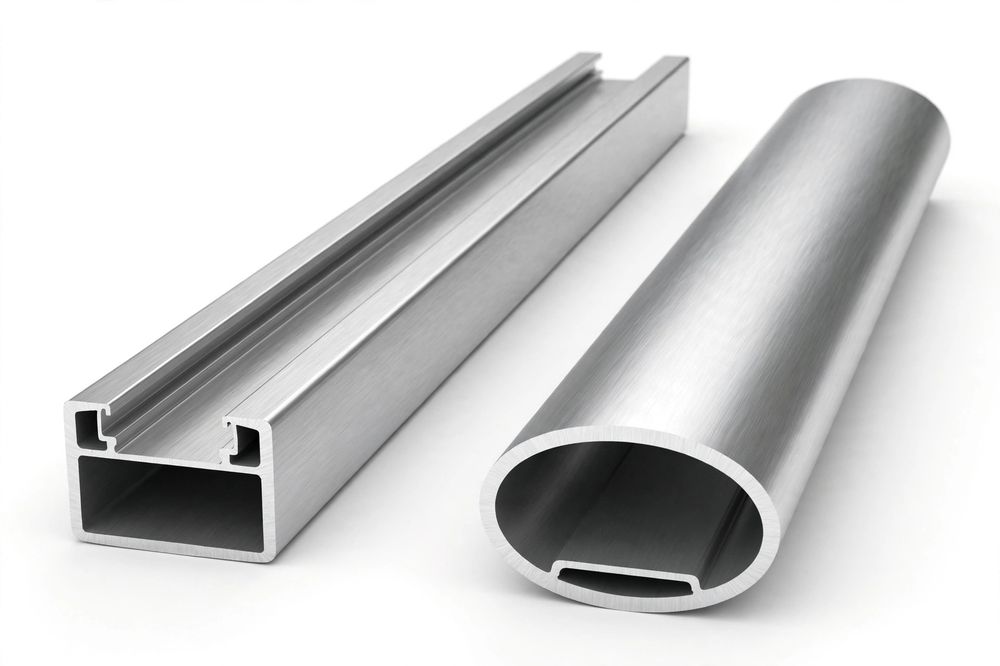
Wardrobe & Rail Profiles
Two shapes in one family, both in the picture: a slim flat profile for shelves and wardrobe interiors, and the oval clothes-rail tube with a light slot along its length — the hanging rod IS the light. Normally sensor-operated: on when the door opens.
Slim 17×8 mmRail ≈15×25 mm ovalQuality check: high-CRI strip (90+) so clothes colours look true; door sensor with a clean on/off delay.
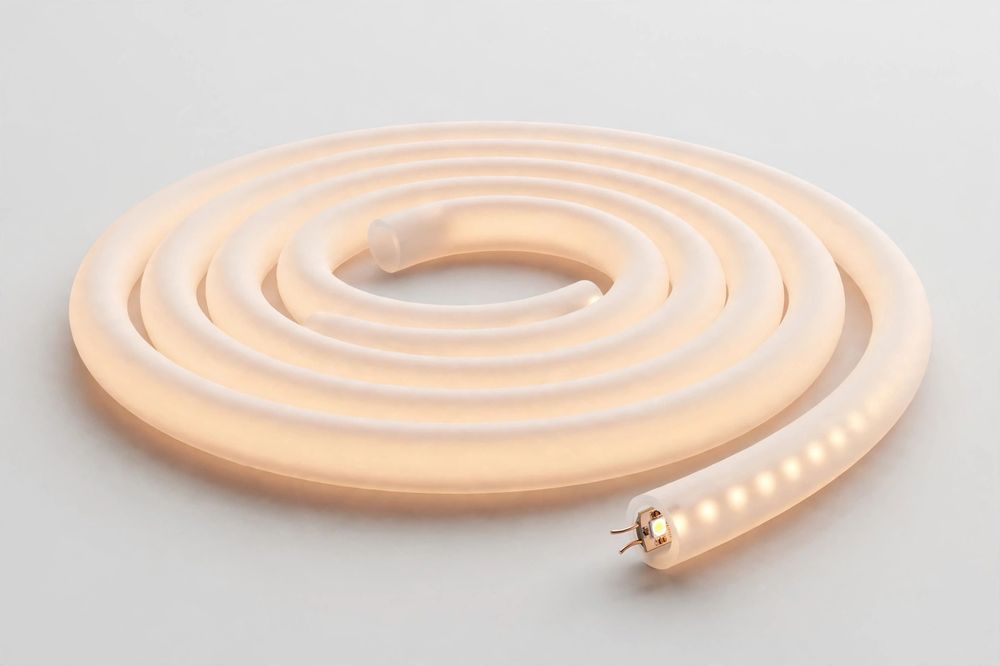
Bendable & Silicone Neon Flex
Not a rigid channel at all — a flexible silicone tube that bends around curves, arches, round ceilings and sign letters. The classic neon look in safe low-voltage LED that never gets hot and cannot shatter like glass neon.
6×12 · 10×18 mm16×16 · 20×20 mmQuality check: food-grade silicone body (cheap PVC versions yellow within a year); even glow with no dark spots at bends.
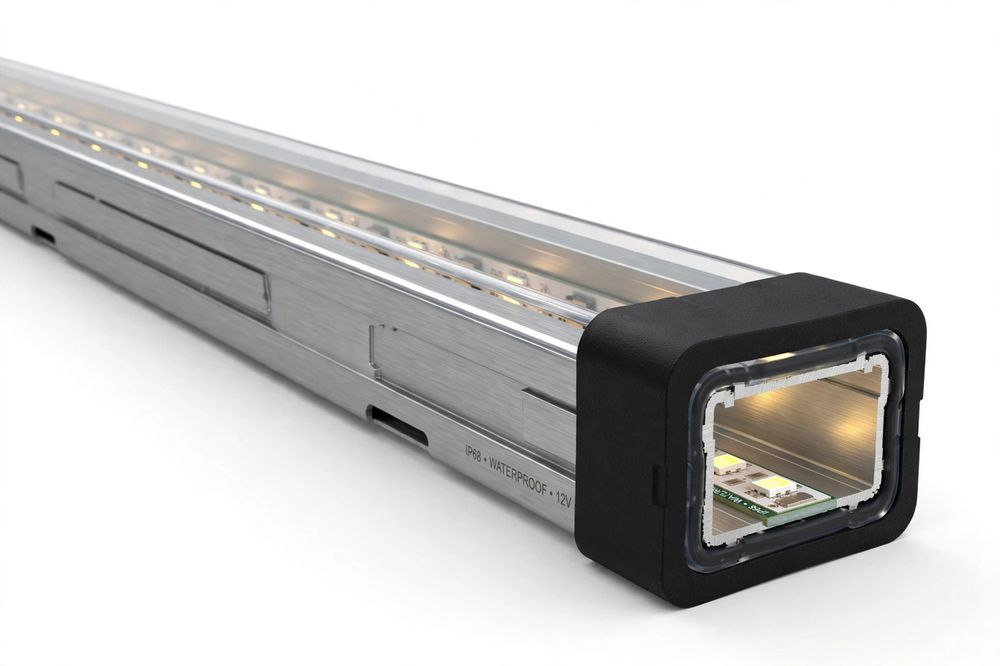
Waterproof Outdoor Profiles
Sealed profiles and fully encapsulated strips (IP65–IP68) for facades, gardens, boundary walls, gate pillars and signage. The picture shows the sealed construction — closed cover and silicone end caps that keep rain and dust out for years.
IP65 · IP67 · IP6824V DC or 220V ACQuality check: every joint and end sealed with silicone; UV-stable diffuser that will not turn yellow outdoors.
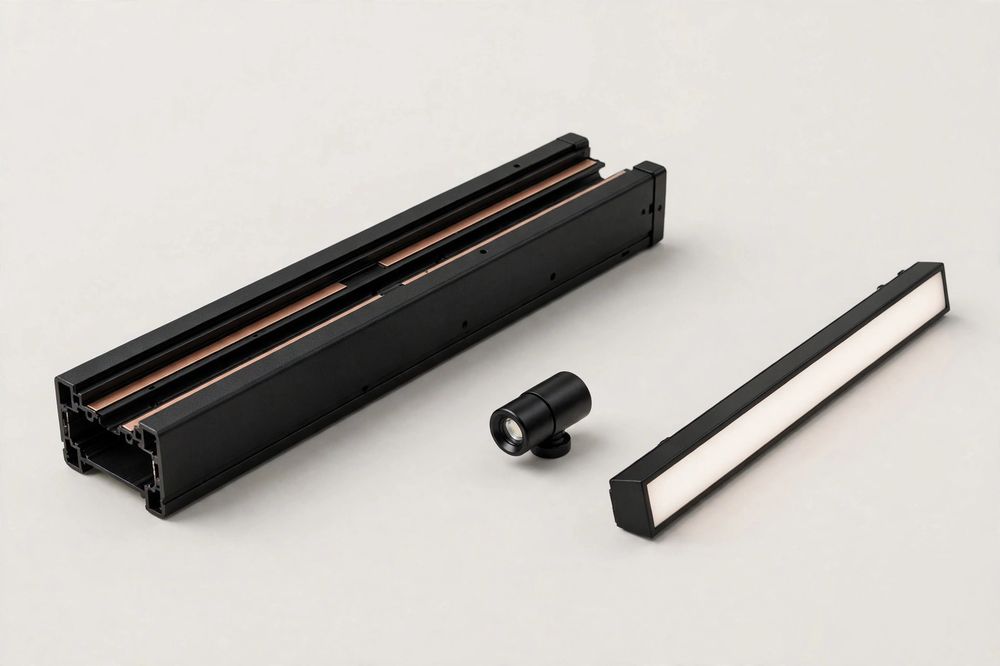
Magnetic Track Lighting
The newest family: a track rail (in the picture) into which spot, linear and pendant modules simply click magnetically — and can be repositioned by hand any time. A safe 48V low-voltage system, very popular in premium interiors.
Track 26 mm · 35 mm48V systemQuality check: strong magnets plus a mechanical lock on each module; genuine copper track contacts for zero flicker.
And This Is How They Look Installed
The same profiles above, photographed in real rooms and buildings — so you can match each channel shape to the finished effect it creates.
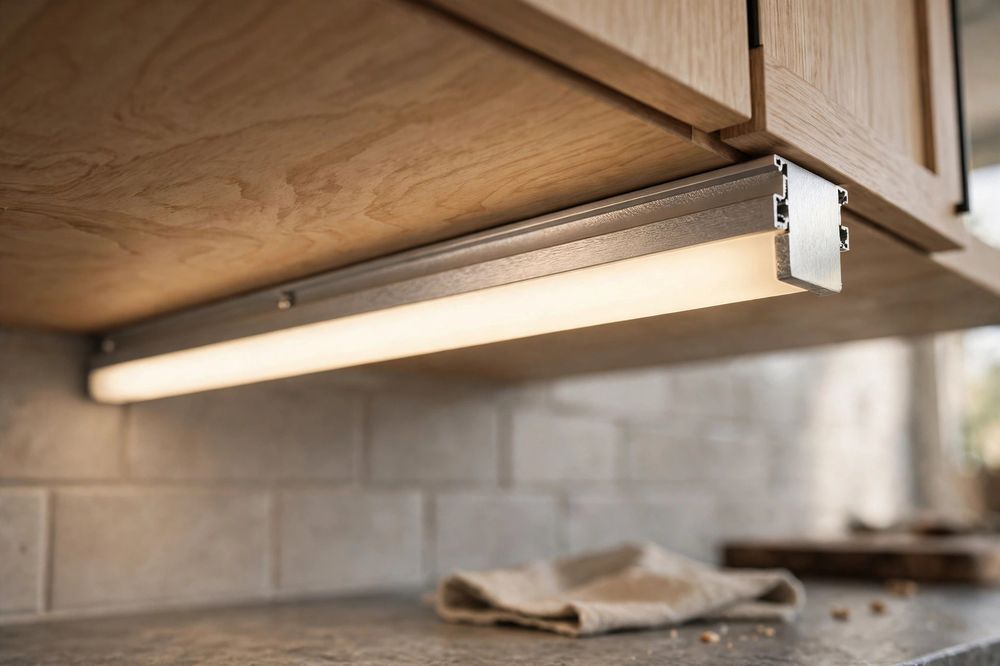
Surface profile installed under a cabinet — Surface profile installed under a cabinet
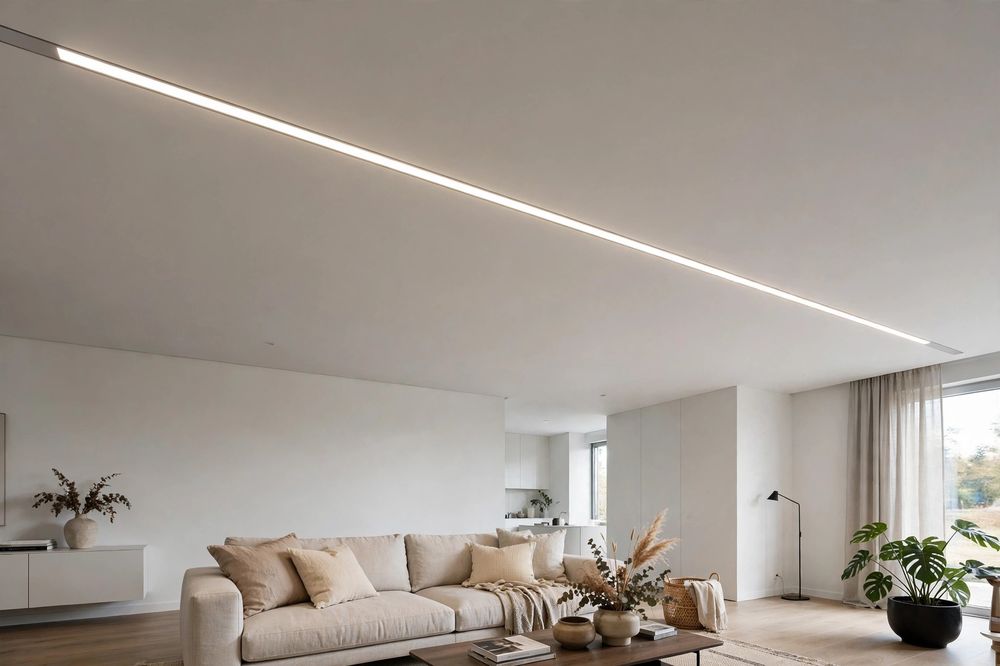
Recessed profile line — Recessed profile line in a false ceiling
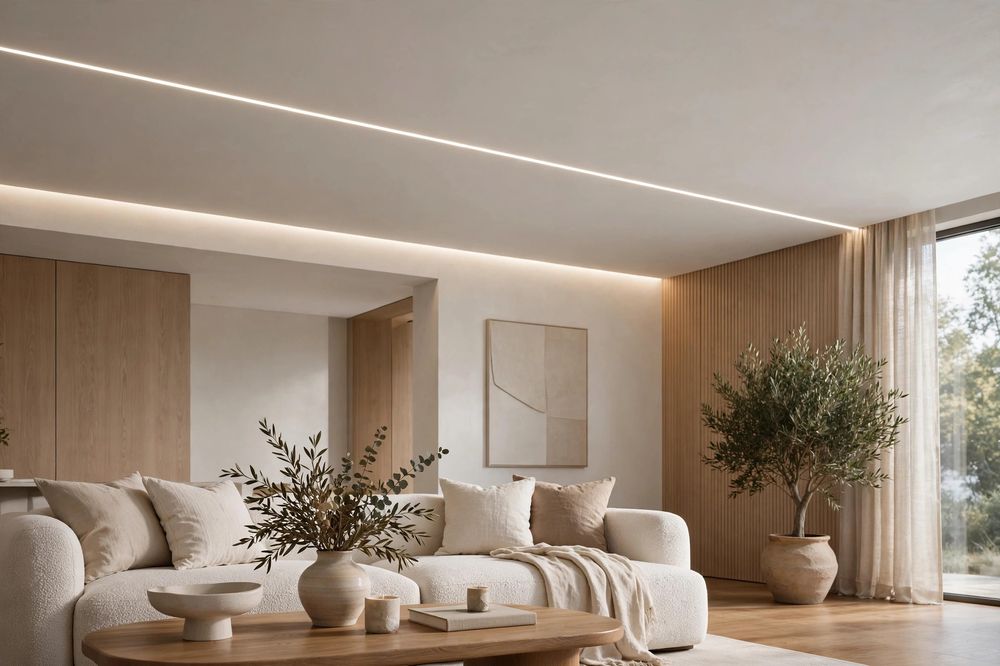
Trimless plaster-in line — Trimless plaster-in line in a luxury ceiling
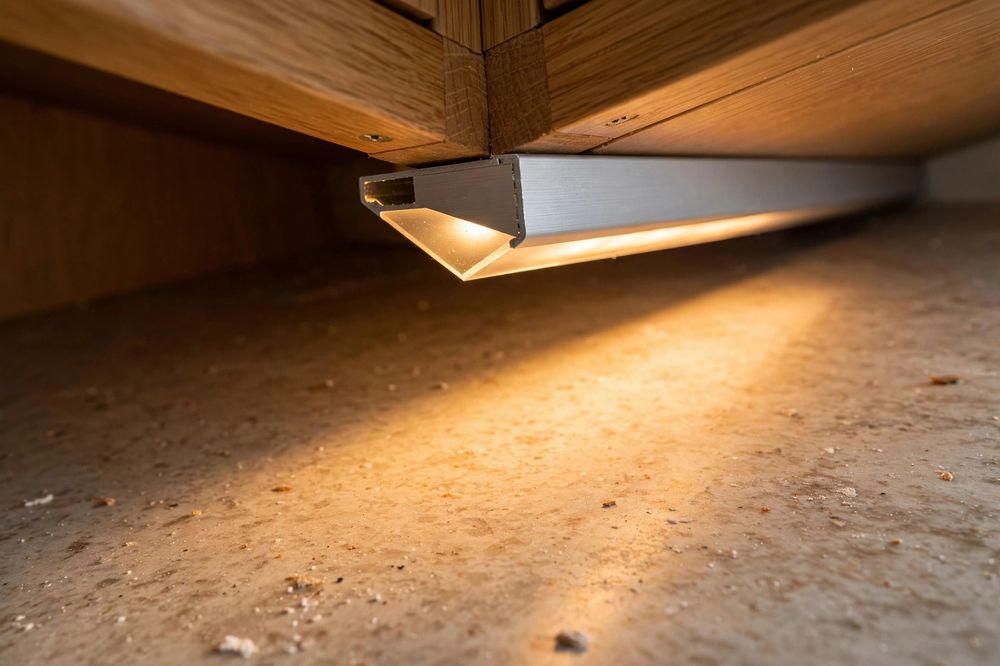
Corner profile washing a kitchen worktop — Corner profile washing a kitchen worktop
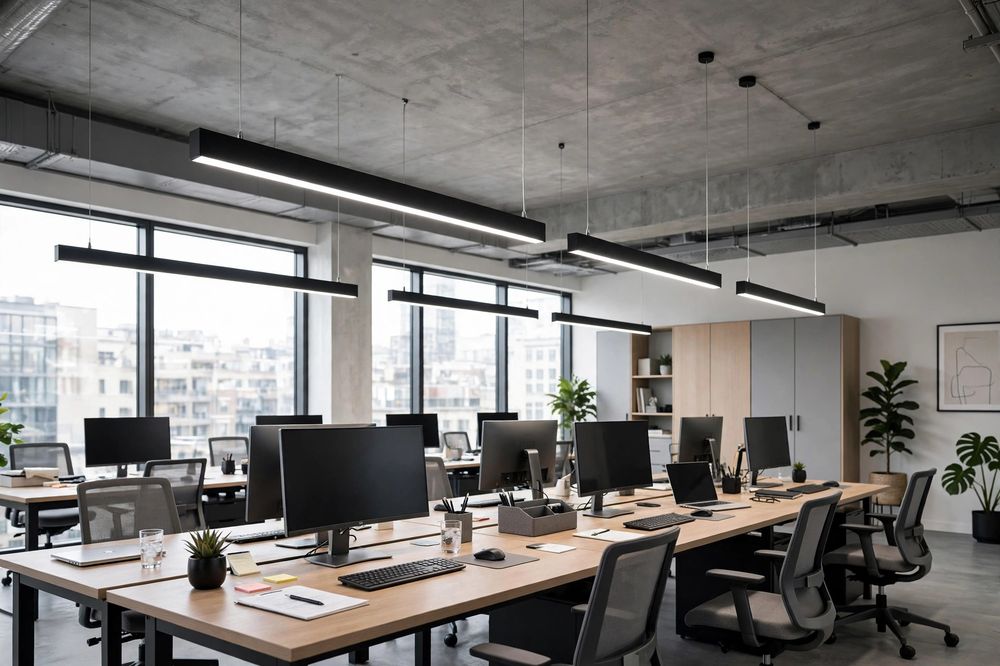
Pendant linear profiles over office desks — Pendant linear profiles over office desks
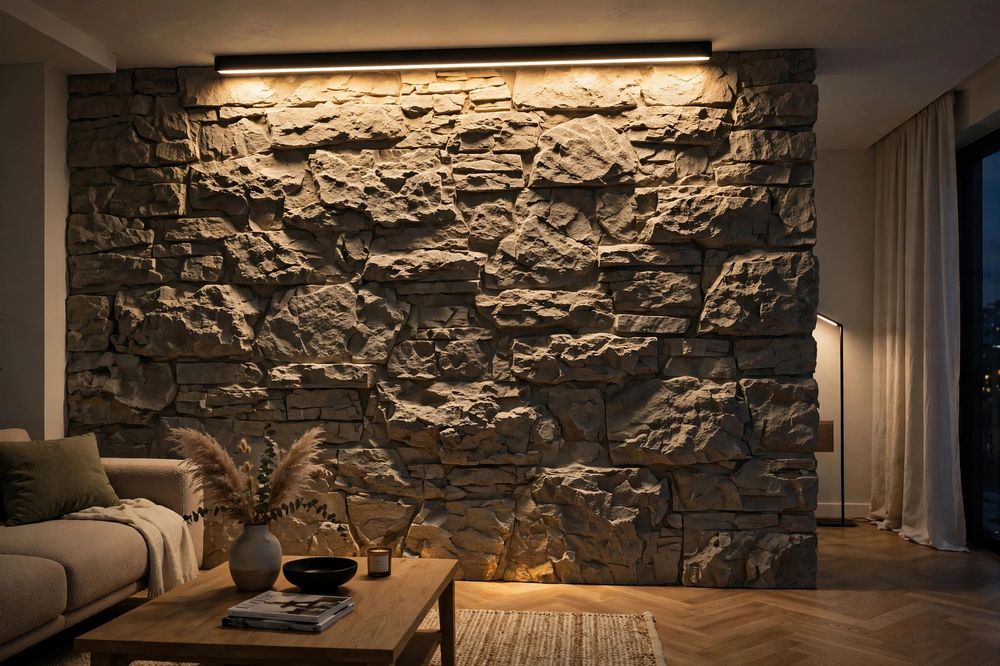
Wall washer grazing a stone feature wall — Wall washer grazing a stone feature wall
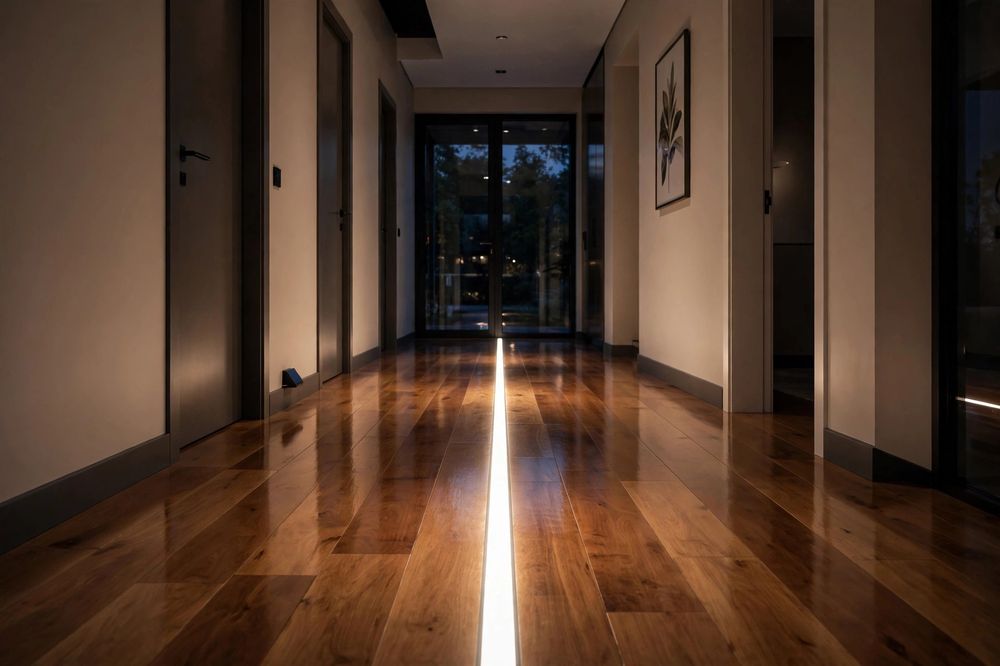
Walk-over floor profile — Walk-over floor profile in a hallway
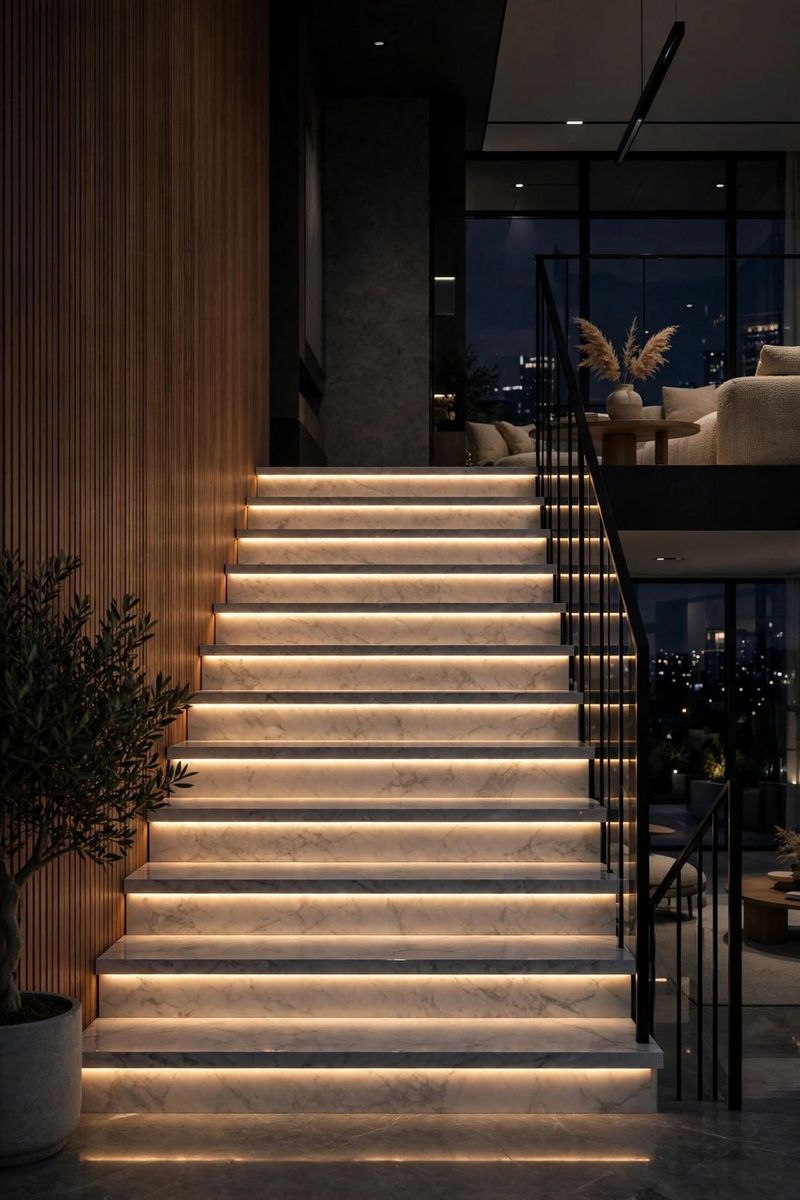
Staircase step profiles — Staircase step profiles at night
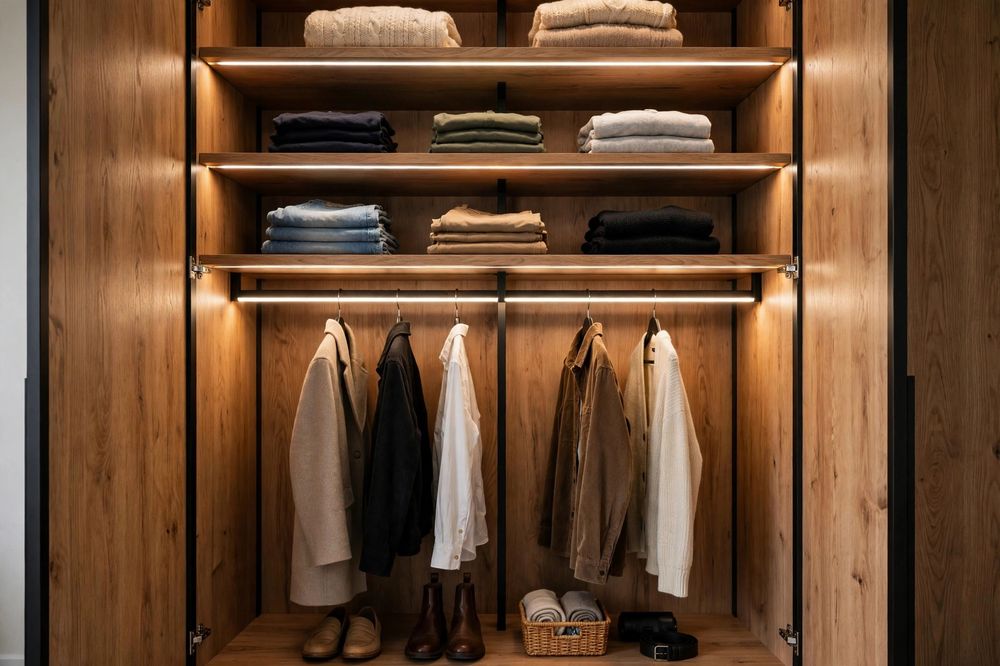
Wardrobe profiles and lighted rail — Wardrobe profiles and lighted rail
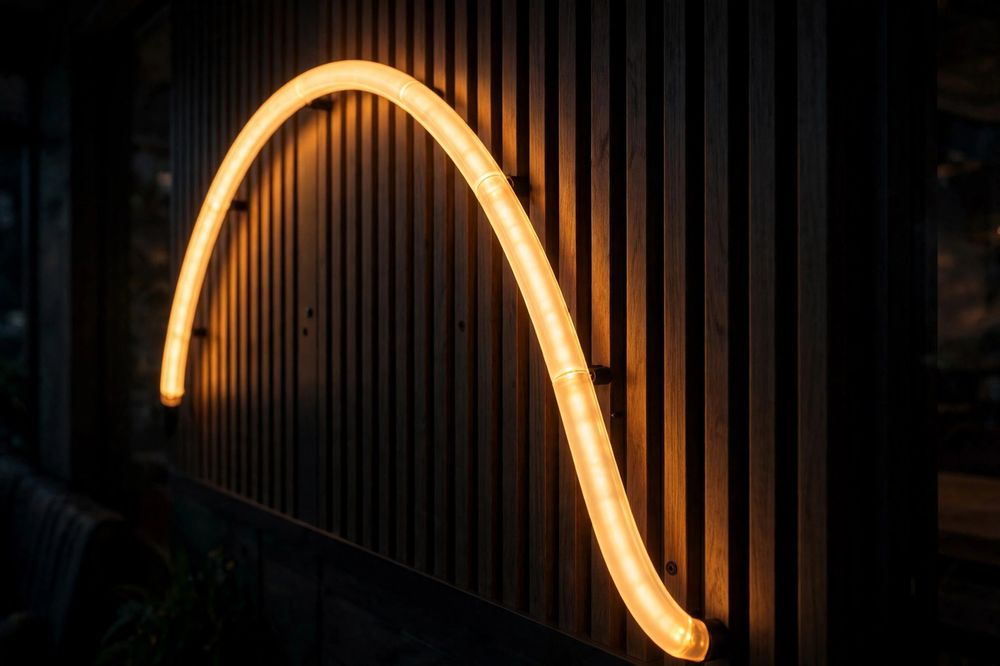
Neon flex curve glowing on a wall — Neon flex curve glowing on a wall
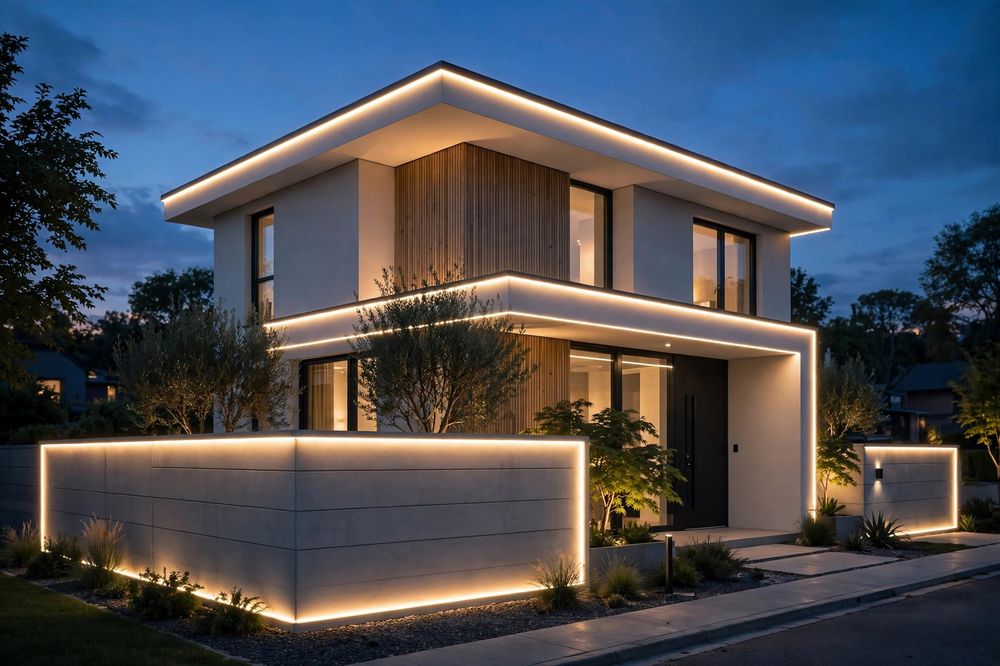
Outdoor profile outline on a facade — Outdoor profile outline on a facade at dusk
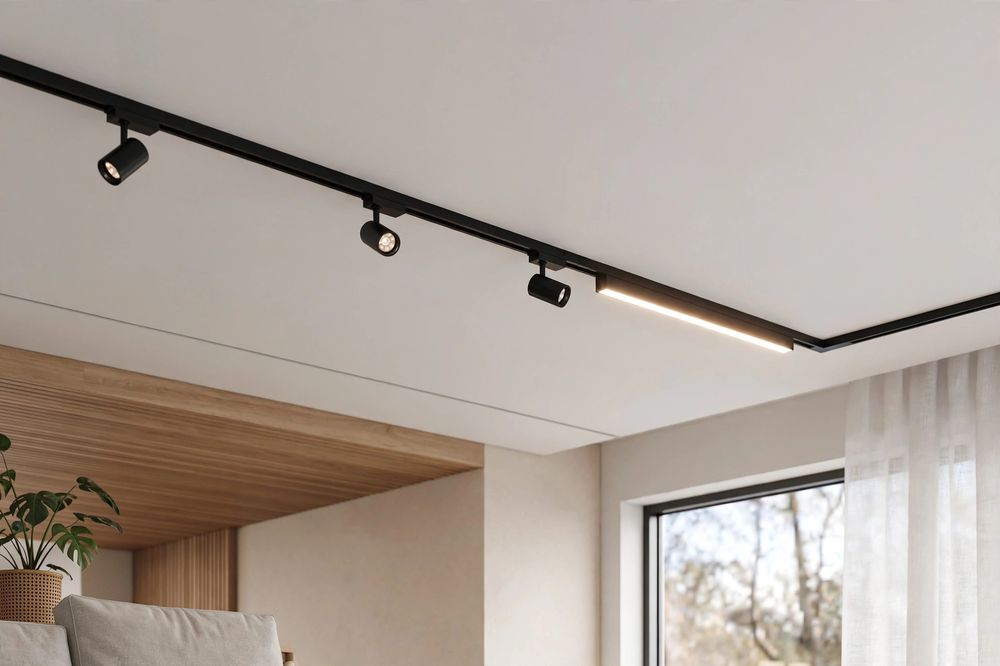
Magnetic track with spots and linear module — Magnetic track with spots and linear module
Profile Sizes — The Complete mm Chart
Profiles are sold in standard bars of 1 m, 2 m and 3 m and cut to your exact size on site. Finishes: silver anodised, matte black and white. Below are the standard sizes available for each design (width × height):
| Profile Type | Full Size Range (mm) | Fits Strip Up To | Typical Use |
|---|---|---|---|
| Micro / mini surface | 7×6 · 8×8 · 10×10 · 11×6 | 3–8 mm (mini strips) | Jewellery counters, model/display lighting, tight niches |
| Slim surface U | 13×7 · 17×8 · 20×10 | 8 / 12 / 16 mm | Cabinets, shelves, coves, TV panels |
| Deep / wide surface U | 23×10 · 25×15 · 30×10 · 30×20 · 35×12 · 50×15 · 50×25 · 60×30 | 20–50 mm (single, double or triple strip rows) | Main ceiling lines, bright long runs, full room lighting |
| Recessed with flange | 17.5×7 groove (23 flange) · 25×12 · 35×14 (≈45 flange) · 55×20 (≈65 flange) | 12–40 mm | False ceilings, gypsum, wood panels |
| Plaster-in trimless | 56×17 · 66×13 · 75×35 · 106×35 · 120×27 (visible opening ≈13–100 mm) | 12 mm (wide sizes: double rows) | Seamless ceiling light lines, wide glowing ceiling bands |
| Corner 45° | 10×10 · 16×16 · 20×20 · 30×30 | 8–24 mm | Corners, cabinet front edges, shelves |
| Pendant / hanging linear | 35×35 · 50×35 · 50×50 · 60×40 · 75×35 · 100×35 · 120×50 | Single/double strip; 50 mm+ sizes house the driver inside | Offices, dining, islands, counters |
| Floor walk-over | 24×12 · 30×15 heavy-duty | 12–20 mm | Floors, step edges, outdoor paths |
| Staircase nosing | ≈50×20 · ≈60×20 with anti-slip insert | 12 mm | Stair steps |
| Wardrobe rail (oval) | ≈15×25 oval | Integrated strip | Clothes hanging rails |
| Silicone neon flex | 4×10 mini side-bend · 6×12 · 8×16 · 10×18 · 16×16 · 20×20 · 30×20 | Integrated | Curves, arches, signs, facades |
| Magnetic track | 26 mm and 35 mm track widths · modules 110–600 mm long | 48V modules | Premium living rooms, galleries, shops |
How to read a size: 17×8 means the profile is 17 mm wide and 8 mm deep. The strip must be narrower than the inside channel — a 17×8 profile takes strips up to 12 mm wide, which covers almost all standard strips.
12V DC vs 24V DC vs 220V AC — Which Strip?
This is the decision that matters most, and the one most often made wrong. All three produce the same quality of light; they differ in wiring, run length, safety and where they belong.
| 12V DC | 24V DC | 220V AC | |
|---|---|---|---|
| Power source | Separate LED driver (SMPS) | Separate LED driver (SMPS) | Direct mains via a small rectifier lead — no driver |
| Cut length | Every 3 LEDs ≈ every 5 cm | Every 6 LEDs ≈ every 10 cm | Every 50 cm or 1 m — only at marked points |
| Max run from one feed | ≈5 m | ≈10 m (longer if fed from both ends) | Up to ≈50 m |
| Brightness along the run | Far end starts dimming after ~3–4 m (voltage drop) | Stays even much further — half the current of 12V for the same power | Even along the full run |
| Safety | Touch-safe low voltage | Touch-safe low voltage | Mains voltage — sealed waterproof types only, professional installation, out of hand reach |
| Dimming & smart control | Full range of dimmers & controllers | Full range of dimmers & controllers | Very limited |
| Best for | Kitchen cabinets, showcases, wardrobes, short runs | Ceiling coves, long lines, whole rooms — the professional standard | Building outlines, facades, boundary walls, garden borders |
Our recommendation: for homes, 24V is the right default — runs stay evenly bright, strips run cooler, and drivers are smaller for the same load. 12V still wins for short cabinet and wardrobe runs where its 5 cm cutting step fits tight spaces. 220V belongs outdoors and on long borders, installed sealed and out of reach — never inside furniture or where hands can touch a damaged section.
Safety note: a 220V strip carries live mains along its whole length. It must never be cut anywhere except the marked cutting points, every cut end must be sealed with its proper end cap and silicone, and it should always be installed by a qualified electrician. For anything within reach — especially around children and water — use 12V or 24V.
Light & Strip Types — With Pictures
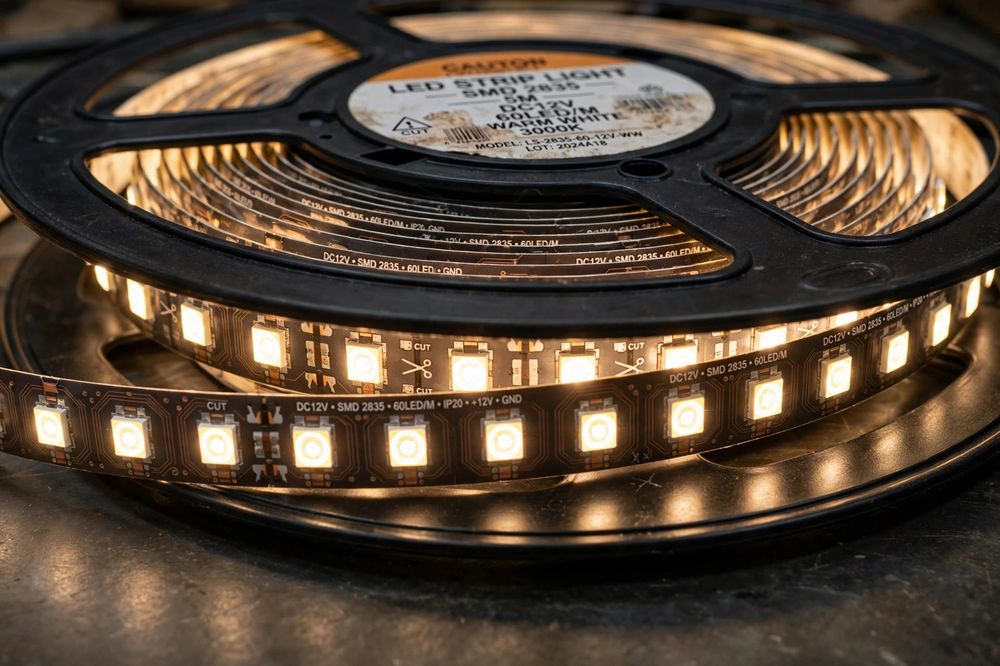
SMD Strip — The Standard Light
The everyday LED strip: individual square chips (2835 for white, 5050 for colour) soldered in a visible row along the board — in the picture you can see every chip. Reliable, economical, and available in every voltage and density. In a profile with an opal diffuser at 120 chips/m, the dots blend into a smooth line.
12V · 24V · 220V2835 · 5050 chipsQuality check: thick copper board (look for 2–3 oz copper markings) and honest chip counts — 60/m and 120/m are the useful densities.
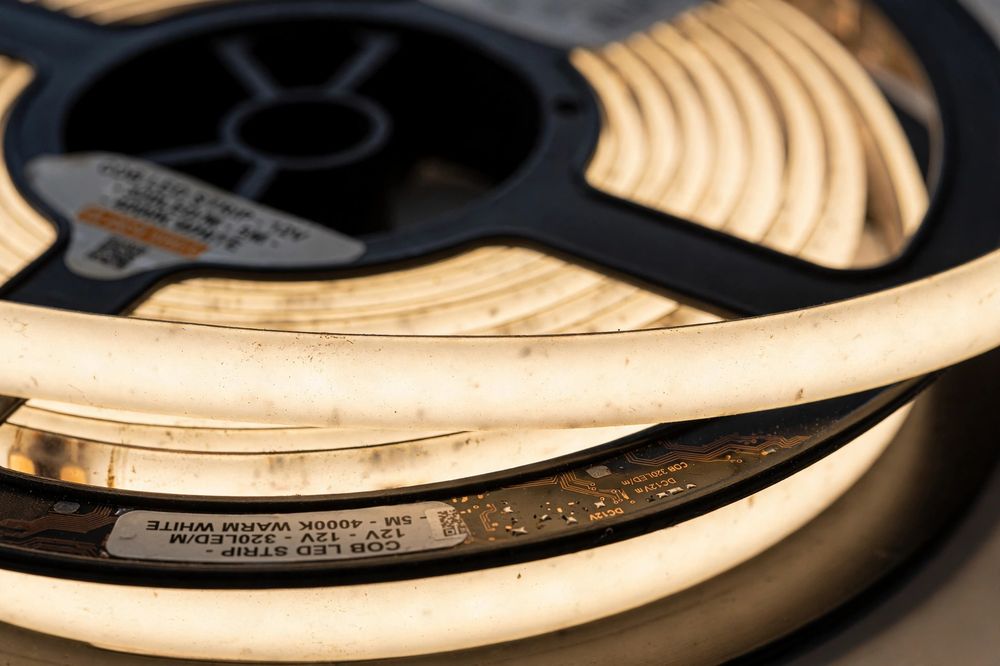
COB Strip — Dot-Free
Hundreds of tiny LED chips under one continuous phosphor coating: the light is a single smooth line with no visible dots at all, even in slim 7–8 mm profiles and behind clear covers. The premium choice wherever the line itself is visible.
12V · 24V320–528 chips/mQuality check: genuine COB has an unbroken phosphor line; output 10–24 W/m — match it with a proper aluminium heat sink.
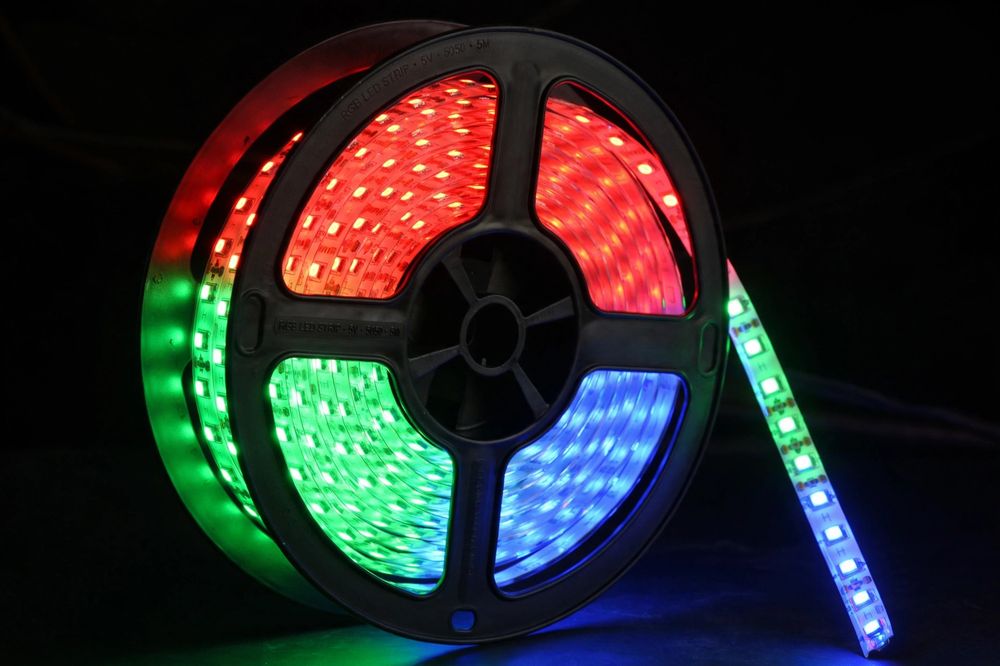
RGB & RGBW Colour Strips
5050-size chips with separate red, green and blue LEDs mix any colour you like; RGBW adds a dedicated white chip for proper warm/white light too. For TV walls, feature coves, events and signage — always paired with a colour controller.
12V · 24V5050 chips · 30/60 per mQuality check: choose RGBW over plain RGB if the strip must also work as normal white lighting.
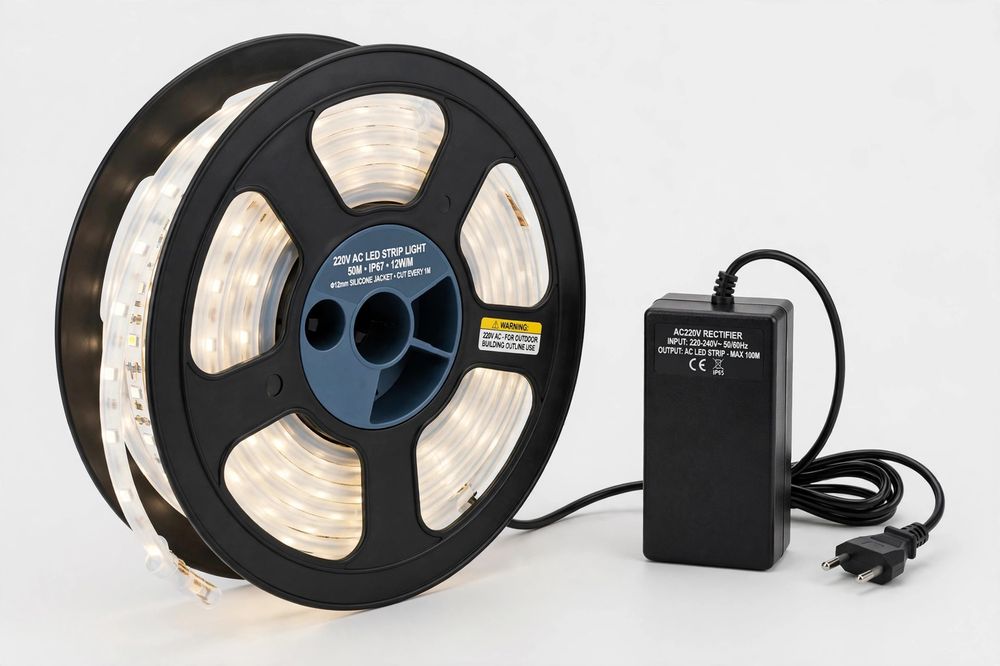
220V AC Strip — Driverless
A mains-voltage strip in a thick waterproof jacket, supplied on large reels and powered through a small rectifier lead — no driver needed and runs up to ~50 m from one plug point. For building outlines, boundary walls and garden borders.
220V AC directCut every 50 cm–1 m onlyQuality check: thick, sealed jacket and proper end caps are non-negotiable — this strip carries live mains (see the safety note above).
Reading any strip's specification
- LED type: 2835 — the efficient modern standard for white light. 5050 — larger chips, mainly for RGB. COB — the dot-free continuous line above.
- Density: 30, 60, 120 or 240 LEDs per metre. More LEDs = smoother, brighter light. 60/m is fine hidden in a cove; 120/m or COB is better where the line itself is visible.
- Power: commonly 4.8W, 9.6W, 14.4W, 19.2W or 24W per metre. Higher watts = brighter, but needs a better heat-sinking profile and a bigger driver.
- Colour temperature (CCT): 2700–3000K warm white (bedrooms, living rooms), 4000K natural white (kitchens, offices, study), 6000–6500K cool white (task areas, shops). Tunable (CCT) strips adjust warm-to-cool with a remote.
- CRI: colour rendering index — 80+ is standard; choose 90+ for kitchens, dressing mirrors and clothing shops, where true colours matter.
- IP rating: IP20 = dry indoor. IP65 = splash-proof (kitchen, bathroom zones, covered outdoor). IP67/IP68 = fully sealed for outdoor and wet areas.
- 5V USB strips also exist for TV back-lighting and small accents — handy, but only for very short lengths.
Strip Widths — From Ultra-Slim to Widest
Strip width decides which profile the strip fits into. The full range available:
| Strip Width | Type | Used In |
|---|---|---|
| 2–3 mm | Ultra-slim mini strip | Micro profiles, jewellery and display niches, signage letters |
| 4–5 mm | Slim strip | Mini/micro profiles 7×6 and 8×8, tight furniture joints |
| 8 mm | Standard narrow | Slim surface profiles, corner 10×10, wardrobe shelves |
| 10 mm | Standard | Most home profiles — the most common width in the market |
| 12 mm | Standard wide | 17×8 and larger profiles, COB strips, RGB strips |
| 16–20 mm | Wide / high-power | Deep and wide profiles, double-row brightness |
| 24–30 mm | Extra wide | Double/triple-row strips in wide surface and pendant profiles for full room lighting |
Connectors, Drivers & Controllers — The Complete System
A profile light is only as good as the parts behind it. These are the components we supply and install with every system — each with its picture and the quality points that matter.
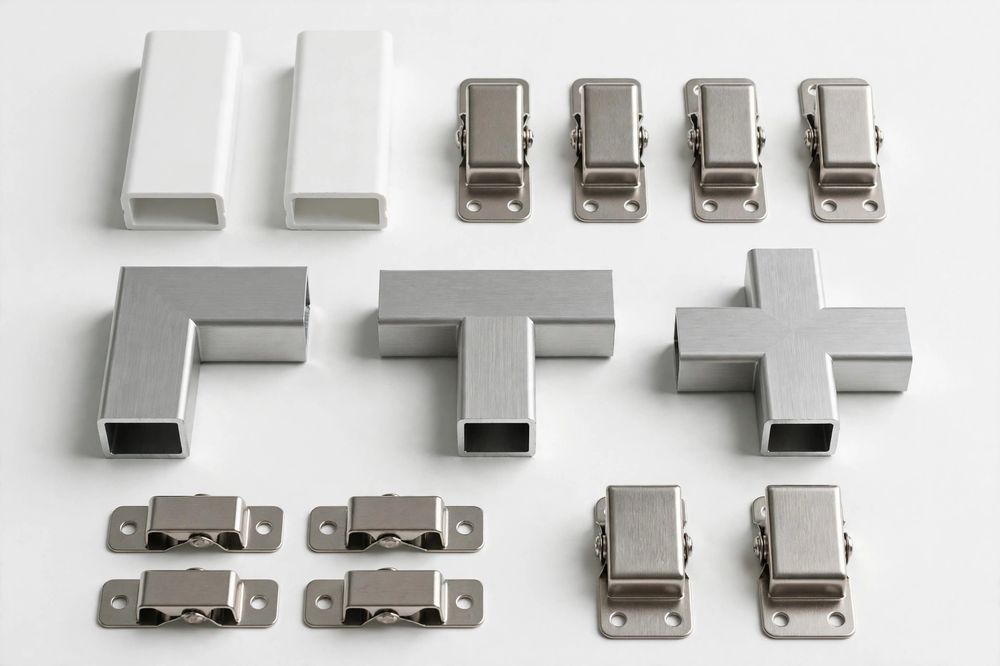
Connectors, End Caps & Clips
End caps close the profile ends (plain or with a cable hole). Mounting clips fix surface profiles so they can be removed for service. L, T and X connectors join profiles at corners and junctions for one continuous line around a ceiling, and strip-to-strip connectors join cut strip pieces.
End caps · clips · L/T/X joinsQuality check: for permanent joints we solder strip connections instead of relying on clip-on strip connectors — soldered joints do not loosen, spark or create dark sections years later.
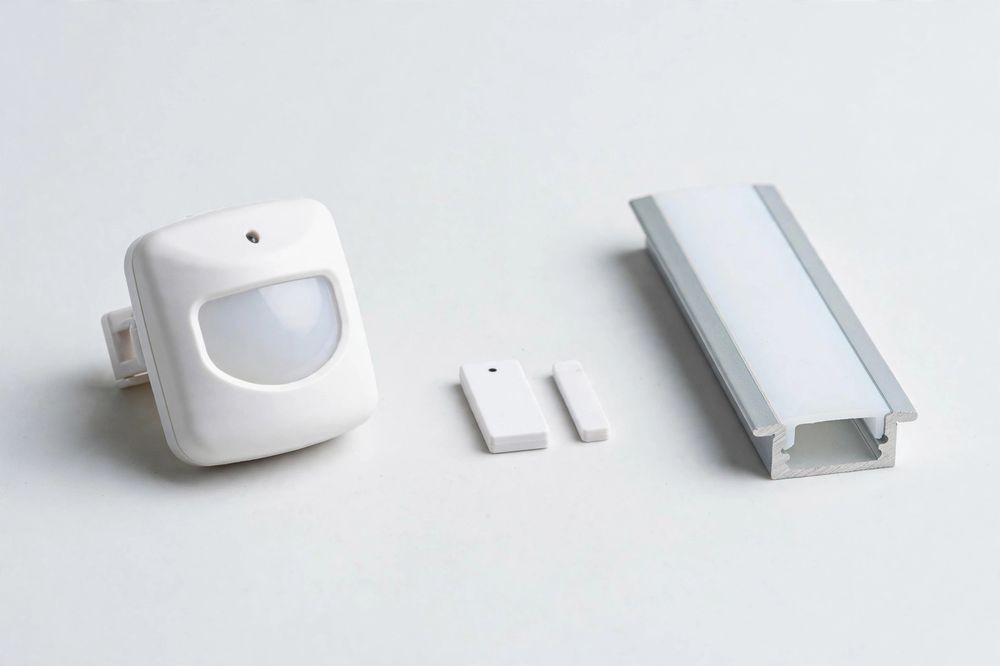
Sensors — Automatic Lighting
PIR motion sensors switch stairs, corridors and bathrooms on as you approach. Door-contact sensors light wardrobes and cabinets when opened. Daylight sensors run outdoor lines dusk-to-dawn. Sensors are where profile lighting saves the most electricity — the light exists only while it is needed.
PIR · door · daylightAdjustable delay & sensitivityQuality check: adjustable off-delay (10 seconds to several minutes) so lights never cut out mid-task.
Adapters (Drivers) — Every Type, With Its Picture
Every adapter below is shown with its own picture and its own detail — what it is, its sizes, what it can power, and how to judge its quality. The adapter is chosen after the strip: voltage must match the strip exactly, and wattage must exceed the load.
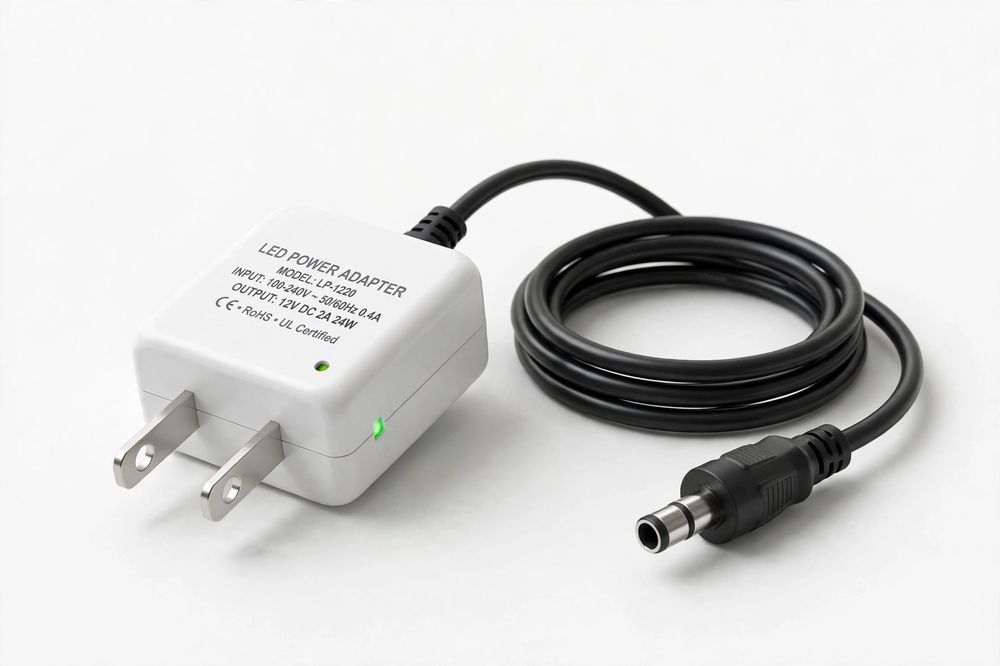
Plug Adapters — 5W to 15W
What it is: a small plug-in power brick with a DC cable, like a phone charger. Plug it into a socket and connect the strip — no wiring work at all.
Sizes: 12V or 24V output; 0.5A–2A (5W, 10W, 12W, 15W). Powers roughly 1–2 metres of strip.
Used for: TV backlights, single cabinets, showcases, small signs.
Quality check: should feel solid, run cool after an hour, and state its real output current honestly — and never be stretched beyond one short strip.
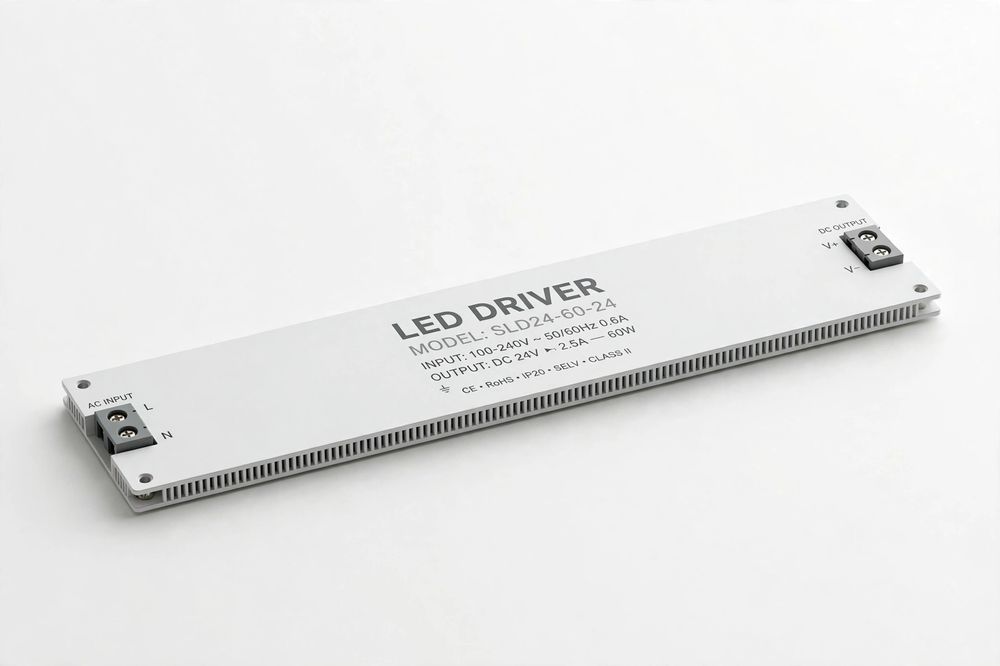
Slim Drivers — 25W to 60W
What it is: a very flat driver (often under 20–30 mm thick) made to disappear — inside wide pendant profiles, ceiling grooves, cabinet tops and pelmets where a normal driver would not fit.
Sizes: 12V / 24V; 25W, 36W, 50W, 60W. Powers roughly 2–6 metres of strip.
Used for: kitchen under-cabinet runs, wardrobe sets, shelf lighting, slim ceiling lines.
Quality check: slim drivers have less room for cooling, so quality matters even more — a good one has full protections and a metal or quality housing, not feather-light plastic.
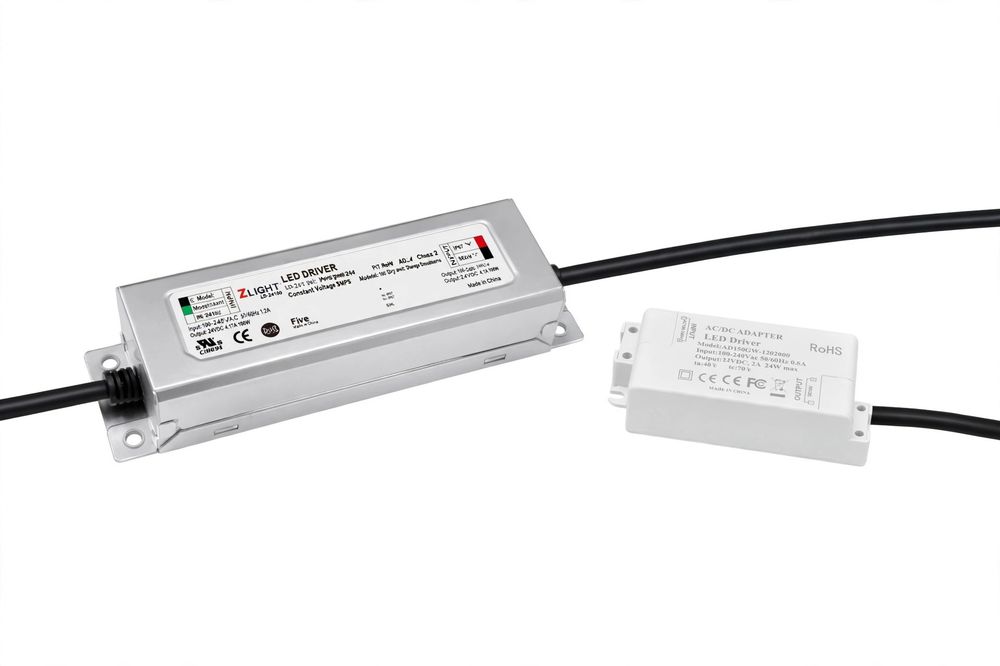
Metal-Case SMPS Drivers — 50W to 200W
What it is: the workhorse of profile lighting — a ventilated metal-cased switched-mode power supply with screw terminals, mounted in a ceiling service space, cupboard or driver box.
Sizes: 12V / 24V; 50W, 60W, 100W, 120W, 150W, 200W. Powers roughly 4–20 metres of strip — one room cove up to a complete large ceiling design.
Used for: ceiling coves, whole rooms, shop lines, most home and commercial systems.
Quality check: honest weight (a real 200W unit has substance), over-load / short-circuit / over-temperature protection, silent running. This class powers most of our installations.
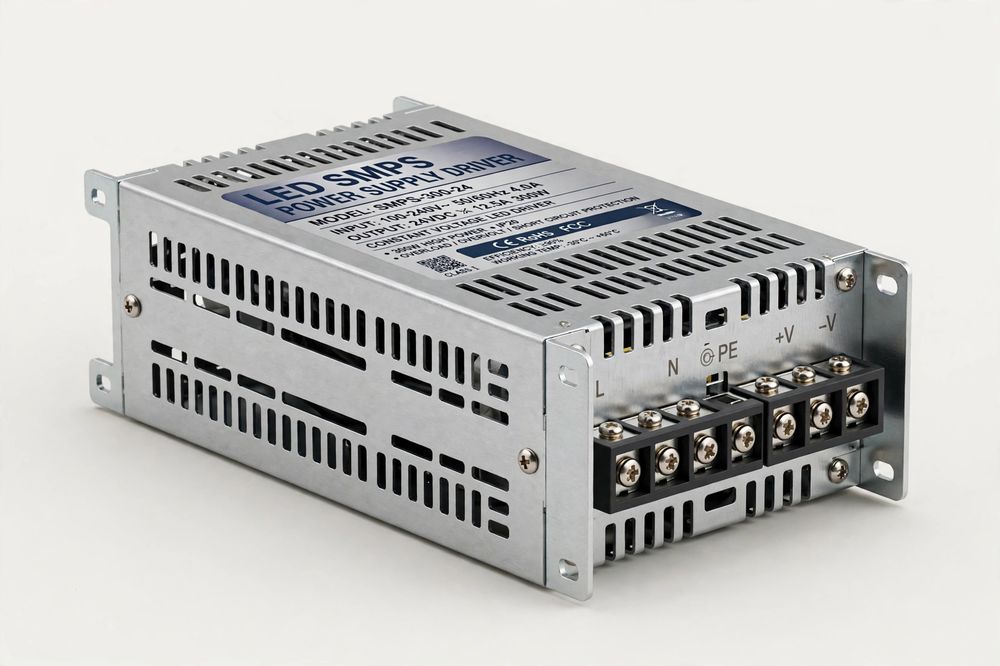
High-Power Drivers — 250W to 400W
What it is: large SMPS units for commercial-scale runs — showrooms, restaurants, halls and whole-floor lighting from a few central driver points.
Sizes: 12V / 24V; 250W, 300W, 350W, 400W. Powers roughly 20–40 metres of strip per unit.
Used for: showrooms, restaurants, banquet halls, large facades on low voltage.
Quality check: cooling design is everything at this size — fan or generous heatsink, real protection circuits, and wiring sized for the high DC current on the output side.
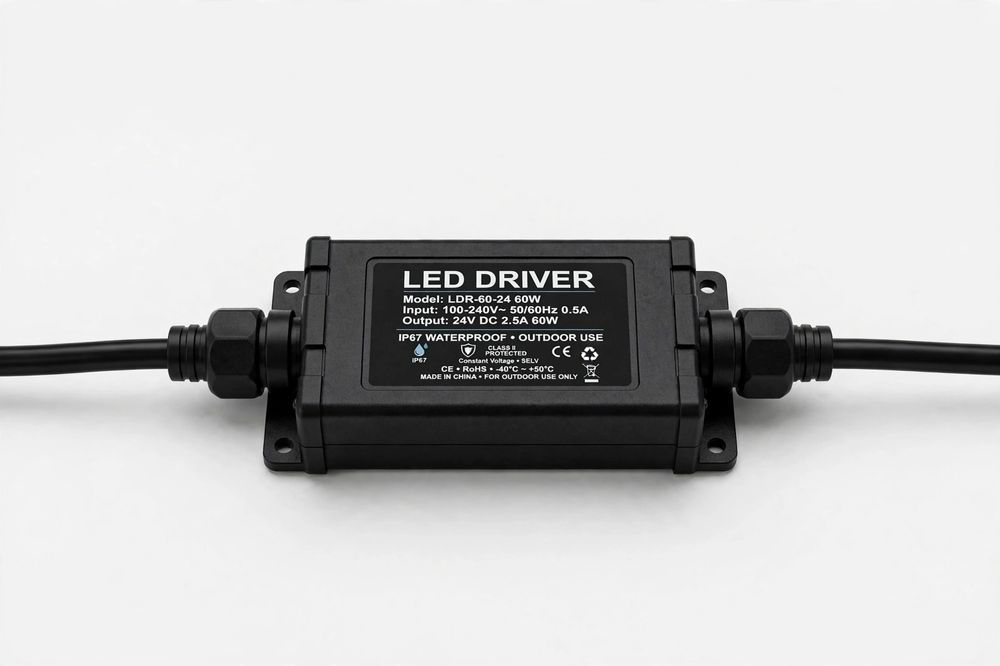
Sealed Waterproof Drivers — IP67
What it is: a fully sealed, potted driver with waterproof cable entries — the outdoor partner for 12V/24V outdoor strips and neon flex.
Sizes: 12V / 24V; commonly 30W, 50W, 60W, 100W, 150W, 200W sealed versions.
Used for: facades, boundary walls, gardens, signage — anywhere rain or washing water can reach.
Quality check: genuine potted sealing (not just a plastic box), sealed glands on both cables, and mounting where air can still move around it.
Driver size = strip watts per metre × total metres, plus 20–30% headroom.
Example: a 10 m ceiling cove at 14.4 W/m = 144 W of strip → fit a 200 W driver, matched to the strip voltage (24V strip = 24V driver — never mix voltages). Drivers belong in a ventilated, reachable place; a driver sealed inside a hot, airless ceiling is the most common cause of the early failures we are called to repair.
Controllers — Every Type, With Its Picture
Controllers give you dimming, colour and automation. Each type below has its own picture and its own detail — size, capacity and the quality points that separate a good unit from a frustrating one.
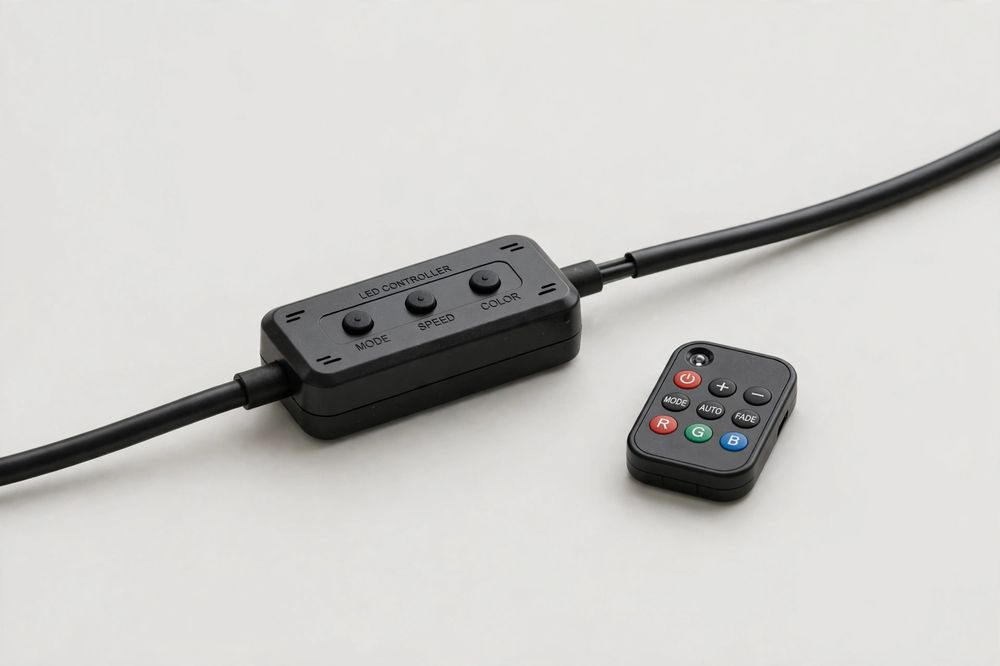
Mini Inline Controller
What it is: a tiny controller built into the cable itself, with small buttons (and often a pocket remote) — the simplest dimming there is.
Size & capacity: about 35×12×6 mm in the lead; up to ~6A — one short strip only.
Used for: TV backlights, single cabinets, desk strips.
Quality check: buttons should feel positive; at this size there is no headroom for overload — keep to short runs.
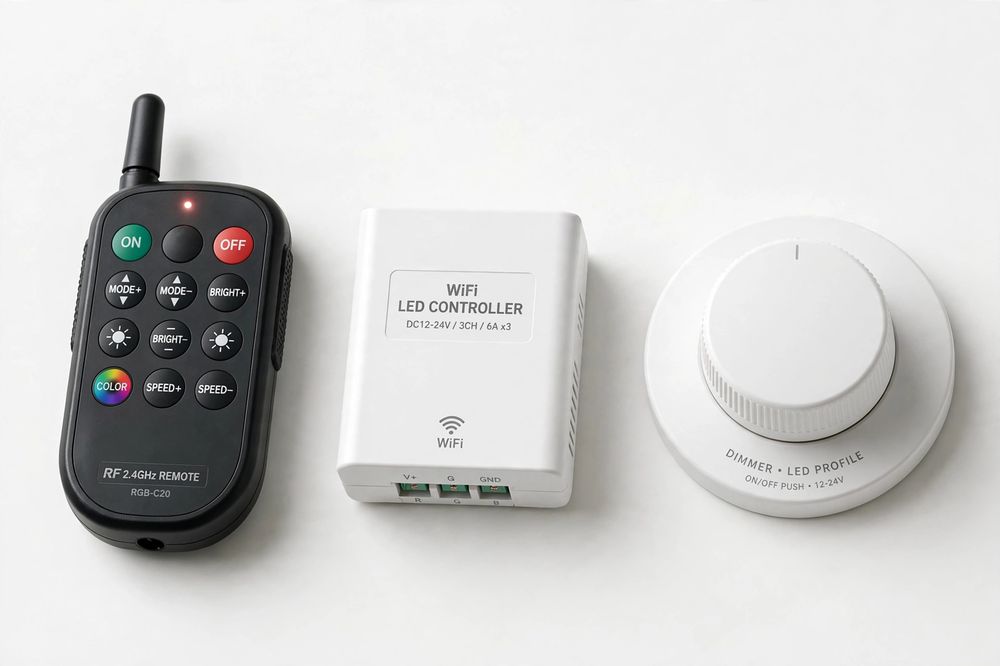
RF Remote Controller
What it is: a small receiver box wired between driver and strip, with a handheld radio remote — works through cabinet doors and from anywhere in the room, no line-of-sight needed.
Size & capacity: box about 85×45×25 mm; 6–12A per channel.
Used for: room coves, TV walls, bedrooms — the standard home choice.
Quality check: high-frequency PWM output (flicker-free on phone cameras), smooth fade at low brightness, and a remote that re-pairs easily after battery changes.
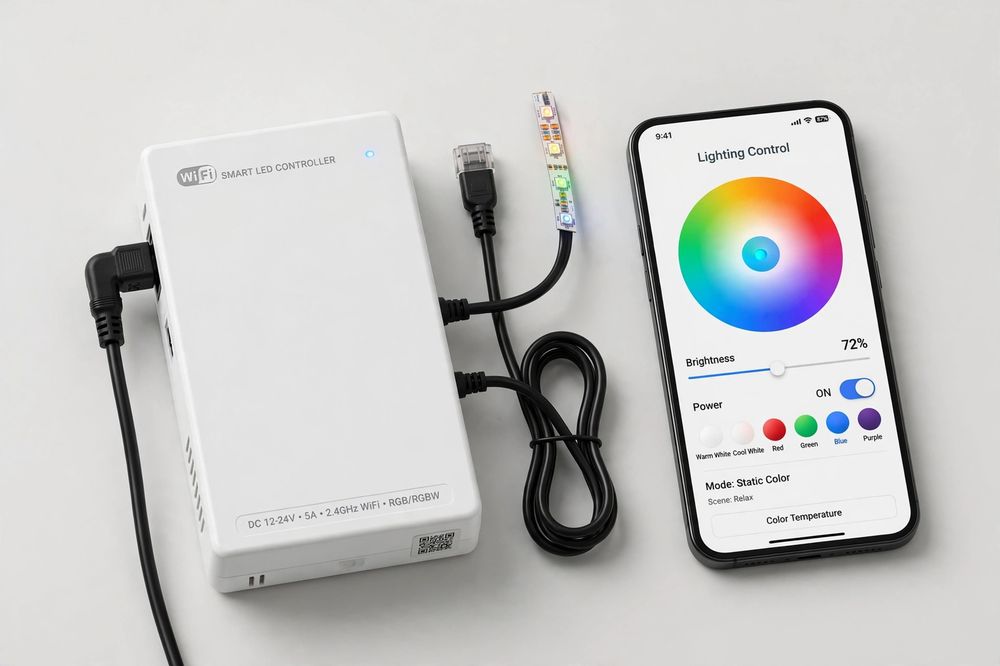
Wi-Fi Smart Controller
What it is: a controller box that joins your home Wi-Fi — full control from a phone app: brightness, colour temperature or colour, timers, scenes and sunrise/sunset schedules, plus voice assistants.
Size & capacity: box about 85×45×25 mm; up to ~15A total.
Used for: smart homes, whole-room scenes, scheduled outdoor lighting.
Quality check: a stable, well-supported app matters more than the box — check the ecosystem (Tuya/Smart Life and similar) and that it remembers its state after a power cut.
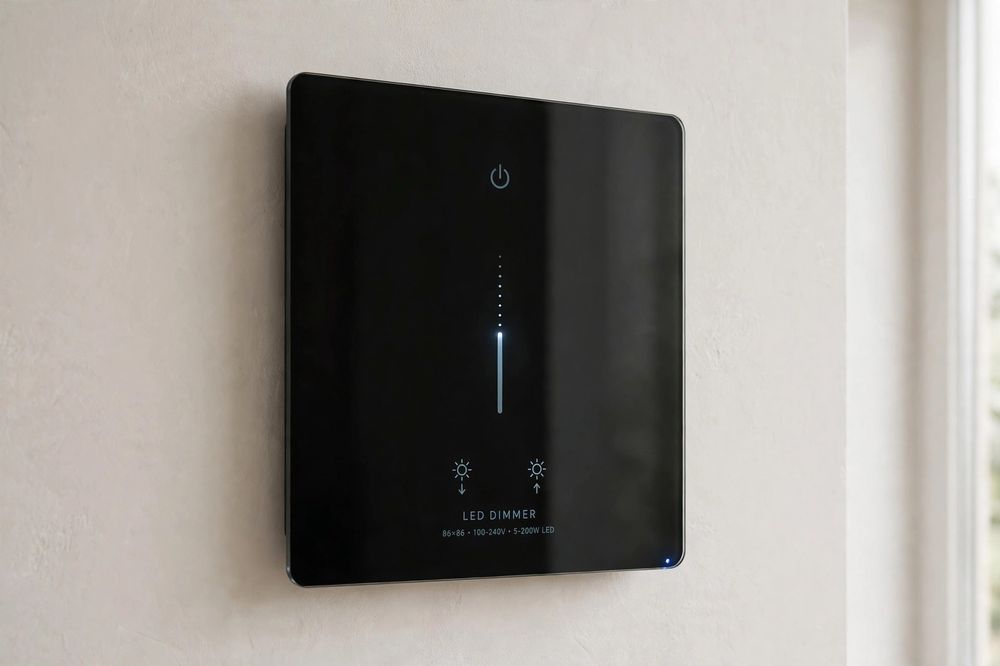
Wall Touch Panel & Rotary Dimmer
What it is: a fixed wall control in the standard switch size — sleek glass touch panels or a traditional rotary knob — paired with a dimmable driver.
Size & capacity: 86×86 mm standard plate; capacity set by the paired driver.
Used for: living rooms, bedrooms, offices — anywhere a proper wall switch feel is wanted.
Quality check: glass quality and touch response show instantly; rotary versions should dim smoothly to low levels without steps or buzz.
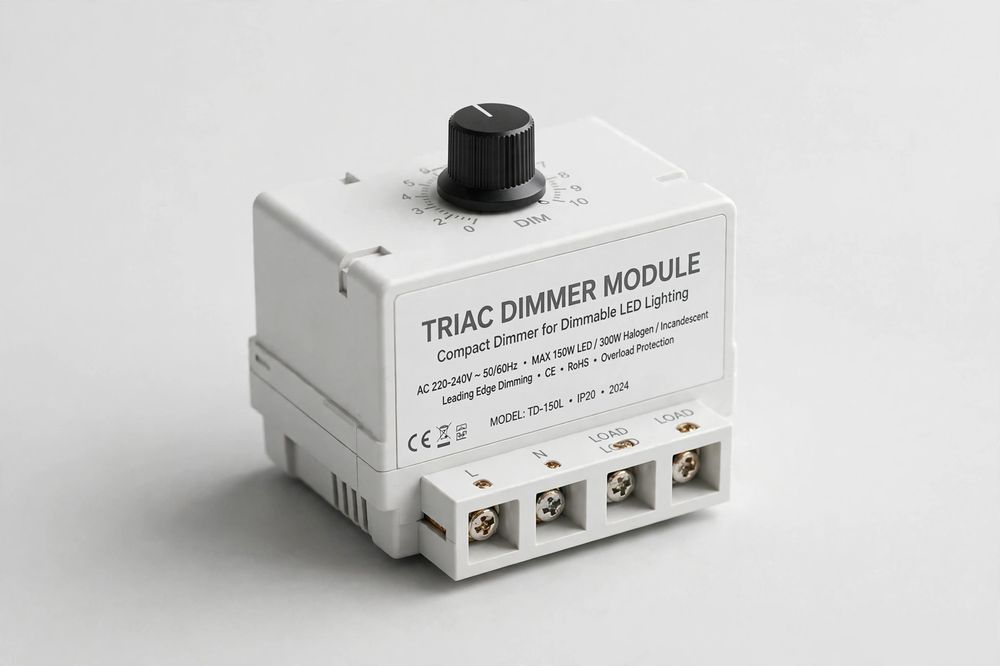
TRIAC Dimmer Module
What it is: an electronic dimming module fitted in the switch box or near the driver, giving classic phase-cut dimming to a TRIAC-dimmable driver from standard wall dimmers.
Size & capacity: compact switch-box module; typically 150–300W.
Used for: homes that want ordinary wall dimmers to control LED profile lighting.
Quality check: module and driver must be a matched pair — a mismatched TRIAC set is the classic cause of flicker and buzzing at low levels.
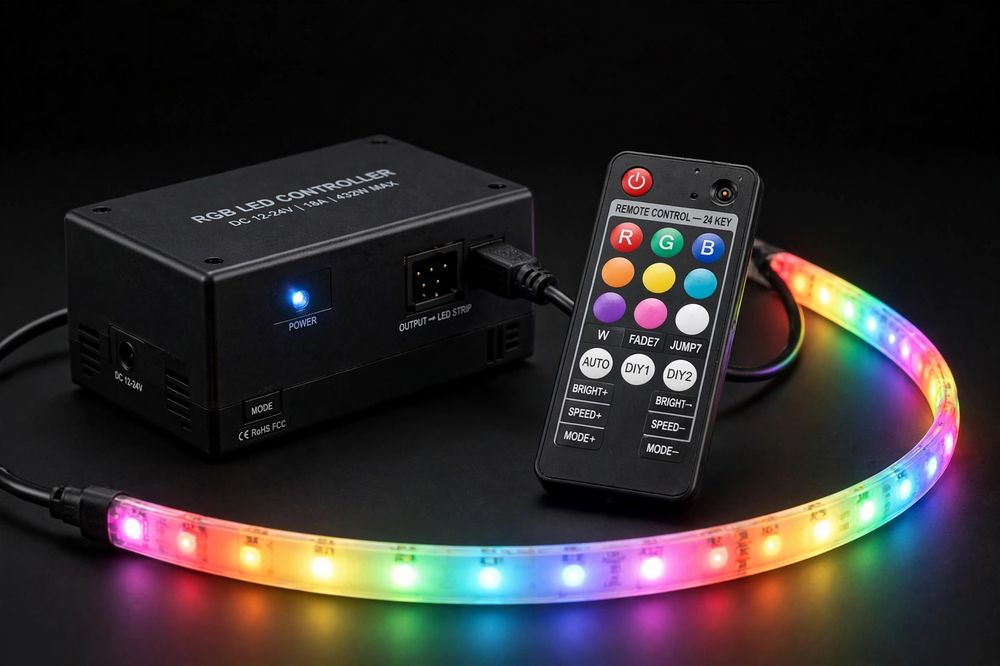
CCT & RGB / RGBW Controllers
What it is: multi-channel controllers for colour work — CCT types sweep warm-to-cool white; RGB/RGBW types mix any colour, with remotes, app control, music-sync and scene modes.
Size & capacity: box about 85×45×25 mm; 4–6A per channel × 3–4 channels.
Used for: TV walls, feature coves, events, signage, kids' rooms.
Quality check: smooth colour fades and accurate whites (RGBW) separate good units from jerky cheap ones; channel ratings must cover the strip load per channel.
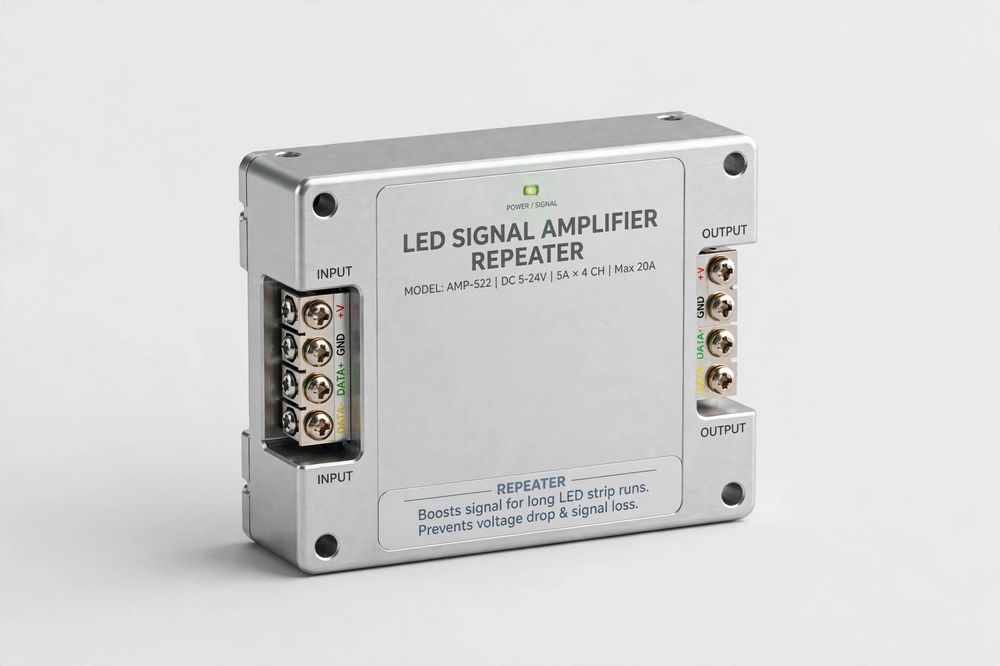
Signal Amplifier / Repeater
What it is: a booster box added along very long runs — it takes the controller's signal and re-powers the next section, so metre 30 matches metre 1 in brightness and colour.
Size & capacity: about 90×50×25 mm; one per added section, powered from its own driver feed.
Used for: long coves, halls, facades, RGB runs beyond one controller's capacity.
Quality check: invisible when correct — if distant sections differ in colour or brightness, the amplifier plan was wrong.
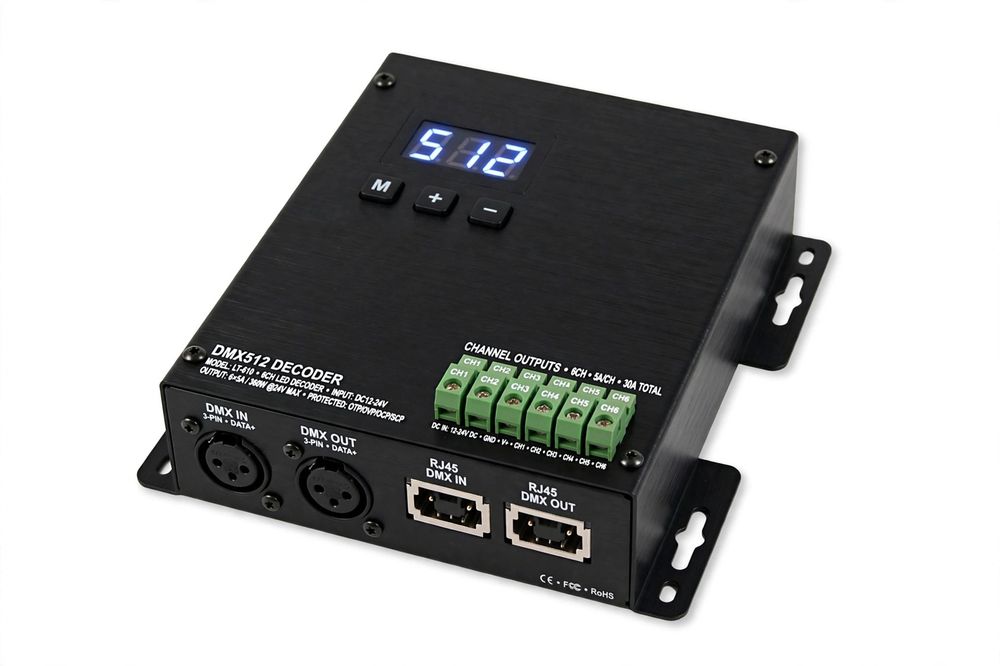
DMX512 Decoder — Professional
What it is: the architectural and stage standard — decoders with digital addressing, driven from a DMX console or architectural controller, for precise programmed scenes across many zones.
Size & capacity: metal units in rack/DIN formats; 3–5 channels per decoder.
Used for: hotels, halls, theatres, building facades, programmed light shows.
Quality check: clean addressing display, solid terminals, and smooth low-end dimming curves for professional fades.
The controller quality rule: total strip watts ÷ voltage = the amps the controller must handle, with headroom to spare. An overloaded controller is the second most common failure we repair — right after undersized drivers.
Diffusers — Getting the Dot-Free Line
- Opal (milky): hides the dots completely and gives the seamless line — costs roughly a third of the brightness, which is why we pair it with brighter strips.
- Frosted: a middle ground — softer light, slight dot visibility up close, less light loss.
- Clear: maximum brightness, dots fully visible — for hidden coves where only reflected light is seen.
- Black: matches black profiles for a clean architectural look when off.
The dot-free rule: use a COB strip, or a 120-LED/m strip in a profile at least 10–12 mm deep with an opal diffuser. In a shallow 7–8 mm profile, even a good SMD strip will show spots through the cover — COB is the correct choice there.
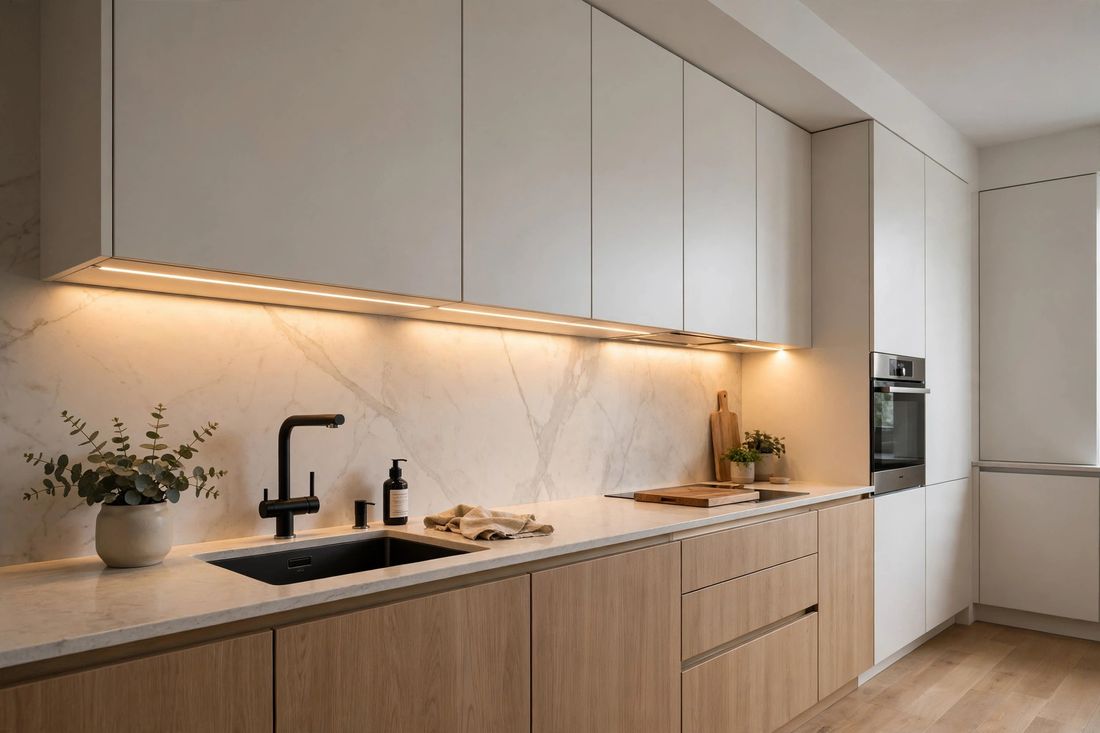
Where Profile Lights Work Best
False-Ceiling Coves
The classic application: a recessed or plaster-in line around the ceiling for soft, indirect, glare-free room light.
TV & Media Walls
Back-lighting and panel lines that make the TV wall the feature of the room and reduce eye strain at night.
Kitchens
Under-cabinet profiles for shadow-free worktops, plus in-cabinet and plinth lighting with door sensors.
Wardrobes & Dressing
Rail and shelf profiles with automatic door sensors — see every colour properly with high-CRI strips.
Staircases
Step-nosing or wall-recessed lines with motion sensors: safe steps at night without switching on the whole house.
Shops & Displays
Shelf and counter profiles, high-CRI cabinet lighting and neon-flex signage that pulls customers' eyes to the product.
Offices
Pendant linear profiles over desks — even, flicker-free light that meets workplace comfort standards.
Bathrooms & Mirrors
IP65 profiles around mirrors and niches, in warm-to-natural white with high CRI for true skin tones.
Outdoor & Facades
220V or IP67 24V lines for building outlines, boundary walls, garden features and gate pillars.
How We Install — Step by Step
Design & Measurement
We measure every run, agree the effect you want (hidden cove glow, visible line, task light), and select the profile, strip voltage, colour temperature and controls to match — with a written quotation before work starts.
Profile Work
Recessed and plaster-in profiles go in at the gypsum/plaster stage; surface and corner profiles can be added any time. Profiles are mitre-cut at corners for a continuous line with no dark gaps.
Strip Fitting & Connections
Strips are cut only at their marked points, soldered (not loose clip connectors) for joints that last, and sealed properly in outdoor work.
Driver & Control Setup
Correctly sized drivers in ventilated, reachable positions; dimmers, remotes and sensors paired and tested; wiring returned neatly to your distribution board with proper protection.
Testing & Handover
Every run is checked end-to-end for even brightness and colour consistency, controls are demonstrated, and we show you how to adjust scenes — warm and dim for the evening, bright and neutral for work.
Quick Choice Guide
| Place | Recommended Combination |
|---|---|
| Living room ceiling cove | Recessed/plaster-in profile · 24V · COB or 120/m · 3000K · dimmable driver |
| Kitchen worktop | Corner 16×16 profile · 24V · 4000K · CRI 90+ · IP65 strip |
| Wardrobe | Slim 17×8 or rail profile · 12V · 4000K · door sensor |
| Staircase | Step profile ≈60×20 · 24V · 3000K · PIR motion sensor |
| Office desks | Pendant 50×35 profile · 24V · 4000K · flicker-free driver |
| Building outline / boundary wall | 220V IP65 strip or neon flex · sealed joints · timer or daylight sensor |
Frequently Asked Questions
Do you only install profile lights?
No — profiles are only one family in our range. We supply and install every type of light: ceiling panels and surface lights, COB spotlights and track lights, wall lights, pendants and chandeliers, flood and street lights, garden and solar lights, and everyday bulbs and tubes — see the 'Every Type of Light' section at the top of this page. Most projects combine several types, and we plan them together so the colour temperature and style match across the whole space.
12V or 24V — which should I choose?
24V for anything longer than about 4–5 metres or for whole-room ceiling work: it stays evenly bright and runs cooler. 12V is fine for short cabinet, wardrobe and showcase runs. We will confirm the right choice at the survey, based on your actual run lengths.
Can profile lights be cut to my exact size?
Yes. Profiles are cut to the millimetre on site, and strips are cut at their marked points (every 5 cm on 12V, 10 cm on 24V, 50 cm–1 m on 220V), so lines fit your ceiling and furniture exactly, corner to corner.
Why can I see dots in my existing profile light?
Usually a low-density strip in a shallow profile with a clear or frosted cover. The fixes are a COB strip, a denser 120/m strip, a deeper profile, or an opal diffuser — we can retrofit most existing installations.
Can profile lights be the only lighting in a room?
Yes, with the right design: wide profiles with double strips (or dedicated linear modules) at 19.2–24 W/m provide full room lighting. Decorative-only designs use lighter strips and are paired with downlights.
Do aluminium profiles get hot?
Warm, not hot — that warmth is the heat sink doing its job, pulling heat out of the LEDs. A quality profile with a correctly sized strip stays touch-safe and is exactly what gives the strip its long life.
Are profile lights safe in bathrooms and outdoors?
Yes, with the correct IP rating: IP65 or higher strips in sealed profiles for wet zones and outdoors, low-voltage (12V/24V) within reach, and 220V only sealed, out of reach and professionally installed.
How much electricity do they use?
Very little. A whole 10 m ceiling cove at 14.4 W/m uses about 144 W — less than two old 100W bulbs — and with dimmers and sensors the real consumption is far lower.
Planning Profile Lighting for Your Space?
Send us your room sizes or photos on WhatsApp — we will recommend the exact profiles, strips and drivers for your space with a transparent, itemised estimate.
Chat on WhatsApp Get an Estimate