Home Appliance Repair
When a home appliance stops working, the whole house feels it — the AC on a hot night, the fridge full of food, the washing machine mid-cycle. Our appliance repair team diagnoses faults at component level, repairs with genuine parts, and tests every unit before handover, so the appliance goes back to work the way it should.
We repair all major home appliances: air conditioners, refrigerators, washing machines, microwave ovens, water dispensers, electric motors and pumps, electric ovens, geysers (electric water heaters) and ceiling fans. From a simple capacitor swap to a full motor rewind or PCB repair, the work is done by trained technicians with proper test equipment — no guesswork, no temporary fixes.
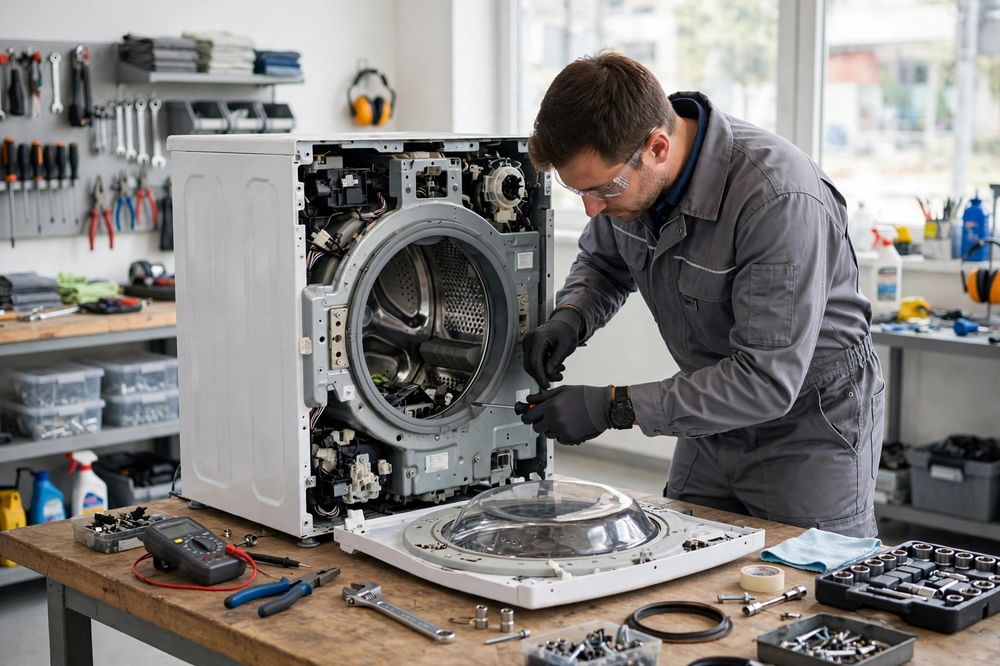
Appliances We Repair — Common Faults & What We Do
Every appliance below is shown the same way: its own picture beside its own detail — the faults we see most often, and exactly what we do about them.
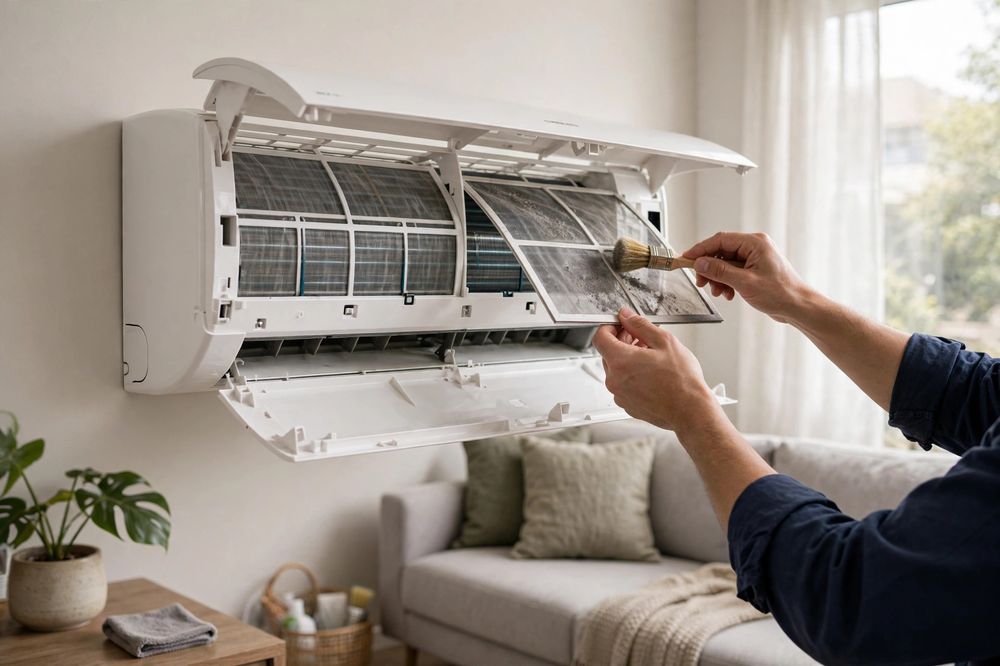
Split Air Conditioner
Common faults:
- Weak or no cooling — choked filters and coils, low refrigerant, or a tired compressor reduce cooling long before the unit fails completely.
- Gas (refrigerant) leak — leaks at flare joints, valves or the coil slowly drain the charge; the unit runs longer, cools less and ices up.
- PCB faults — the indoor or outdoor control board fails from voltage surges, moisture or burnt relays; the unit may not start, or starts and trips.
- Fan problems — indoor blower or outdoor fan motor failure causes noise, weak airflow or overheating trips.
What we do: full diagnosis first — pressures, current draw, error codes and board checks — then leak repair and recharging, PCB repair or replacement, fan motor repair, and a complete general service so the unit leaves cooling at full capacity.
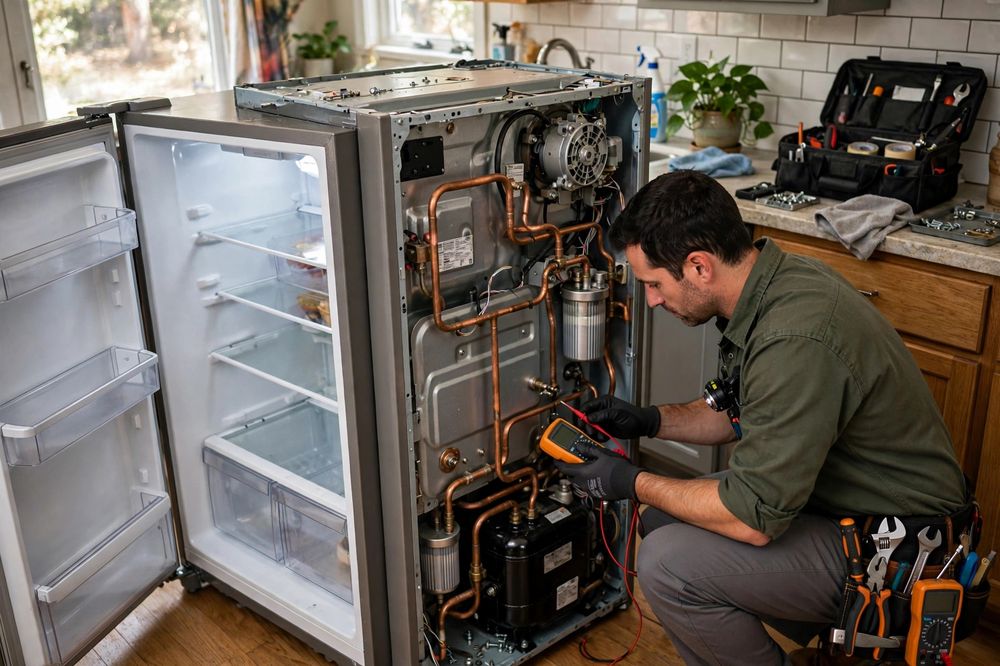
Refrigerator & Freezer
Common faults:
- Not cooling — the cabinet stays warm while the compressor runs, or the freezer cools but the fridge section does not.
- Compressor failure — the compressor does not start, clicks off on its overload, or runs with a weak pumping capacity.
- Thermostat faults — a faulty thermostat or sensor makes the fridge over-freeze everything or never get cold enough.
- Gas (refrigerant) shortage — a slow leak or a blocked capillary/filter drier starves the evaporator; the frost pattern tells the story.
What we do: compressor testing and replacement, thermostat and sensor replacement, leak detection, system flushing, filter drier replacement, vacuum and accurate recharging — then a temperature test run before handover.
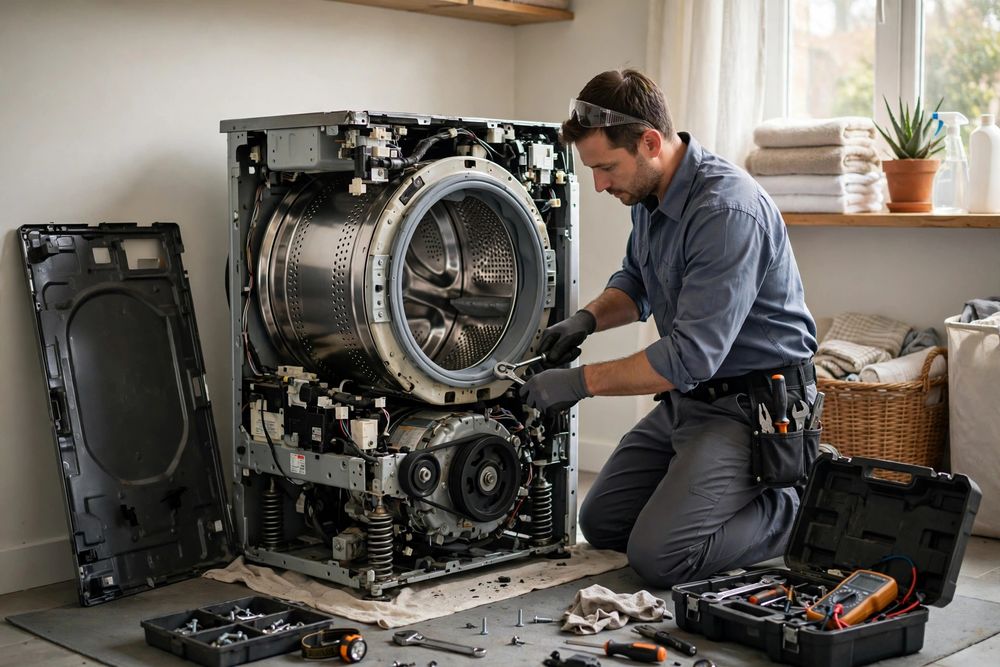
Washing Machine
Common faults:
- Not spinning or draining — a failed drain pump, worn belt, faulty lid switch or motor problem stops the cycle mid-way.
- Drum noise — grinding or rumbling during spin usually means worn drum bearings or a loose pulley.
- Motor faults — burnt windings, worn carbon brushes (universal motors) or a failed inverter drive stop the drum completely.
- PCB faults — the control board fails from moisture and surges: dead display, random cycles or error codes.
What we do: pump, belt and bearing replacement, motor repair or rewinding, inverter/PCB repair, and a full test wash cycle to confirm spin, drain and balance before the machine goes back.
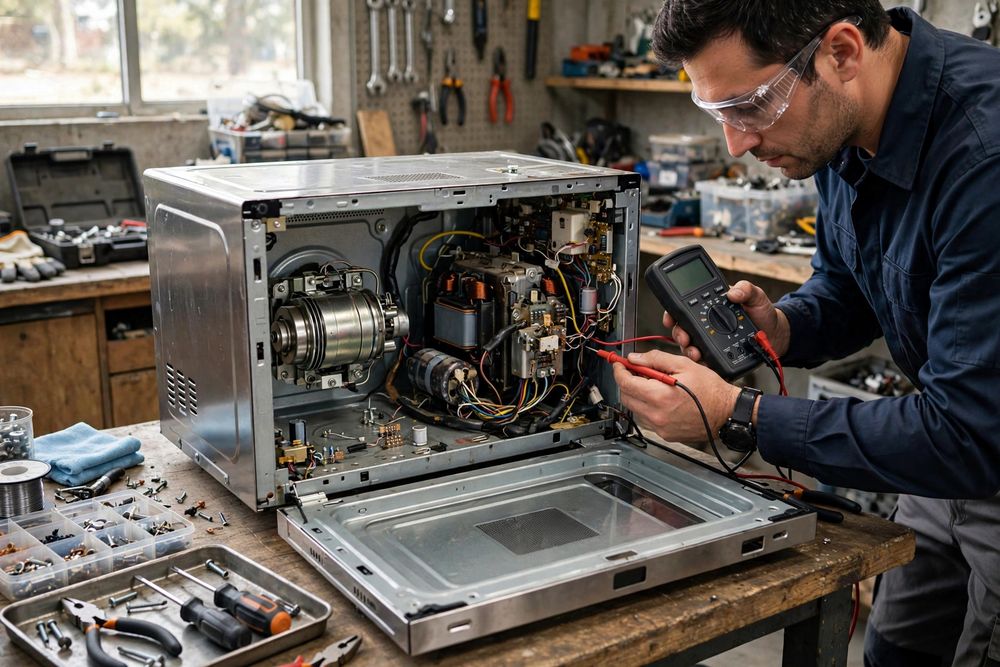
Microwave Oven
Common faults:
- Not heating — food rotates and the light works, but nothing gets hot: the classic sign of a failed magnetron, high-voltage diode or capacitor.
- Turntable not rotating — a worn plate (turntable) motor or cracked coupler stops the plate, causing uneven cooking.
- Sparking inside — a burnt mica wave-guide cover or damaged cavity paint arcs during cooking.
- Dead or erratic controls — touch panel or PCB faults make keys unresponsive or the oven start on its own.
What we do: high-voltage section testing and magnetron replacement, diode/capacitor/fuse replacement, turntable motor replacement, mica cover renewal and control board repair — followed by a heating test with a measured water load.
Safety: high-voltage work is done only by our technicians — a microwave capacitor can hold a dangerous charge even when unplugged.
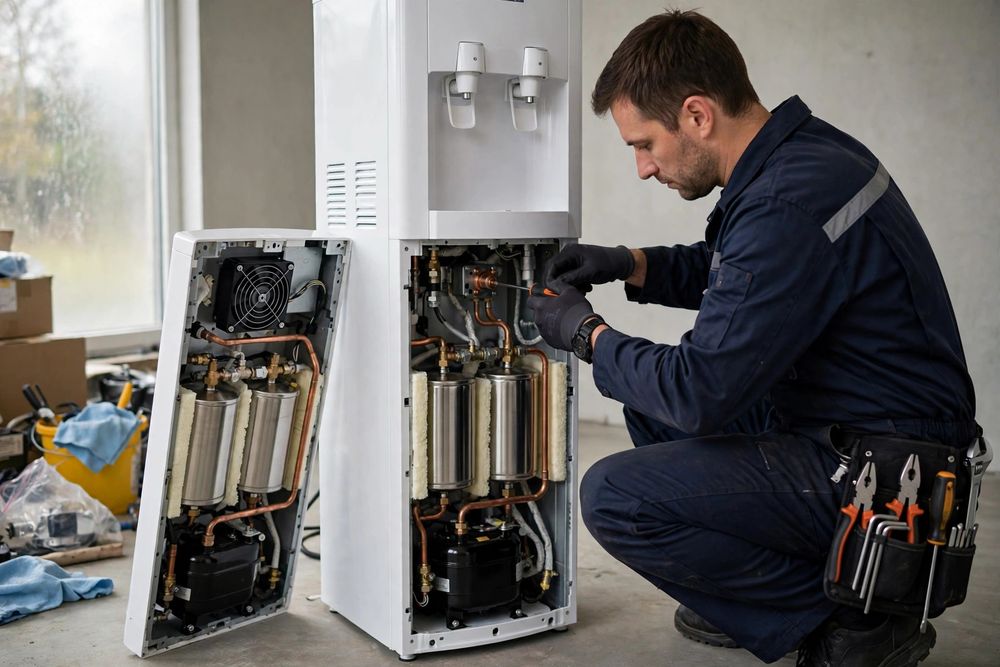
Water Dispenser
Common faults:
- Not cooling — the compressor or its relay fails, or the refrigerant charge is low; water stays at room temperature.
- Not heating — a burnt heating element or failed thermostat leaves the hot side cold.
- Leaks — cracked tanks, worn taps, loose bottle necks or split internal pipes drip into the base or onto the floor.
- Bad taste or slow flow — scaled tanks and clogged lines reduce flow and affect taste.
What we do: compressor and relay repair, element and thermostat replacement, tank and tap resealing or replacement, full internal descaling and sanitising, and a hot/cold temperature check at handover.
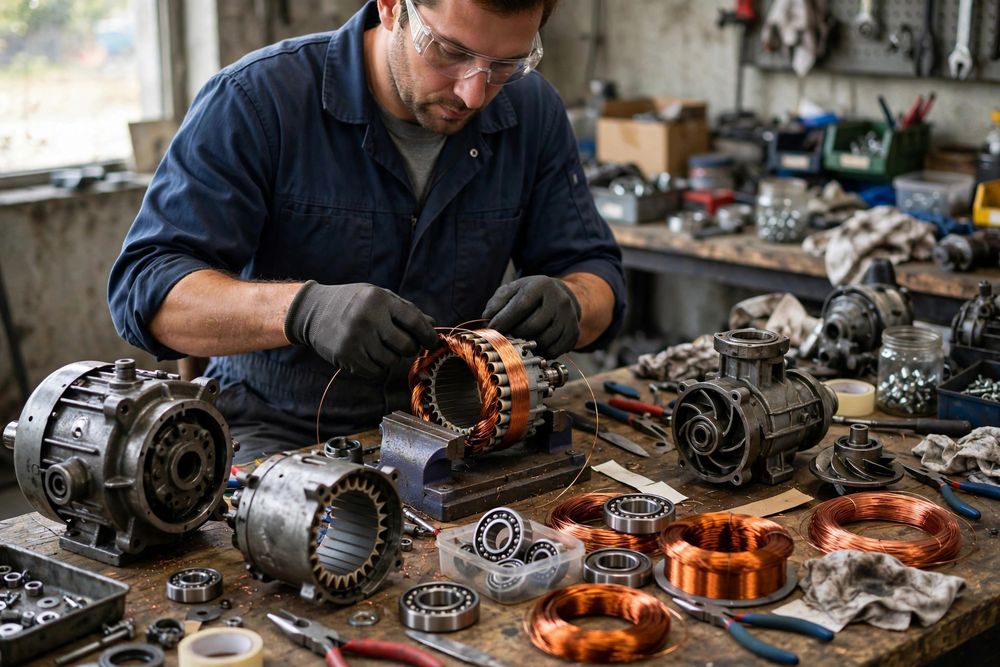
Electric Motors & Water Pumps
Common faults:
- Burnt winding — overload, voltage fluctuation or a seized bearing overheats the winding until the insulation fails.
- Bearing failure — dry or worn bearings make the motor noisy, slow to start and hot; left alone, they burn the winding.
- Won't start / hums — a failed starting capacitor, centrifugal switch or open winding leaves the motor humming without turning.
- Low pressure / no delivery (pumps) — worn impellers, seals or a weak motor reduce water flow.
What we do: complete motor rewinding with quality copper wire and proper insulation class, bearing and capacitor replacement, shaft and impeller repair, seal replacement, and a load test with current-draw measurement before delivery.
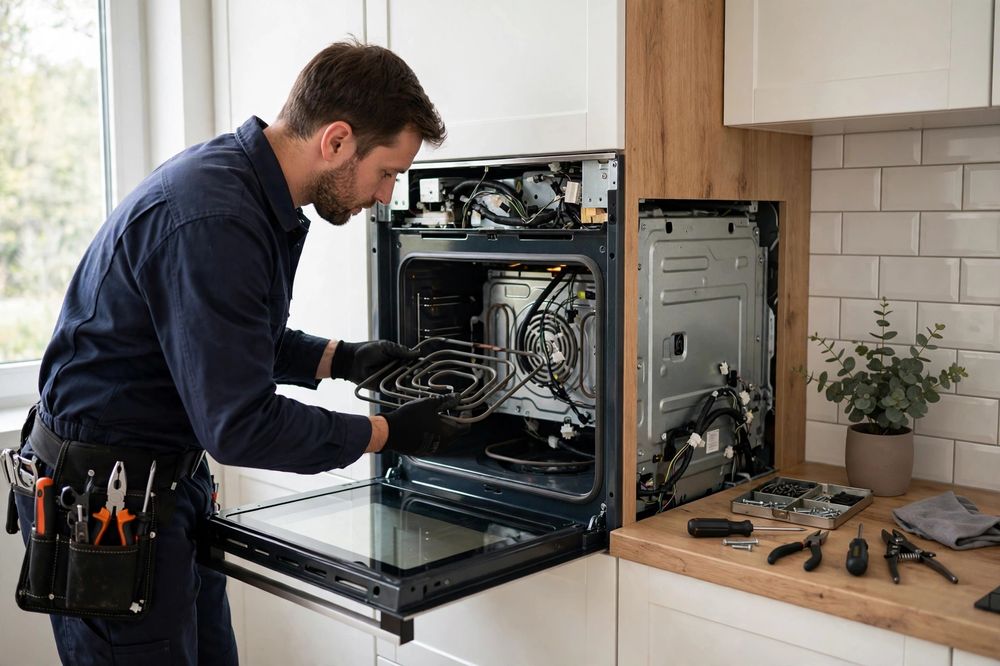
Electric Oven & Cooker
Common faults:
- Heating element failure — the most common fault of all: the element burns out, and the oven simply stops heating.
- Thermostat faults — a failed thermostat causes overheating, no heating, or constant tripping of the safety cut-out.
- Uneven cooking — one element (top, bottom or fan element) fails, so food cooks on one side only.
- Tripping the breaker — a leaking or damaged element trips the RCD/MCB as soon as the oven is switched on.
What we do: element testing and replacement with the correct wattage and rating, thermostat and safety cut-out replacement, wiring and terminal renewal, insulation checks (megger test) and a full heat-up test before handover.
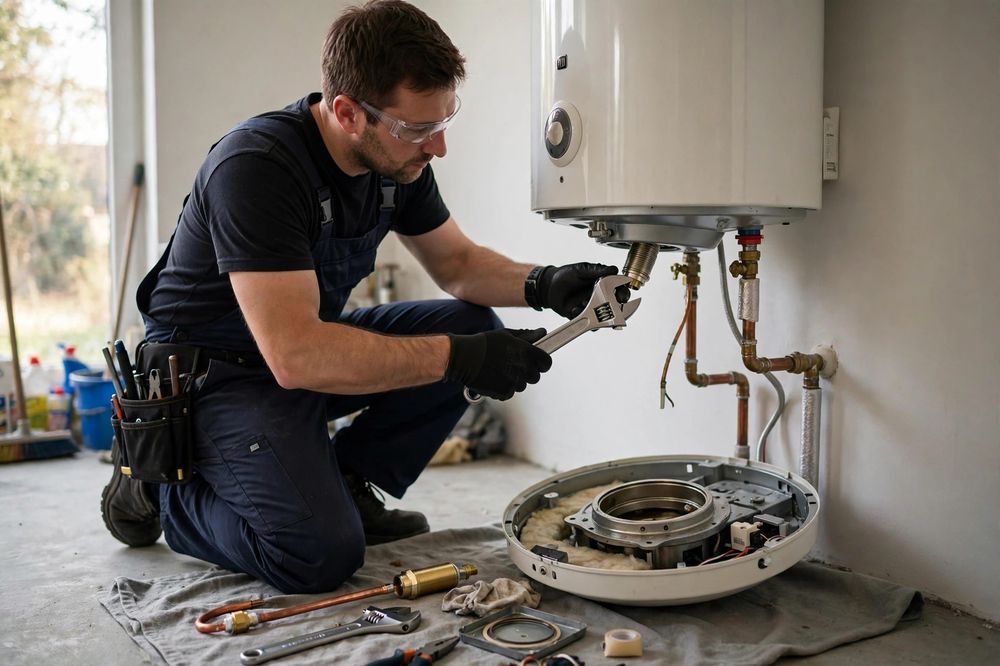
Geyser (Electric Water Heater)
Common faults:
- Heating element failure — the element burns out and the water simply stays cold.
- Thermostat faults — overheating, no heating, or the safety cut-out tripping again and again.
- Tripping the breaker — a leaking element or water ingress trips the RCD/MCB as soon as the geyser is switched on.
What we do: element testing and replacement with the correct wattage and rating, thermostat and safety cut-out replacement, wiring and terminal renewal, insulation checks (megger test) and a full heat-up test before handover.
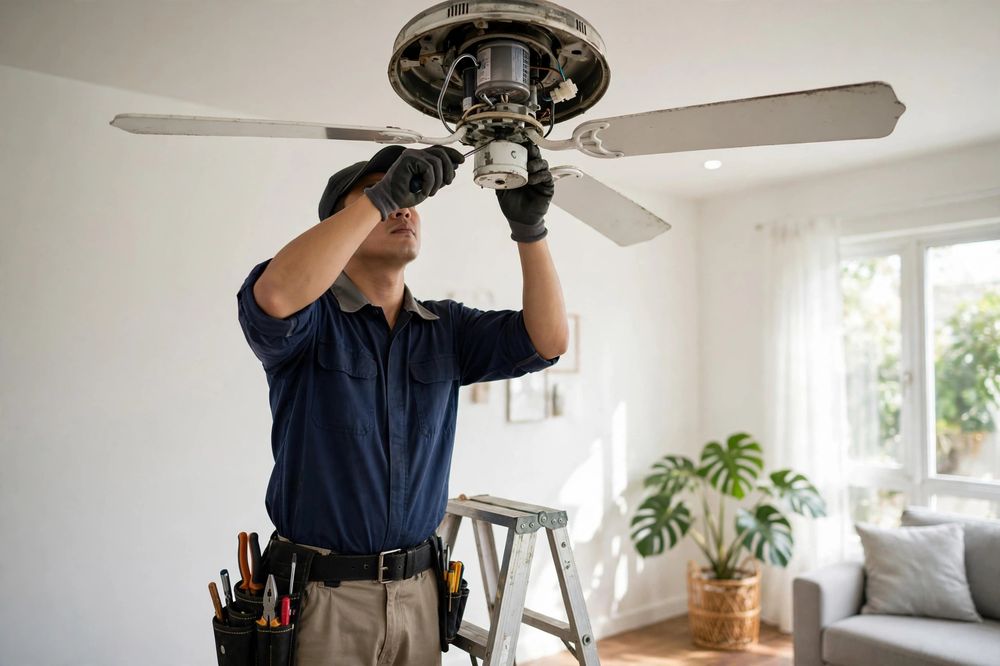
Ceiling Fans
Common faults:
- Slow speed — the classic capacitor fault: the fan runs but never reaches full speed, even on the highest setting.
- Capacitor failure — a dried-out or burst run capacitor makes the fan slow, noisy or unable to start without a push.
- Regulator problems — a faulty regulator gives only one speed, buzzing, or no response at all.
- Noise and wobble — dry bearings, loose blades or a bent blade iron make the fan hum, grind or shake.
What we do: capacitor replacement with the correct µF rating, bearing greasing or replacement, regulator repair/replacement (including electronic and remote-controlled types), blade balancing and a full-speed test on every step of the regulator.
Our Services — Service, Gas, Boards & Rewinding
Beyond fault repair, these are the standing services our workshop provides — each with its picture and what it actually includes.
General Service & Deep Cleaning (AC)
A complete service, not a quick wash: filters, cooling coil and blower cleaned, drain line flushed, outdoor condenser washed, gas pressure and current draw checked, and connections tightened.
A serviced AC cools faster, uses less electricity and lasts longer.
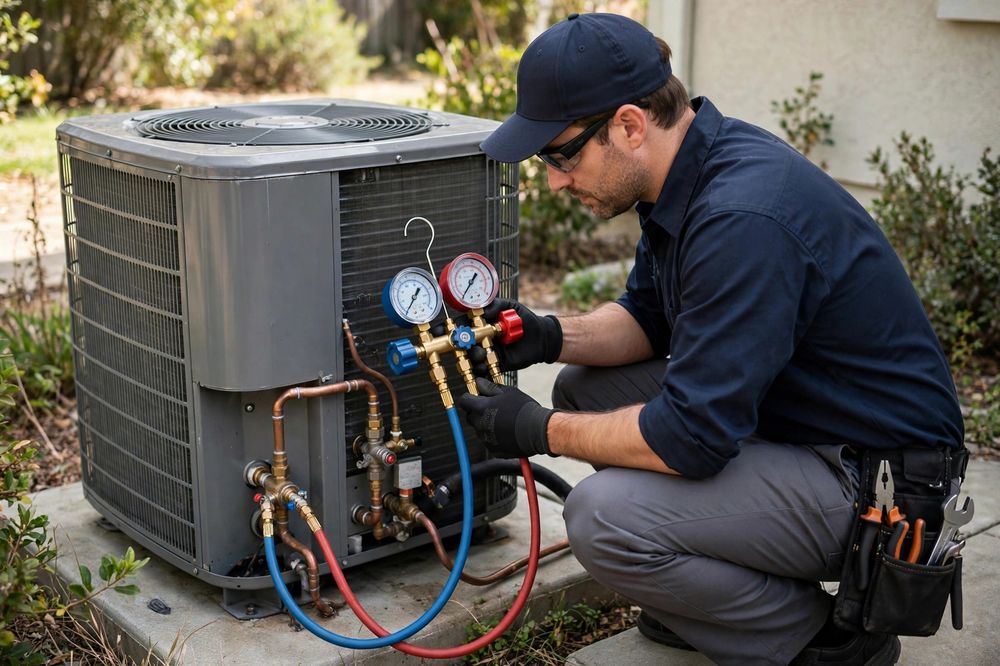
Gas Refilling & Leak Repair
Refrigerant top-up and full recharge for R22, R410a and R32 systems — always after leak detection and repair, never just "gas and go".
The system is vacuumed before charging and the charge is weighed/measured to specification, then pressures and cooling are verified.
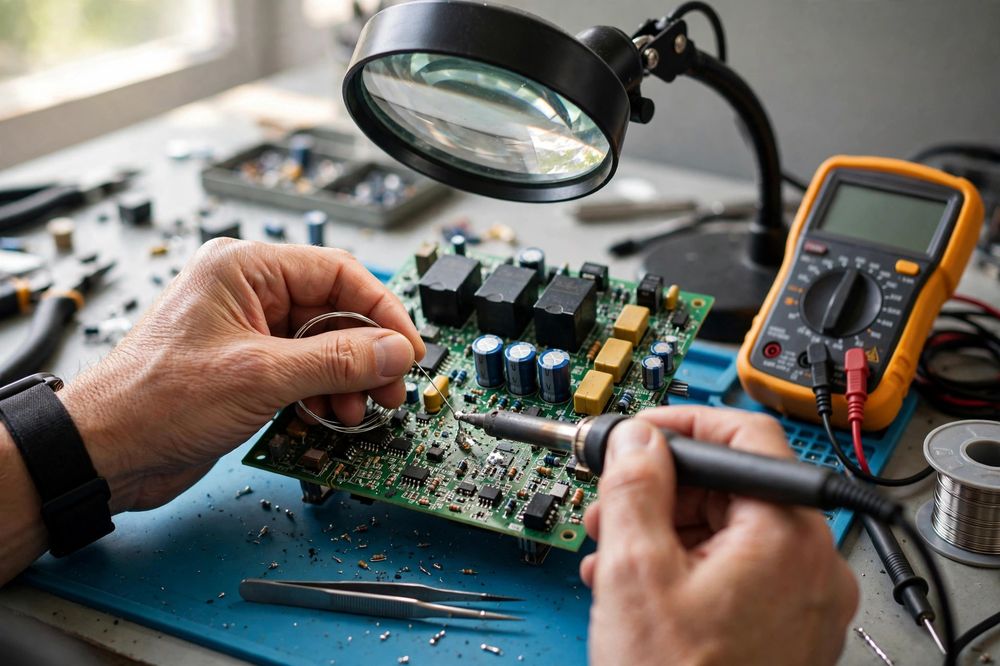
PCB Repair
Component-level repair of appliance control boards — AC indoor/outdoor boards, washing machine and fridge PCBs, microwave control panels.
Burnt relays, failed capacitors, power-supply sections and sensor circuits are repaired and bench-tested, which often saves the cost of a full board replacement.
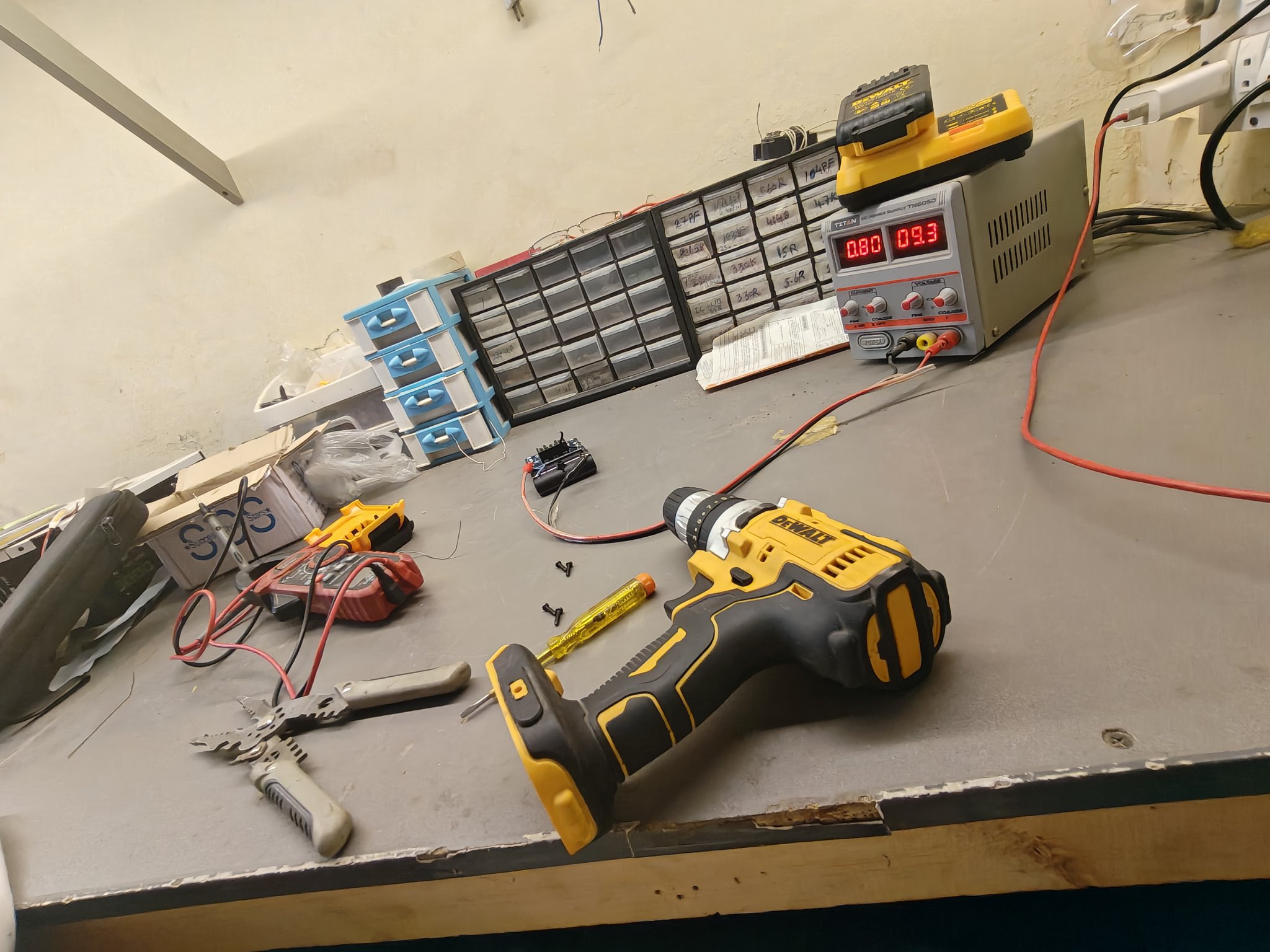
Power Tool Repair
Cordless drills and other power tools repaired on the service bench: motor, switch, chuck and battery faults tested and fixed.
Motor Rewinding
Full and partial rewinding of fan motors, pump motors and appliance motors with quality copper wire, correct insulation and varnish treatment — finished with bearing checks and a load test.
Our Repair Process — 5 Steps
Booking
Tell us the appliance and the symptom (call or WhatsApp). We agree a visit or a workshop drop-off time that suits you.
Inspection & Estimate
The technician tests the appliance, finds the actual fault and gives a clear estimate before any work begins. No repair starts without your approval.
Repair with Genuine Parts
The fault is repaired using genuine or correctly rated parts — the right capacitor value, the right element wattage, the right refrigerant — fitted and wired to standard.
Testing
The appliance is run through a full working cycle: cooling temperatures, spin and drain, heating, pressures and current draw are measured, not assumed.
Handover
You see the appliance working, we explain what was done and how to look after it, and the old parts are handed back to you.
Care Tips — Keep Every Appliance Running Longer
Split AC
Clean the filters every 2–3 weeks in the season; service the unit before summer, not during the first heatwave.
Refrigerator
Keep a small gap behind the fridge for airflow, clean the condenser coils twice a year, and never overload the door shelves.
Washing Machine
Do not overload the drum, leave the door slightly open after washes to prevent odour, and clean the drain filter monthly.
Microwave
Never run it empty, keep the mica cover clean of food splashes, and stop the oven immediately if you see sparks.
Water Dispenser
Sanitise the tanks every few months and replace a cracked bottle at once — a leaking bottle neck is the top cause of dispenser leaks.
Motors & Pumps
Keep motors dry and ventilated; a new noise or vibration is an early warning — early bearing replacement is far cheaper than a rewind.
Oven & Geyser
If the breaker trips when the appliance starts, switch it off and call a technician — repeated resetting damages the element and the wiring.
Ceiling Fans
A fan that has slowed down usually needs a capacitor, not a new fan; run fans on the regulator's top step occasionally to keep the capacitor exercised.
Frequently Asked Questions
Do you check the appliance first and tell me the cost before repairing?
Yes. Every job starts with inspection and a clear estimate. The repair only begins after you approve it — if you decide not to repair, you pay nothing for the repair work that was not done.
My AC is cooling weakly but still runs. Should I get the gas topped up?
Not blindly. Weak cooling is often dirty coils, a choked filter or a slow leak. We check pressures and look for the cause first; gas is only added after any leak is repaired, otherwise the charge is lost again within weeks.
Is PCB repair reliable, or should the board be replaced?
Most board faults are a few failed components — relays, capacitors, power-supply parts — and a proper component-level repair with bench testing is reliable and usually costs far less than a new board. If a board is damaged beyond repair (burnt tracks, water damage across the board), we will tell you honestly and quote a replacement.
My washing machine is very noisy when it spins. What is wrong?
A rumbling or grinding noise on spin is most often worn drum bearings; a knocking noise can be an unbalanced load or a loose pulley. Bearings should be replaced promptly — a collapsed bearing can damage the drum and motor.
The ceiling fan runs slowly on every speed. Do I need a new fan?
Usually not. A fan that is slow on all settings almost always has a failed run capacitor. Replacing it with the correct rating restores full speed at a fraction of the cost of a new fan.
Can a burnt motor really be repaired, or is rewinding a temporary fix?
A proper rewind — correct copper wire, correct turns, proper insulation and varnish — restores a motor to its original performance; it is a standard industrial repair, not a temporary fix. We finish every rewind with a load test and current-draw measurement before delivery.
Appliance Not Working? Get It Fixed Properly
Tell us the appliance and the symptom on WhatsApp — we will inspect it, give you a clear estimate first, and repair it with genuine parts, tested before handover.
Chat on WhatsApp Get a Free Quote