Electrical Wiring
Wiring is the backbone of every building. Done properly, it is invisible for decades — silent, cool and safe. Done badly, it means tripping breakers, burnt terminals, damaged appliances and a real fire risk.
Solar Sync Solution provides complete electrical wiring for homes, shops, offices and small industrial units: brand-new installations, full re-wiring of old buildings, distribution board (DB) installation and upgrades, fault finding and repair, three-phase and commercial work, outdoor and gate wiring, and careful fitting of fancy lights and chandeliers. Every job is planned on a points chart first, wired with the correct cable size for every circuit, protected at the DB, earthed properly, and tested instrument-by-instrument before handover.
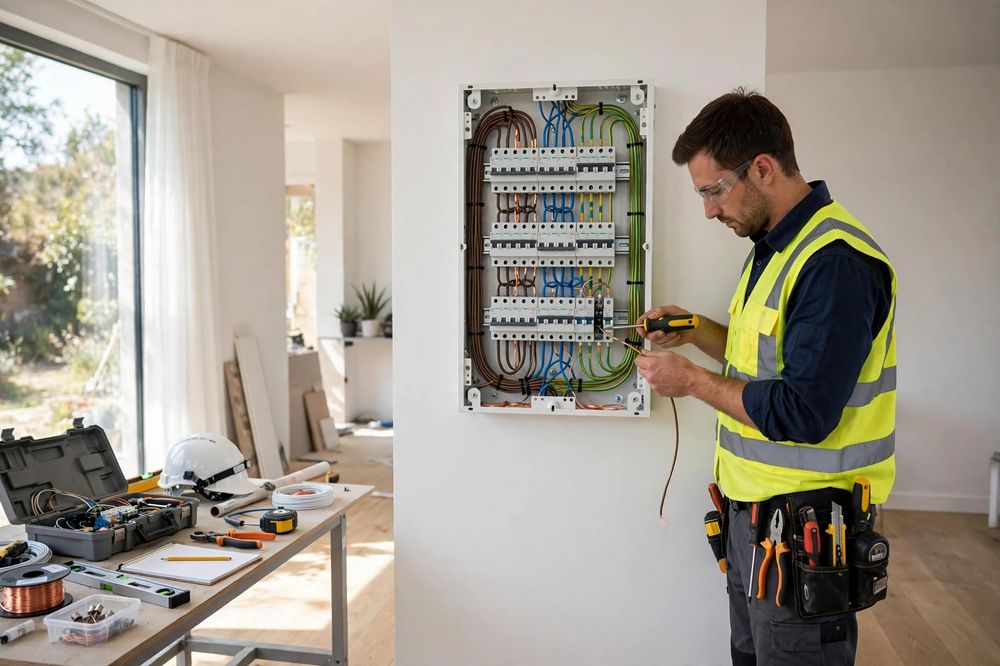
Why it matters: the right cable size, the right breaker and a real earth connection are what stand between a normal day and an electrical accident. We build all three into every job as standard.
Services Covered — Every Service, With Its Picture
Every service below is shown the catalogue way: its own picture beside its own full detail, so you can see exactly what the work involves before you order.
New House Wiring
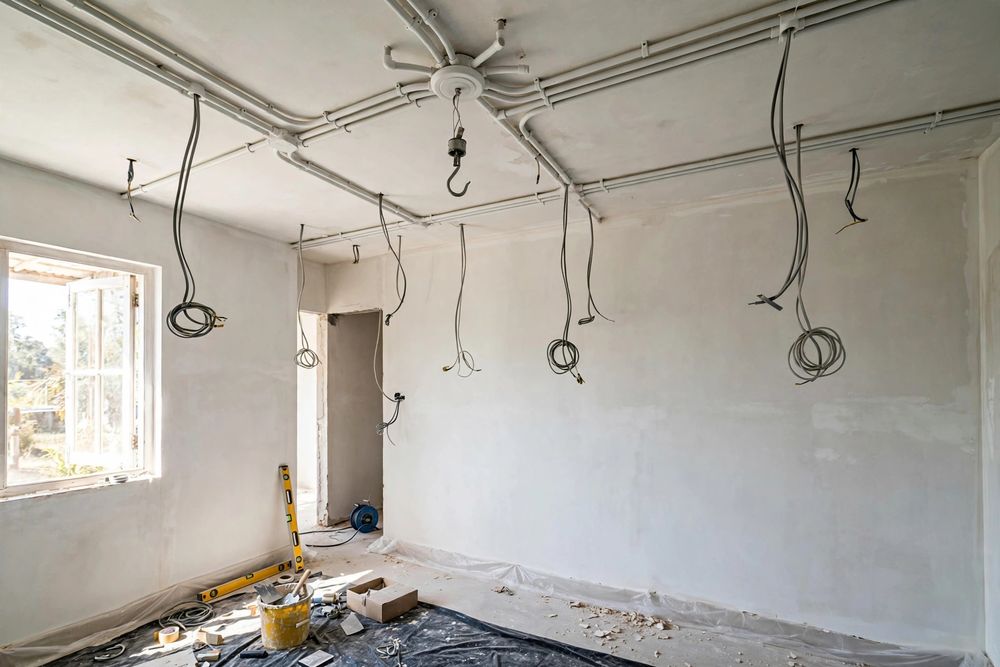
Complete wiring for new homes, planned room by room from a points chart: light points, fan points, socket points, AC points, TV and network points, kitchen and laundry circuits, and a correctly sized DB. Conduit is concealed in walls and slabs, cables are pulled circuit by circuit, and every point is tested before the fittings go on.
Re-Wiring & Renovation Wiring
Old, undersized or damaged wiring is stripped out and replaced with modern cable, new conduit where needed, and a new protected DB. Re-wiring is the right fix for repeated tripping, warm sockets, flickering lights and buildings where the original wiring was never designed for today's load — air conditioners, water heaters, pumps and kitchen appliances.
DB Installation & Upgrade
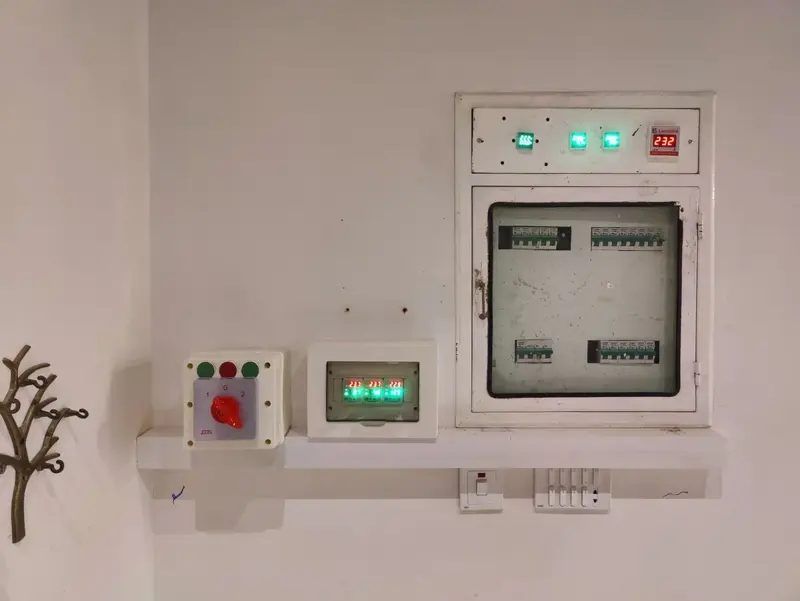
The distribution board is the control and protection centre of the whole building. We install and upgrade DBs with separate breakers per circuit, an RCCB for earth-leakage protection, a surge protector, and — where a generator, UPS or solar system is present — a safe changeover arrangement. Everything is labelled circuit by circuit, and terminals are torqued and checked. (Pictured: an actual installed board from our own work.)

Fault Finding & Repair
Tripping breakers, dead sockets, shocks from appliance bodies, burning smells and half-powered rooms are traced methodically — circuit isolation, insulation testing and thermal checks — until the actual fault is found: a loose terminal, a damaged cable, an overloaded circuit or a failing breaker. The faulty section is repaired or replaced, then re-tested under load.
Commercial & Three-Phase Wiring
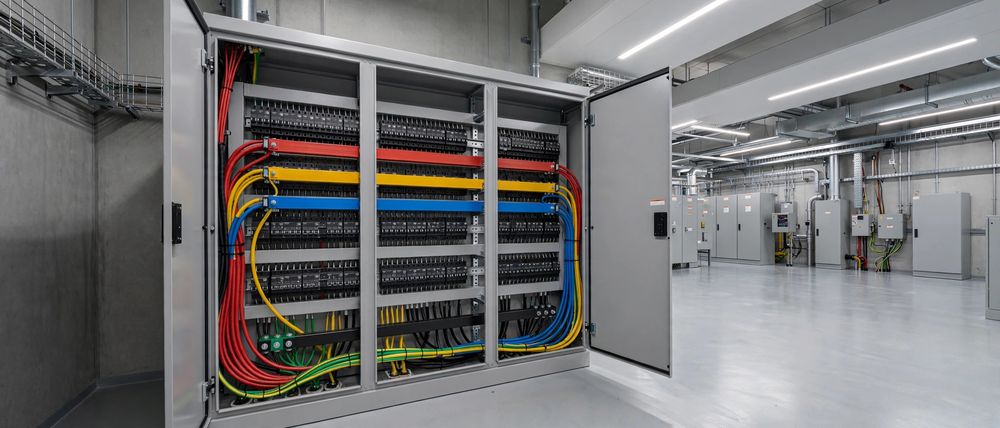
Three-phase installations for shops, workshops, offices and machinery: load balancing across phases, correctly rated moulded-case breakers, busbar chambers, motor and HVAC circuits, and metering. Phase balance matters — an overloaded single phase trips and overheats even when total capacity looks sufficient.
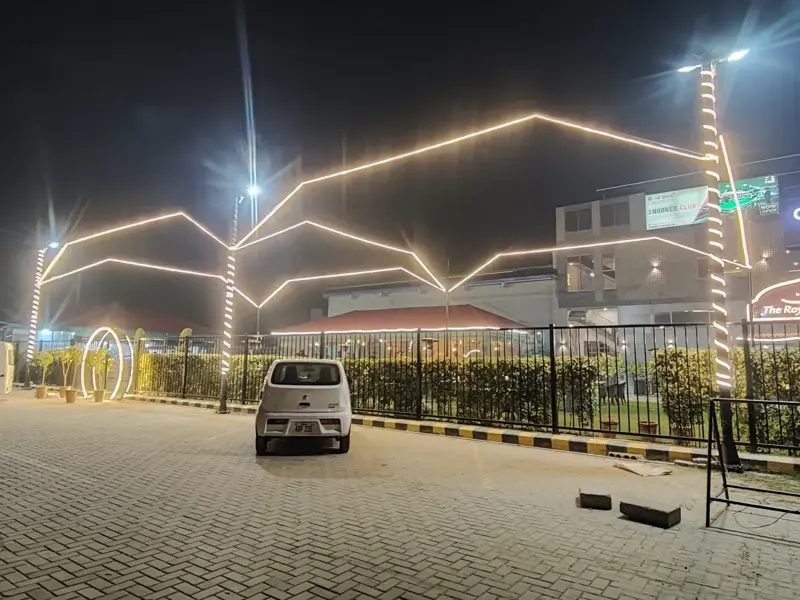
Outdoor, Gate & Boundary Wiring
Garden and driveway lights, gate motors, boundary-wall lighting, outdoor sockets and façade lighting — all wired for weather. Cables run in sealed conduit or armoured cable underground, every outdoor fitting and junction is in a weatherproof (IP-rated) box, and outdoor circuits sit on their own RCCB-protected breaker so a wet fault never blacks out the house. (Pictured: an actual outdoor installation from our own work.)

Fancy Light & Chandelier Fitting
Chandeliers, pendant clusters, wall sconces and heavy decorative fittings, fitted properly: the ceiling hook or bracket is anchored to carry the full weight, the wiring connection is made in a proper ceiling rose or junction, dimmer compatibility is checked, and two-way switching is wired where the room layout needs it. Heavy fittings are never hung from the cable alone.
Point Additions & Extensions
New points added to an existing installation — an extra AC point, a relocated socket, a new fan or light point, a dedicated line for a water heater, pump or oven. New points are wired back to the DB on their own breaker wherever the load justifies it, not tapped into the nearest overloaded circuit.
Cable Size Guide — 1.5 mm² to 16 mm²
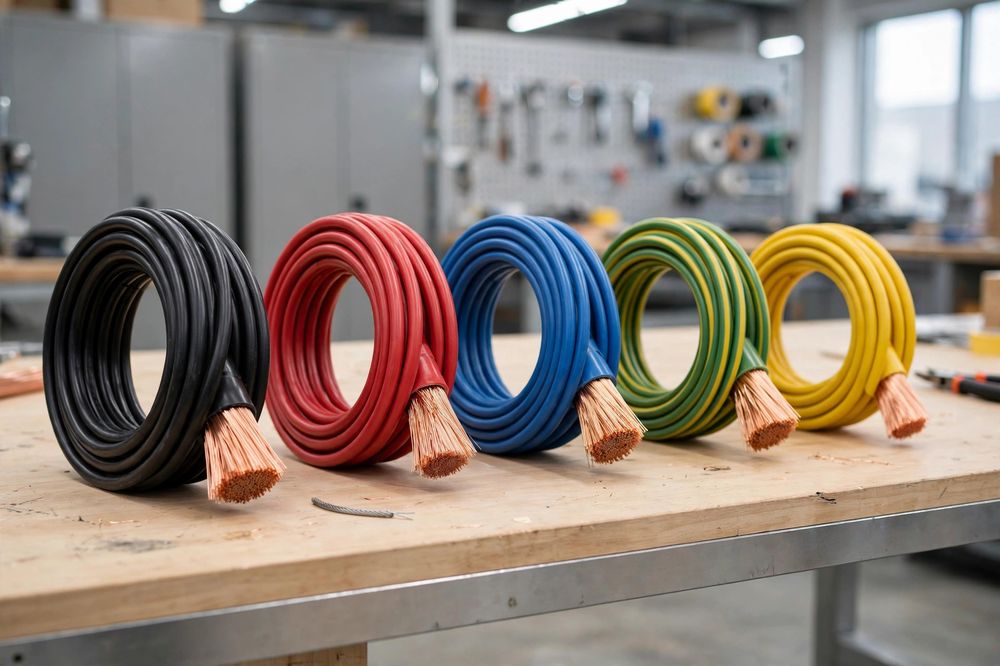
The Right Size for Every Circuit
Cable size is measured by the cross-section of the copper conductor, in mm². The rule never changes: the cable must be rated above the breaker that protects it, and the breaker is chosen for the load. An undersized cable on an oversized breaker is the most common wiring fault we are called in to fix.
| Cable Size | Typical Use | Notes |
|---|---|---|
| 1.5 mm² | Lighting circuits — light points, fan points, LED and profile lighting runs | Standard for lights and fans on a 6–10 A breaker |
| 2.5 mm² | General socket circuits — room sockets, TV points, small appliances | The workhorse socket size, on a 16–20 A breaker |
| 4 mm² | Heavy single loads — air conditioners (up to ~2 ton), water heaters / geysers, washing machines, ovens on a dedicated circuit | One load, one circuit, one breaker |
| 6 mm² | Larger ACs, electric cookers, sub-main feeds to a floor DB or an annex | Also used for longer runs where voltage drop matters |
| 10 mm² | Main incoming line for a typical home — meter to main DB; heavy sub-mains | Sized to the sanctioned load and main breaker |
| 16 mm² | Main line for large homes, three-phase incomers and commercial feeds | Also used where the meter-to-DB run is long |
Practical Notes
- Long runs need bigger cable. Voltage drop grows with distance; a long garden, gate or annex run is stepped up a size so motors and ACs still get full voltage.
- Copper only. We use pure copper cable from reputable makers — undersized "copper-coated" cable overheats at a fraction of its claimed rating.
- Colour discipline. Live, neutral and earth colours are kept consistent through the whole building, so any future electrician can read the wiring safely.
DB & Protection — What Every Device Does
Inside the Board
A good DB is not just a box of switches. Each protection device has one job, and together they cover overload, short circuit, leakage, surge and source changeover.
- MCB (Miniature Circuit Breaker) — protects one circuit against overload and short circuit. If a circuit draws too much current or a live wire touches neutral, the MCB trips in a fraction of a second — before the cable can overheat. Every circuit gets its own MCB, rated below its cable.
- RCCB / RCD (Residual Current Circuit Breaker) — protects people. It continuously compares the current going out with the current coming back; if even 30 mA leaks away — through a faulty appliance or a person's body — it trips instantly. This is the single most important life-safety device in the building.
- ELCB (Earth Leakage Circuit Breaker) — the older generation of leakage protection, found in many existing boards. It works, but it is less sensitive and can miss faults an RCCB catches; when we upgrade a board, an ELCB is replaced with a modern RCCB.
- SPD (Surge Protection Device) — absorbs voltage spikes from lightning and grid switching before they reach appliances, TVs, inverters and electronics. Essential wherever a solar inverter or sensitive equipment is installed; the SPD sacrifices itself instead of your equipment.
- Changeover Switch — safely switches the building's supply between sources — grid, generator, UPS or solar — with a mechanical interlock so two sources can never feed the building at the same time or back-feed each other. Manual and automatic (ATS) versions are fitted depending on the setup.
Board standard we follow: one labelled breaker per circuit, RCCB protection as standard, SPD on the incomer, neat dressed wiring with no loose strands, and a circuit chart fixed inside the door.
Earthing — The Safety Path Into the Ground
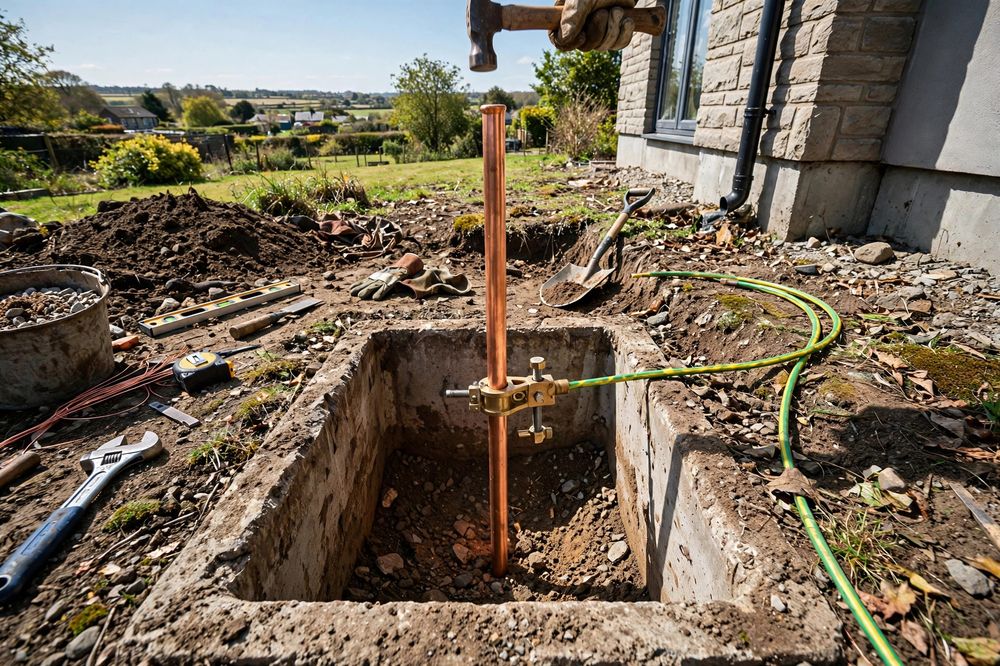
Why Earthing Is Not Optional
Earthing gives fault current a safe path into the ground. Without it, a faulty appliance can leave its metal body live, waiting for someone to touch it — and leakage devices cannot do their job properly either.
Types of Earthing We Install
- Rod earthing — a copper-clad steel rod driven deep into the soil, with the earth wire clamped and protected in an inspection pit. Compact and effective for most homes.
- Plate earthing — a copper or galvanised plate buried vertically in a treated pit, used where soil conditions or load demand a larger contact area.
- Chemical / maintenance-free earthing — an electrode in a backfill compound that holds moisture and keeps resistance low and stable through dry seasons, with no regular watering or salt treatment needed.
- Strip / wire earthing — a buried copper or GI strip, typically used to bond a larger site, a boundary or multiple structures into one earth system.
Why It Matters
- It makes the RCCB trip fast and reliably when a fault occurs.
- It keeps appliance bodies at zero voltage — no tingling shocks from fridges, washing machines or geysers.
- It gives lightning and surge energy (via the SPD) somewhere to go.
- Solar inverters and electronics require a proper earth for warranty and stable operation.
- We measure earth resistance with an earth tester after installation — a number, not a guess — and bond the solar structure, DB and main earth together into one system.
The Wiring Process — 6 Steps
Planning & Points Chart
We walk the building with you and mark every point on a chart: lights, fans, sockets, ACs, appliances, outdoor points. Loads are calculated per circuit, cable sizes and the DB layout are fixed, and you approve the chart before any wall is cut.
Chasing & Conduit
Wall chases are cut cleanly, PVC conduit and boxes are laid and fixed, and slab conduit is placed before concrete where the structure is new. Runs are kept straight, bends are gentle, and no conduit is crushed or kinked.
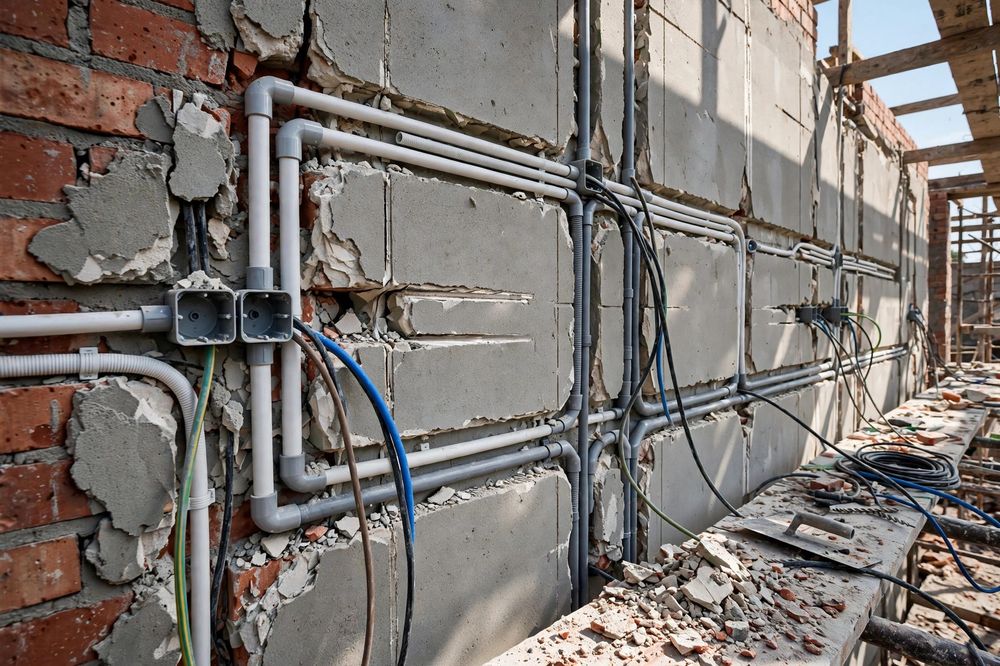
Cable Pulling
Cables are pulled circuit by circuit with the correct size and colours for each run, with spare draw wire left in long conduits. No joints are hidden inside conduit — every joint lives in an accessible box.
DB & Earthing
The distribution board is mounted and dressed, breakers and RCCB/SPD are fitted and labelled, and the earth electrode is installed and its resistance measured.
Fittings
Switch and socket plates, ceiling roses, fan fittings and lights are installed. Plates are fitted level and flush, terminals are tightened and checked, and heavy fittings are anchored to structure, not plaster.

Testing & Handover
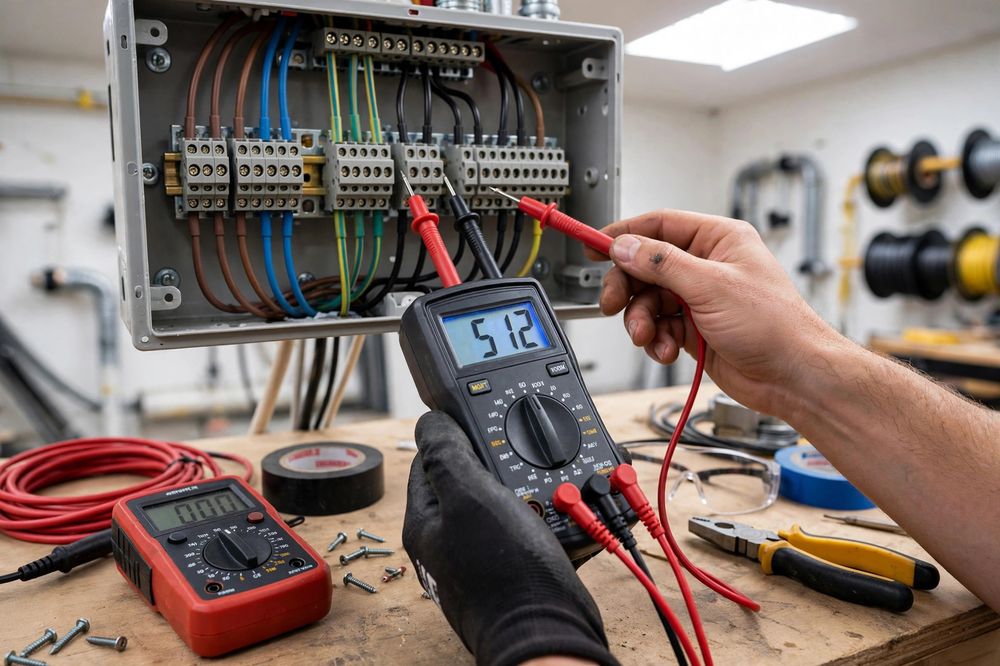
Every circuit is tested with a multimeter and insulation (megger) tester: continuity, polarity, insulation resistance, earth continuity and RCCB trip testing. The board is loaded circuit by circuit, the circuit chart is fixed inside the DB door, and the installation is handed over working.
Safety Rules We Follow
- Power off and proven dead before any existing circuit is opened — tested, not assumed.
- The cable is always rated above its breaker. Protection is matched to the wire, never the other way round.
- No hidden joints. Every splice is in an accessible junction box, made with proper connectors — never twisted-and-taped inside a wall or conduit.
- RCCB protection is standard on every board we install or upgrade, and it is trip-tested before handover.
- Every circuit earthed. Earth continuity is tested at the furthest point of each circuit, not just at the board.
- Colour discipline for live, neutral and earth throughout the building.
- Outdoor work is weatherproof — IP-rated boxes and glands, sealed conduit, drip loops, and a dedicated RCCB-protected outdoor circuit.
- Heavy fittings are anchored — chandeliers and fans hang from structure-rated hooks, never from cable or plasterboard alone.
- No aluminium or undersized "market" cable on our jobs — pure copper, correct gauge, reputable make.
- Boards are left labelled with a circuit chart, so the next person who opens the DB can work safely.
Frequently Asked Questions
How do I know if my house needs complete re-wiring?
Frequent breaker trips, warm or discoloured sockets, flickering lights, a tingling shock from appliances, or wiring that predates your air conditioners and water heaters are all signs. We test insulation resistance and load first — if the existing cable passes and only the board is weak, we will tell you an upgrade is enough.
What cable size should be used for an air conditioner?
A dedicated 4 mm² circuit with its own breaker covers most ACs up to about 2 tons; larger units and long runs step up to 6 mm². The AC should never share a circuit with room sockets.
What is the difference between an MCB and an RCCB — do I need both?
Yes, both. The MCB protects the cable against overload and short circuit; the RCCB protects people against electric shock by detecting tiny leakages the MCB cannot see. They do different jobs and one cannot replace the other.
Why do I get a shock or tingle from my fridge / washing machine?
Almost always a missing or failed earth connection, sometimes combined with a small internal fault in the appliance. It is a warning sign, not a nuisance — the earth should be repaired and the circuit put on RCCB protection, because a bigger fault on an unearthed body can be lethal.
Can you add just one or two new points without re-wiring everything?
Yes. Point additions are routine: we run the new point back to the DB on its own breaker where the load justifies it, or from the nearest suitable circuit for a light point, and test the circuit afterwards.
Do you wire for a future solar system or generator?
Yes — and it is far cheaper to plan it during wiring. We can install the changeover arrangement, reserve DB space and routes for the inverter, and bond the earthing so a solar system, generator or UPS can be added later without opening walls again.
Planning Wiring for Your Home or Building?
Send us your building plan or photos on WhatsApp — we will chart your points, fix the correct cable size for every circuit, and give you a transparent, itemised estimate before any wall is cut.
Chat on WhatsApp Get a Free Quote