Solar Installation
Complete solar power systems for homes & businesses. Turn your rooftop into your own power plant. We design, supply and install complete solar power systems — panels, structure, inverter, batteries and full protection — sized exactly to your roof, your load and your daily routine. Every system is installed by our own team, wired to proper protection standards, and handed over with live monitoring so you can see every unit your system produces.
Whether you want to cut your electricity bill with a grid-connected system, end power-cut worries with battery backup, or run fully independent of the grid, there is a system type built for it — explained below, item by item, with pictures.
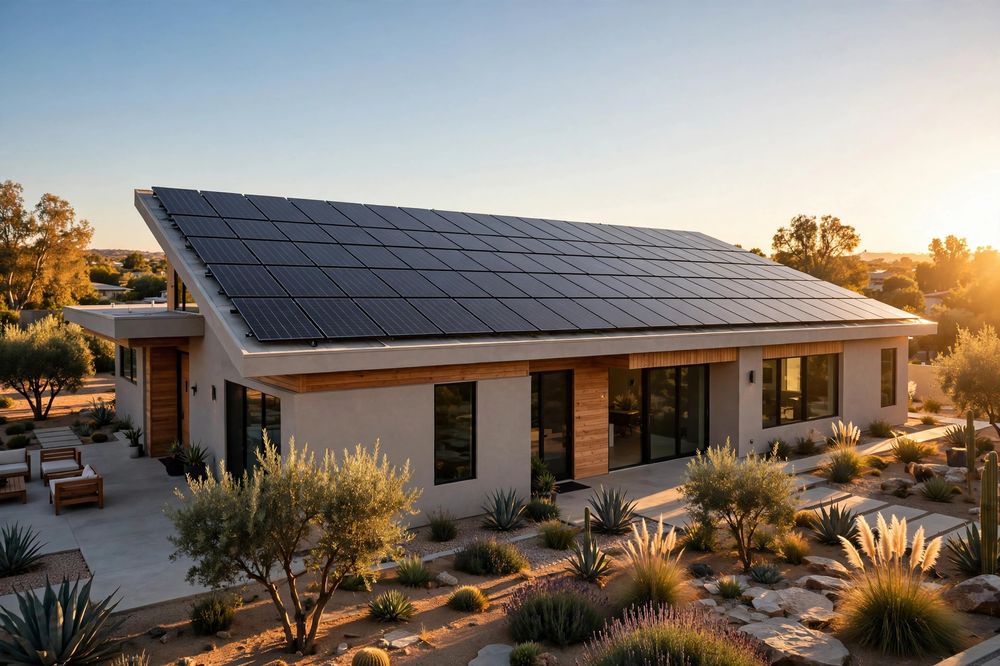
1 kW to 50 kW+
System sizes from 1 kW to 50 kW and above — for single rooms, family homes, offices and industrial rooftops.
Three System Types
On-grid, off-grid and hybrid systems — choose by how you use electricity and how much backup you need.
Net Metering Support
Net metering support included with grid-connected systems, so surplus units are credited on your bill.
Protection Included
Every installation includes protection, earthing and monitoring setup — no unfinished systems.
System Types — Three Ways to Go Solar
Each type works differently. Pick by how you use electricity and how much backup you need.
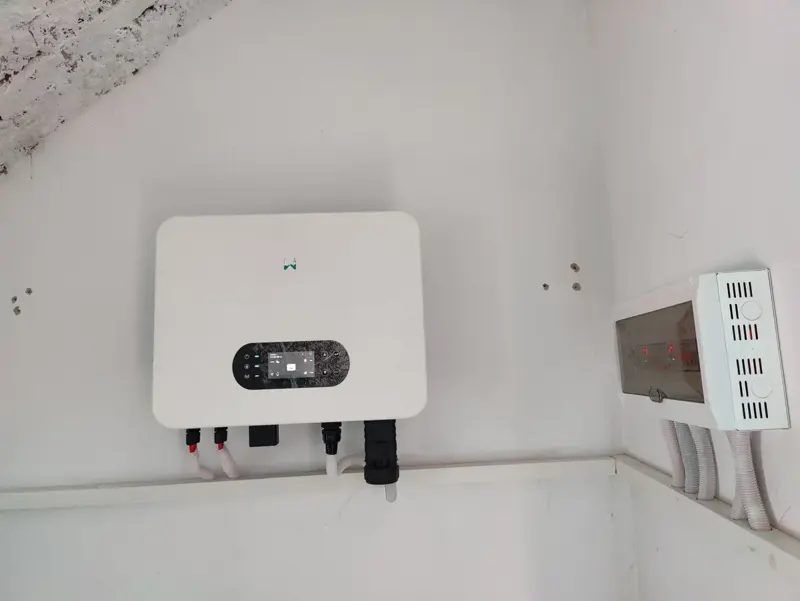
On-Grid (Grid-Tie) System
How it works: the panels generate DC power, the on-grid inverter converts it to AC and feeds your home first. Any extra electricity flows out to the grid through a bidirectional (net) meter, and you draw from the grid at night or on cloudy days. The grid acts like a giant, free battery — no battery bank to buy or maintain.
Best for:
- Homes and businesses with a reliable grid connection that want the lowest possible electricity bill
- Anyone who uses most electricity during the day (offices, shops, schools)
- Maximum savings for the amount invested — fastest payback of all three types
Key parts: Solar panels · on-grid string inverter · mounting structure · DC/AC protection box · bidirectional net meter · earthing kit
Note: for safety, an on-grid inverter switches off automatically when the grid goes down, so this type gives no backup during an outage.
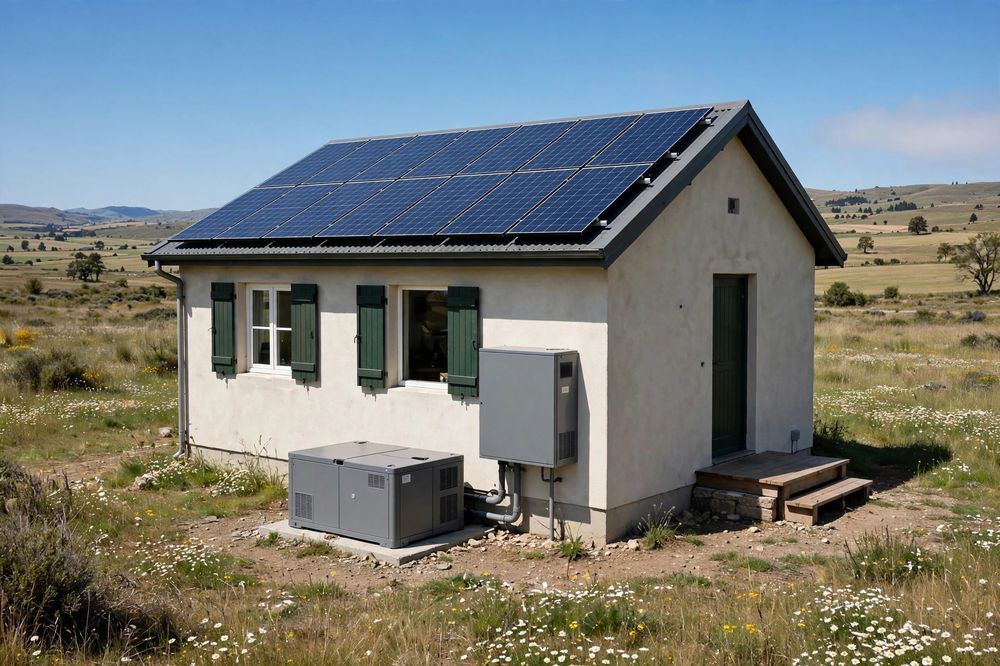
Off-Grid System
How it works: the system runs completely independent of the grid. Panels charge a battery bank through the inverter/charger during the day; your home runs from the panels by day and from the batteries by night. A correctly sized battery bank is the heart of this system — it decides how many hours of backup you get.
Best for:
- Farmhouses, remote homes and sites with no grid connection at all
- Places where the grid is so unreliable that depending on it is not an option
- Cabins, pumps and outbuildings far from the nearest pole
Key parts: Solar panels · off-grid / hybrid inverter with built-in charger · lithium or tubular battery bank · mounting structure · DC/AC protection box · earthing kit
Note: loads must be planned carefully — the system is sized to your daily units, and heavy loads (ACs, motors) need a bigger inverter and bank.
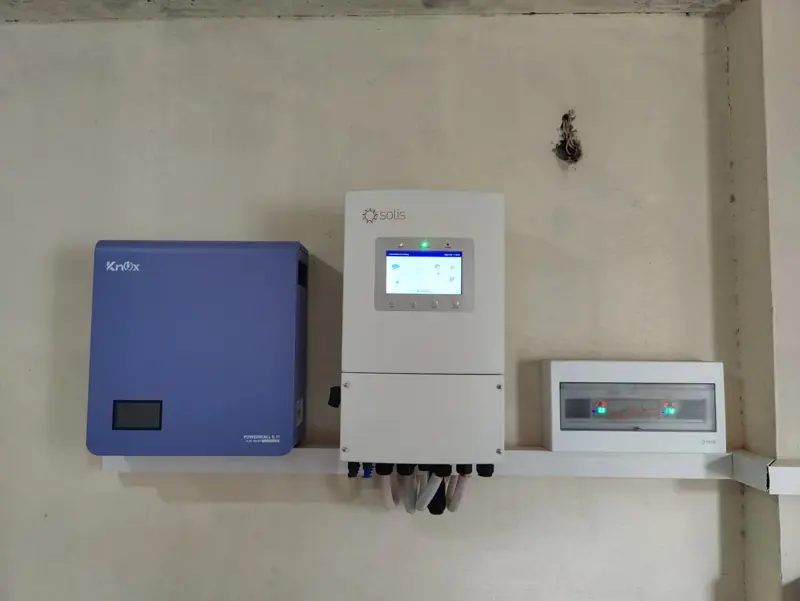
Hybrid System
How it works: the best of both worlds. A hybrid inverter connects to the panels, the grid AND a battery bank at the same time. It runs your home from solar first, charges the batteries with the surplus, exports any extra to the grid (net metering), and switches to battery power automatically the moment the grid fails — no interruption, no manual changeover.
Best for:
- Homes that face regular power cuts and want both bill savings AND backup
- Anyone who wants net metering now, with the option to add or grow batteries later
- Offices and clinics where power cuts interrupt work or equipment
Key parts: Solar panels · hybrid inverter · lithium battery bank (wall-mounted) · mounting structure · DC/AC protection box · bidirectional net meter · earthing kit
System Sizes Guide — Which Size Runs What?
Use this guide as a starting point — the final size is always confirmed after a free load survey, because two homes with the same rooms can use very different amounts of electricity. Generation figures are yearly averages; output is higher in summer, lower in winter.
How to Read This Guide
- "Runs" means the load can operate while the sun is up; on battery (hybrid/off-grid) the same loads depend on battery bank size.
- Air conditioners are the biggest single load in most homes — count your ACs first, then everything else.
- A system one size too small is the most common mistake. If your family or load will grow, we design the structure and wiring so panels can be added later.
| Size | Typical Use | Example Loads It Can Run | Approx. Generation |
|---|---|---|---|
| 1 kW | Studio / 1-room home, small shop counter | 4–5 LED lights, 2–3 fans, 1 LED TV, Wi-Fi router, phone & laptop charging | ~4–5 units/day |
| 2 kW | Small 1–2 bedroom home | All of 1 kW plus a refrigerator, washing machine (daytime) and a water dispenser | ~8–10 units/day |
| 3 kW | 2–3 bedroom home | Lights, fans, fridge, TV, washing machine plus 1 inverter AC (up to 1 ton) in daytime | ~12–15 units/day |
| 5 kW | Medium family home | 2 inverter ACs, fridge + freezer, washing machine, water pump, iron, microwave (short use) | ~20–25 units/day |
| 10 kW | Large home | 3–4 ACs, full-house lighting and fans, double-door fridge, freezer, pump, kitchen appliances | ~40–50 units/day |
| 15 kW | Large home / small office | 5–6 ACs, full home load, office computers, printers and networking equipment | ~60–75 units/day |
| 20 kW | Villa / office / guest house | Multiple ACs across floors, office load, commercial lighting, lifts (small), pumps | ~80–100 units/day |
| 25 kW | Commercial — shops, clinics, schools | Central cooling, commercial lighting, computers, medical/retail equipment, pumps | ~100–125 units/day |
| 50 kW | Industrial / large commercial rooftop | Factory machinery (day shift), warehouse lighting and cooling, large office floors | ~200–250 units/day |
The Larger Sizes — 20 kW to 50 kW and Beyond
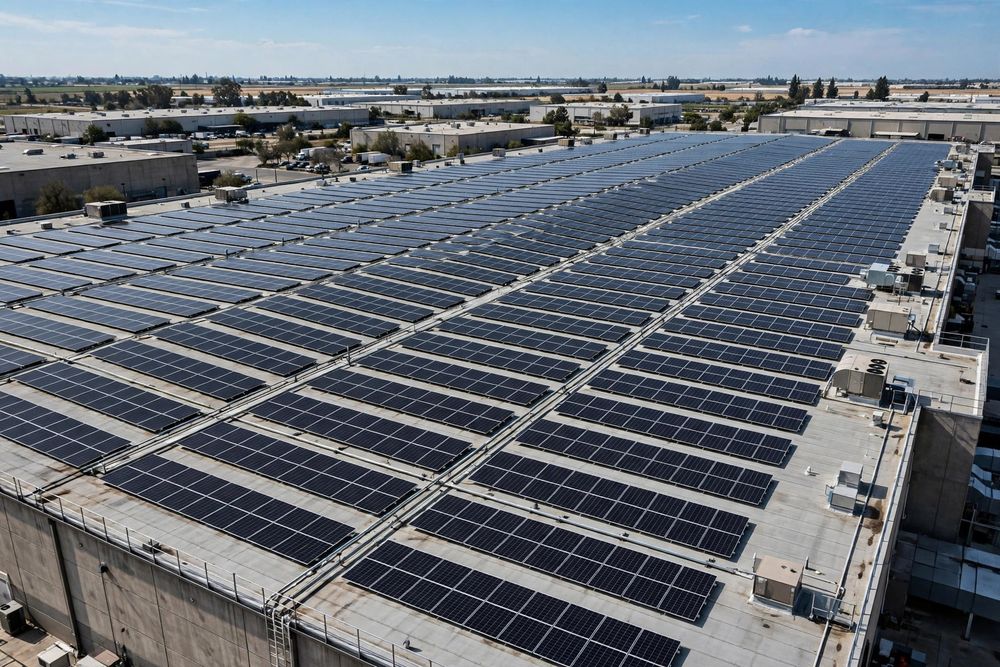
From 20 kW upwards, systems serve villas, offices, guest houses, shops, clinics, schools and industrial rooftops. Arrays are built in strings across the available roof, with three-phase inverters and full protection — the same design discipline as a home system, at commercial scale. Large commercial rooftop arrays run from 20 kW to 50 kW and beyond; the size is set by your daytime load and the roof area available.
Main Components — Item by Item
Every component below is a separate catalogue item: its own picture, its own detail. This is what a complete, properly installed system is made of.
Solar Panels
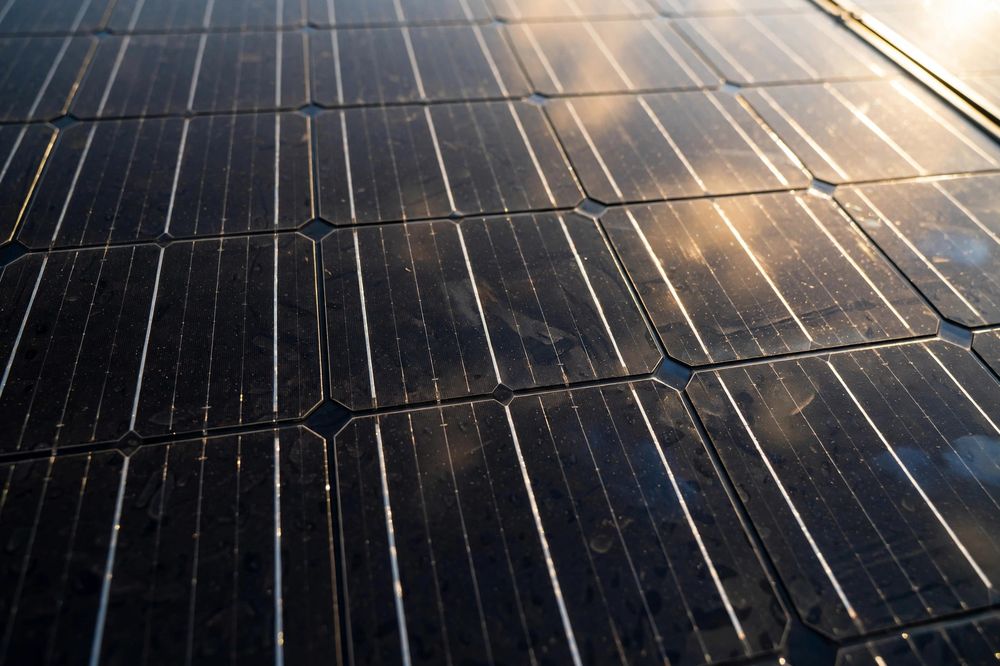
The engine of the system. We install modern monocrystalline panels in 545W to 720W per panel, so fewer panels cover the same roof:
- Mono PERC (545–580W): the proven workhorse — half-cut cells, efficiency around 21%, excellent value for homes.
- TOPCon (580–630W): the newer cell technology — higher efficiency (up to ~22.5%), better performance in heat and low light, slower yearly degradation.
- Bifacial (620–720W): generates from both sides — the rear side catches reflected light from the roof surface, giving extra output on raised structures and light-coloured roofs.
All panels are glass-fronted, aluminium-framed, and rated for hail, wind and high temperatures, with long manufacturer performance warranties (typically 25 years of rated output life).
Inverters
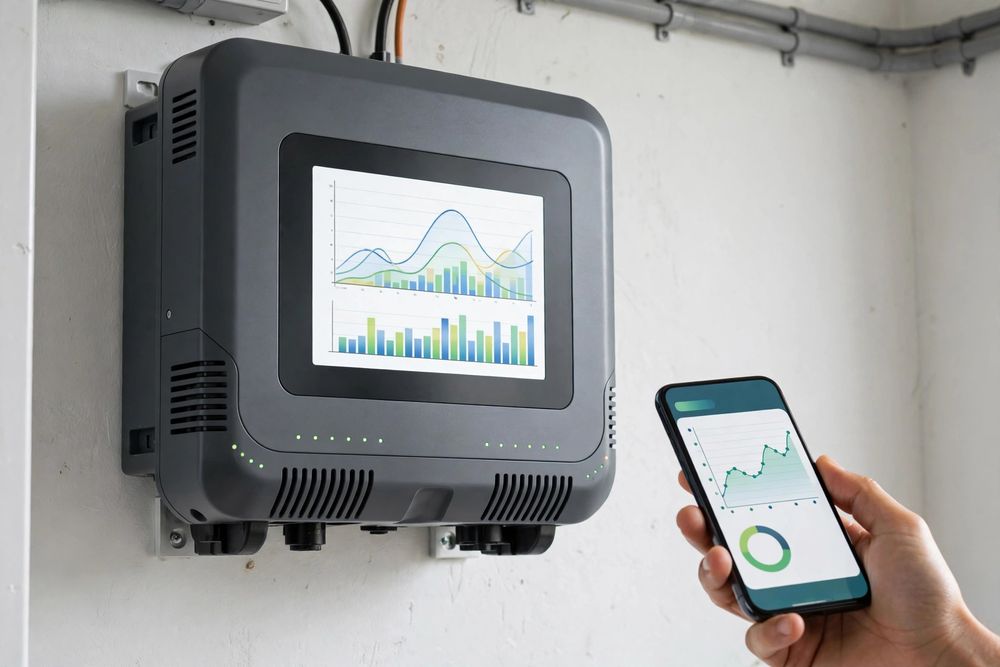
The brain of the system — converts panel DC into home AC and manages everything else:
- On-grid string inverters (3–50 kW): single-phase for homes, three-phase for larger/commercial systems. Dual MPPT trackers so two roof directions can be used at once.
- Hybrid inverters (3–12 kW for homes, larger for commercial): panel + grid + battery in one unit, automatic switchover in milliseconds when the grid fails, programmable charging and backup priorities.
- Fan-less or quiet-fan designs, IP65 weather rating on on-grid models, built-in Wi-Fi monitoring on all current models.
We match the inverter to the panel array size and your future expansion plan — never undersized, because a clipped inverter wastes your panels' power at midday. Live monitoring shows every unit your system makes, on the inverter display and on your phone.
Mounting Structures
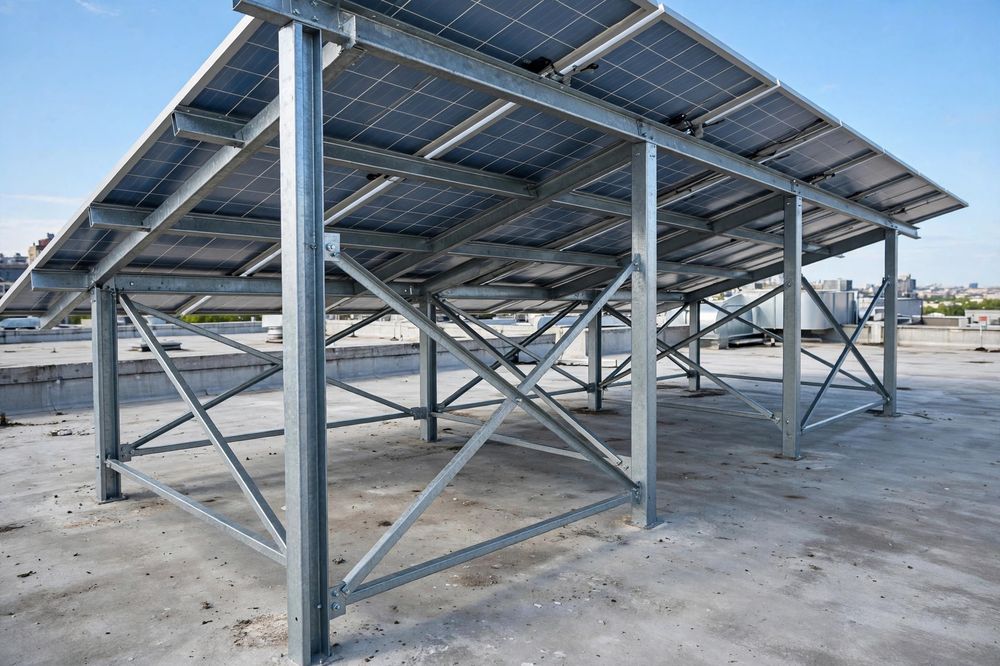
The structure decides how long the system survives storms — and how much of your roof you can still use.
- Standard structure: low-profile rails close to the roof — the cleanest look and the lowest wind load; ideal where the roof is not used for sitting or storage.
- Raised structure: galvanized frame raised above the roof, so the roof underneath stays usable (sitting area, water tank access, drying) and panels get better airflow and cooling.
- Custom structure: built-to-measure frames for sheds, pergolas, uneven roofs and ground mounting.
Material & gauges: hot-dip galvanized iron or anodised aluminium rails; heavy 14-gauge steel for raised and high-wind structures, 16-gauge for standard low-profile frames. Every structure is anchored into the roof slab with chemical or expansion bolts and sealed against leaks — never just weighted down or screwed into sheets. Panel tilt is set for maximum yearly generation at your roof's direction.
Batteries
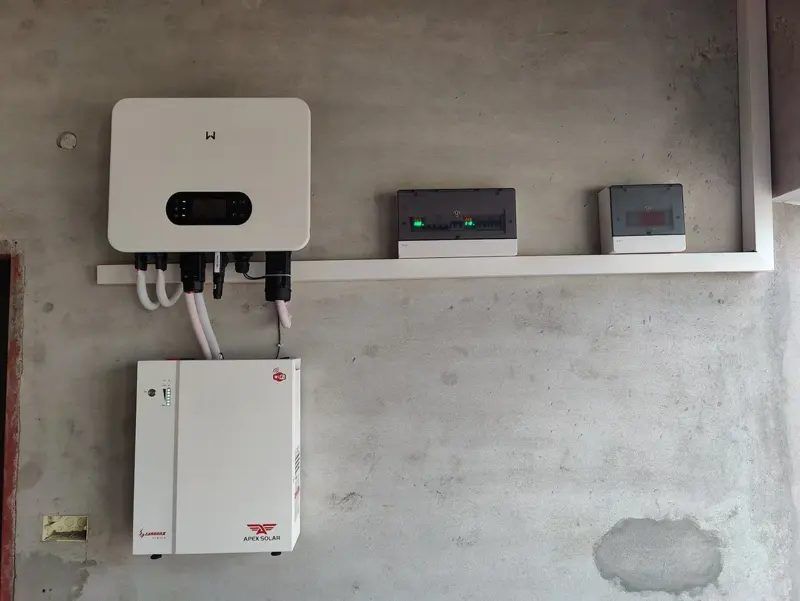
Storage is what turns a solar system into 24-hour power. Needed for hybrid and off-grid systems only.
- Lithium (LiFePO4) 48V wall-mounted — our standard recommendation: slim wall-mounted units in 48V 100Ah (5.12 kWh) per module; stack two or more for 10.24 kWh and above. 6,000+ charge cycles, built-in BMS that talks directly to the hybrid inverter, no water topping, no fumes, charges fast from solar.
- Tubular lead-acid: the budget option for off-grid setups — larger, needs ventilation and periodic distilled-water care, shorter life (typically 3–5 years) but a lower starting cost.
Sizing rule of thumb: essential backup (lights, fans, TV, fridge, Wi-Fi) for a full night ≈ one 5.12 kWh module for a medium home; AC backup needs a larger bank — sized during the survey.
Protection — Breakers, SPD & Earthing
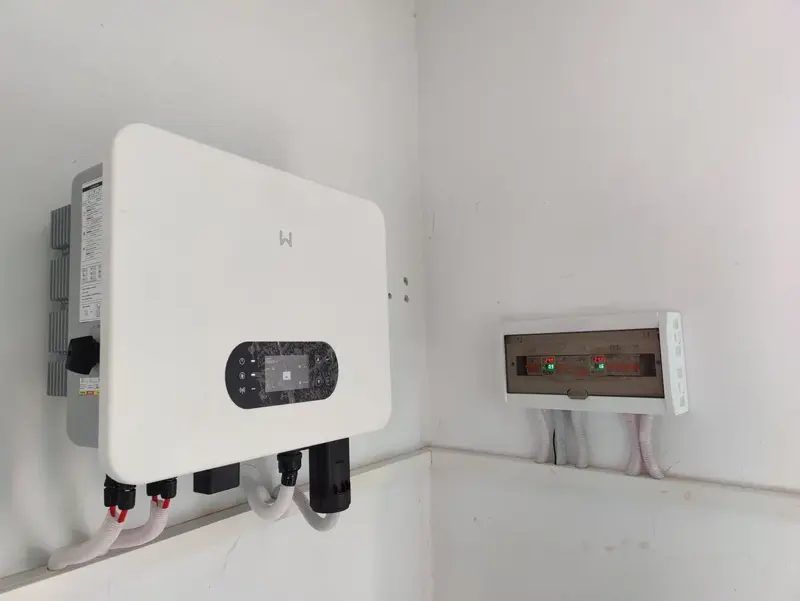
The part cheap installations skip — and the part that decides whether a surge destroys your inverter or not. Every one of our systems includes:
- DC breaker: isolates the panel array from the inverter for safe maintenance and faults.
- DC SPD (surge protection device): absorbs lightning-induced surges travelling down the panel cables — the #1 killer of inverters.
- AC breaker + AC SPD: protects the inverter's grid side and your home wiring from grid surges.
- Earthing: dedicated earth pits — one for the lightning arrester/structure side, one for the electrical side — with proper earth wire run to the protection box and inverter. A lightning arrester is fitted on higher structures.
A system without this box is not finished. Ours always is.
Cables & Wiring
- DC solar cable: 4 mm² / 6 mm² PV-rated, tinned copper, double-insulated and UV-resistant — ordinary wire degrades in sunlight within a few years; solar cable is made for decades on a hot roof.
- AC cable: sized to the inverter output and distance to your main DB — undersized cable means voltage drop and lost units.
- Battery cable: heavy 25/35 mm² flexible cable with crimped lugs, kept as short as possible.
- All outdoor runs go in conduit/trunking, all joints in weatherproof boxes. Neat wiring is not decoration — it is how faults are found fast and rodents and rain stay out.
Net Metering
What It Is
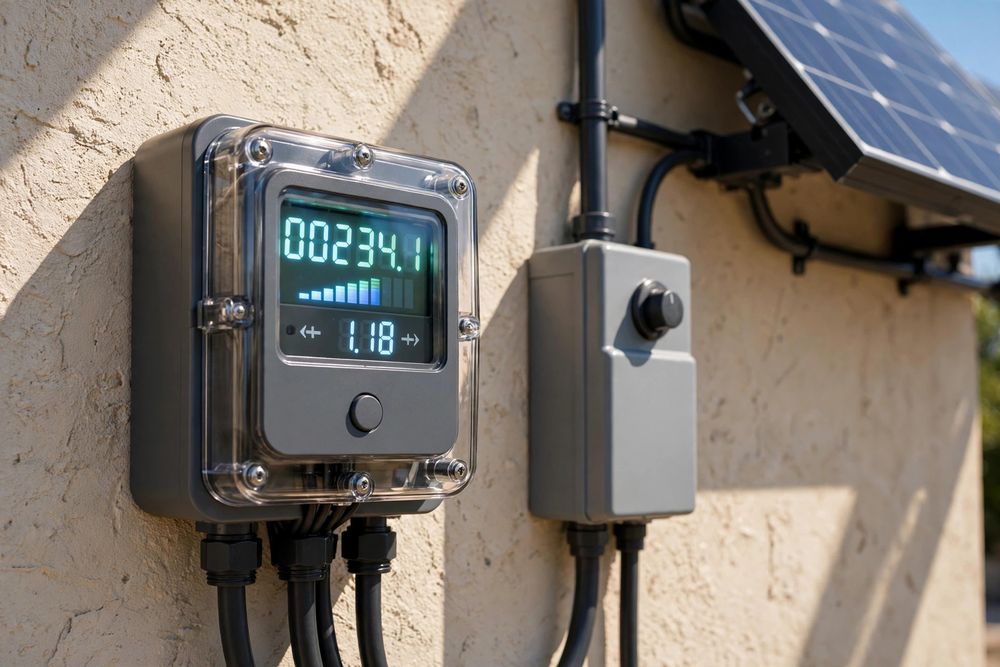
Net metering lets your on-grid or hybrid system sell its extra electricity back to the grid. A bidirectional meter replaces your normal meter — it counts two things separately: units you import from the grid, and units you export to it. At the end of the billing cycle you pay only for the difference. On a correctly sized system, daytime export can offset most of your night-time use.
How It Happens — The Steps
System Installed & Tested
The system is installed and tested to the utility's technical requirements (approved inverter, protection, earthing).
Application Submitted
The application goes to your electricity distribution company with your bill, ID and system documents — we prepare the paperwork with you.
Inspection
The utility's team inspects the installed system.
Bidirectional Meter Installed
The utility installs the bidirectional meter and the net metering agreement is signed.
Export Starts
From that day, every extra unit your panels produce is credited on your bill.
Good to know: your system saves you money from day one even before the net meter arrives — every unit you consume directly from your panels is a unit you never buy. Net metering adds the export credit on top.
Installation Process — 6 Steps
Survey & Load Assessment
We visit your site, measure the roof, check its direction, shading and strength, and list your actual loads (ACs, fridge, pump, everything). No system is quoted blind.
Design & Approval
You receive a clear design: system size, panel layout, structure type, inverter and battery selection, and expected generation. You approve before any material moves.
Structure Installation
The galvanized frame is anchored, levelled, sealed and tilt-set. This step gets the most time — everything above it depends on it.
Panels & Equipment Installation
Panels are mounted and stringed, the inverter and batteries are wall-mounted in a ventilated spot, and all DC/AC cabling is run in conduit.
Protection & Earthing
The protection box (DC/AC breakers + SPDs) is wired, earth pits are made and tested, and the lightning arrester is fitted where required.
Testing, Monitoring & Handover
The system is powered up in front of you: generation checked, backup switchover tested (hybrid/off-grid), monitoring app set up on your phone, and the working of every part explained before we leave.
Care & Maintenance
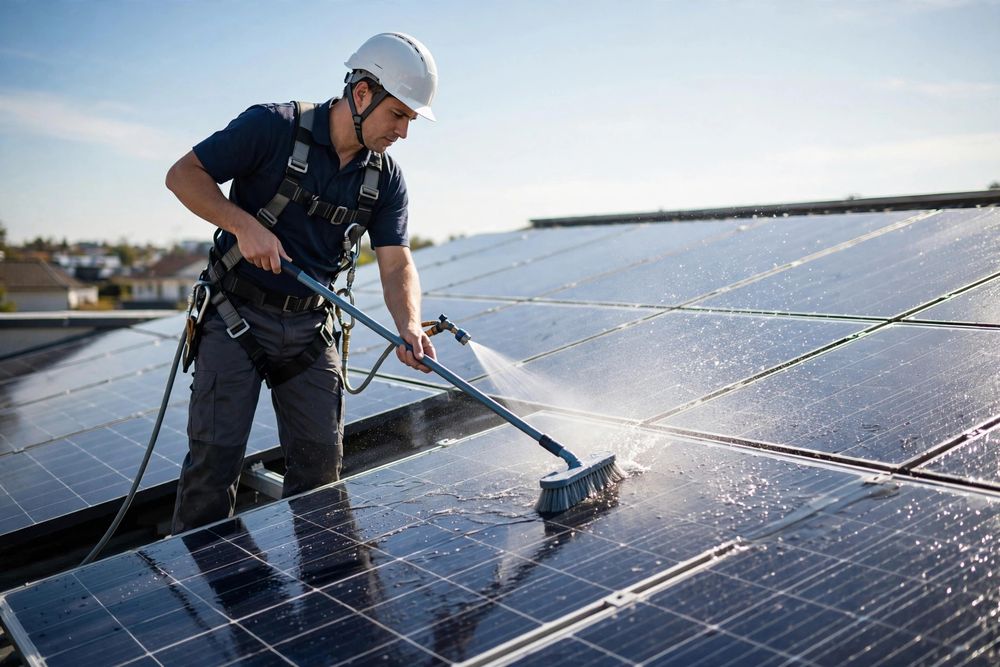
Solar has no moving parts, but it is not zero-care. A little attention keeps generation at full:
- Clean the panels regularly — dust is the biggest silent loss. In dusty weather clean every 1–2 weeks; otherwise once a month. Early morning, soft brush or cloth, plain water — never dry-wipe grit across the glass.
- Watch your monitoring app — a sudden drop in daily units is the earliest sign of a fault, a tripped breaker or new shading. Checking takes ten seconds.
- Keep the area shade-free — trim plants and plan new construction (water tanks, extensions) so they don't shadow the array.
- Keep the inverter breathing — never block its vents or stack storage against it; heat shortens its life.
- Battery care — lithium needs none beyond keeping the area dry and ventilated. Tubular batteries need distilled-water top-ups and terminal cleaning.
- Annual check-up — structure bolts, cable condition, protection box, earth resistance and panel output reviewed once a year. Tighten, clean, test — done.
Frequently Asked Questions
Which system type is right for me — on-grid, off-grid or hybrid?
If your grid supply is reliable and you mainly want lower bills, go on-grid. If you face regular power cuts, hybrid gives you savings plus automatic backup. Off-grid is for places with no grid connection at all. Most homes today choose hybrid — it does everything.
What size system does my home need?
Count your air conditioners first — they dominate the load. As a guide: 3 kW runs a small home with one AC, 5 kW a medium home with two ACs, 10 kW a large home with three to four ACs. We confirm the exact size with a free load survey before quoting, so you never buy too little or too much.
Will my system work on cloudy days and at night?
Panels still generate on cloudy days — typically 25–40% of a clear day's output. At night, on-grid systems draw from the grid, while hybrid and off-grid systems run from their battery bank. Your monitoring app shows all three flows live.
How long do solar panels last?
Panels are built for decades — manufacturers rate them for around 25 years of useful output, with a slow, small drop each year (roughly 0.5% annually on modern TOPCon panels). Inverters typically last 10–15 years and batteries 10+ years for lithium (3–5 for tubular) — panels are almost never the part that wears out first.
Can I start small and expand later?
Yes — and it is a smart way to start. We design the structure, cabling and inverter choice with expansion in mind, so adding panels or an extra battery module later is a small job, not a rebuild. Tell us at the survey stage that you plan to grow.
What happens to my system when the grid goes down?
An on-grid inverter shuts off automatically for line-worker safety, so the home loses power too. A hybrid system switches to battery in milliseconds — your lights, fans and protected loads never notice. An off-grid system is unaffected; it never used the grid.
Get a System Designed for Your Roof
Send us your latest electricity bill or book a free survey — we will tell you the right size, the right type, and exactly what it will generate. No obligation.
Chat on WhatsApp Get a Free Quote