EV Charger Repair
An electric car is only as reliable as the charger that feeds it. When a home wallbox stops mid-charge, trips the breaker every night, or a public fast charger faults out, the problem is almost always electrical — a worn contactor, a damaged cable, a failing control board, or a protection device doing its job because something upstream is wrong.
We repair, service and install EV chargers of every class: portable chargers, home AC wallboxes and commercial DC fast chargers. Every repair starts with proper diagnosis — test instruments on the circuit and the charger, not guesswork — and ends with a full load test and safety check, so the charger you get back works the way it did on day one.
What We Cover on This Page
- Charger types & speeds — and what each one means in real charging time
- Connector types — Type 1, Type 2, GB/T, CCS2 and CHAdeMO
- Common faults we repair
- Our 5-step repair process
- Home installation requirements
- Safety notes and FAQ
Charger Types & Speeds
Charging speed is set by the charger's power rating (kW) — and, on AC charging, by the car's own onboard charger, which can never accept more than its rated limit. As a working guide: one hour of charging adds roughly the charger's kW figure in kWh to the battery, and a typical EV uses about 15–20 kWh per 100 km, so 10 kWh ≈ 50–65 km of range.
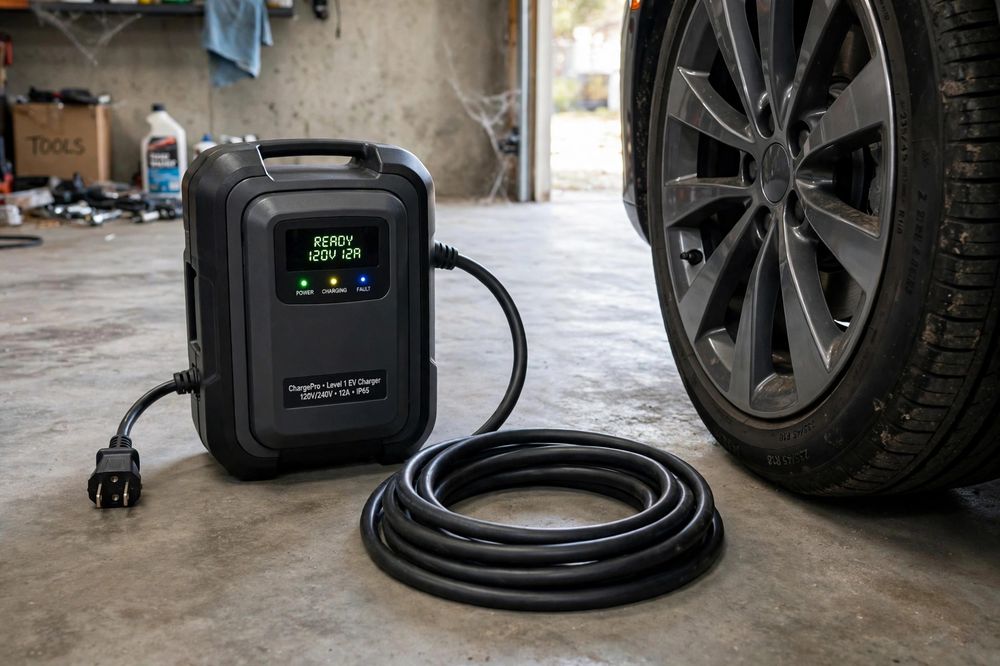
Portable Charger — 3.3 kW
Plugs into a standard household socket; the control box sits in the cable itself.
Best for: overnight top-ups, a second car, travel, or as a backup charger.
Charging time: adds about 3.3 kWh per hour (~15–20 km of range per hour). A 40 kWh battery from empty takes roughly 12–13 hours; a typical overnight top-up of 20 kWh takes about 6 hours.
3.3 kWHousehold socketRepair note: the in-cable control box is the usual failure point — heat damage, water ingress and broken plug pins are all repairable or replaceable faults.
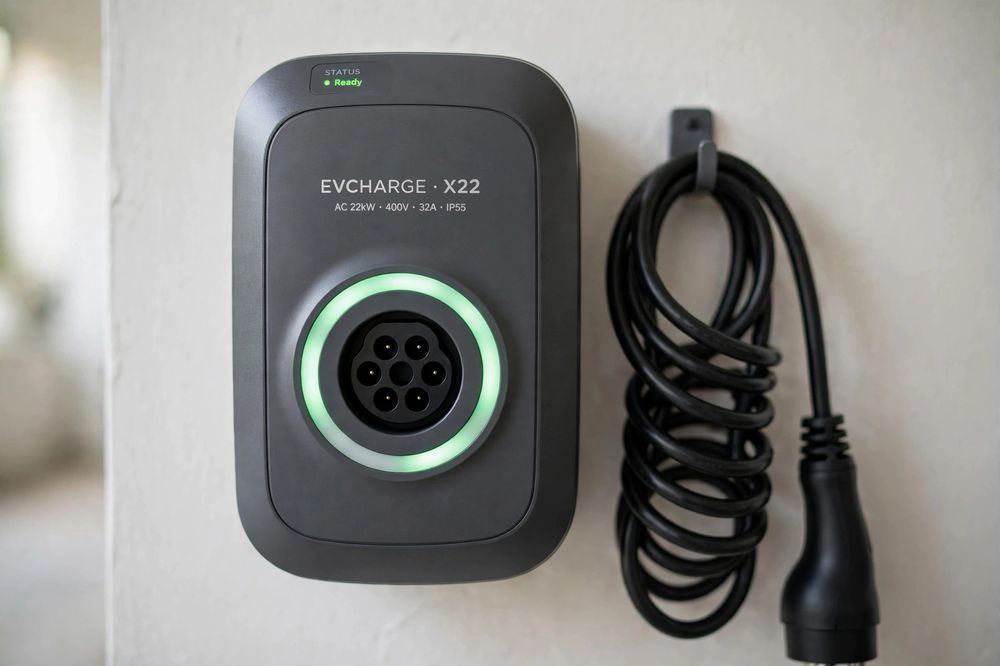
AC Wallbox — 7.4 kW / 11 kW / 22 kW
A fixed wall-mounted charger on a dedicated circuit — the standard home setup.
- 7.4 kW (single-phase): ~7.4 kWh per hour (~35–45 km of range per hour). A 40 kWh battery charges empty-to-full in about 5.5–6 hours — comfortably overnight.
- 11 kW (three-phase): ~11 kWh per hour. The same 40 kWh battery takes about 3.5–4 hours.
- 22 kW (three-phase): ~22 kWh per hour — full charge in about 2 hours, for cars whose onboard charger supports it. Many models cap AC charging at 7.4 or 11 kW, so the car, not the wallbox, sets the real speed.
Best for: daily home charging, workplaces, hotels and fleet depots.
7.4 · 11 · 22 kWDedicated circuitRepair note: contactors, control boards, RFID/app modules and cooling fans are the common service items — all diagnosed and repaired at component level where practical.
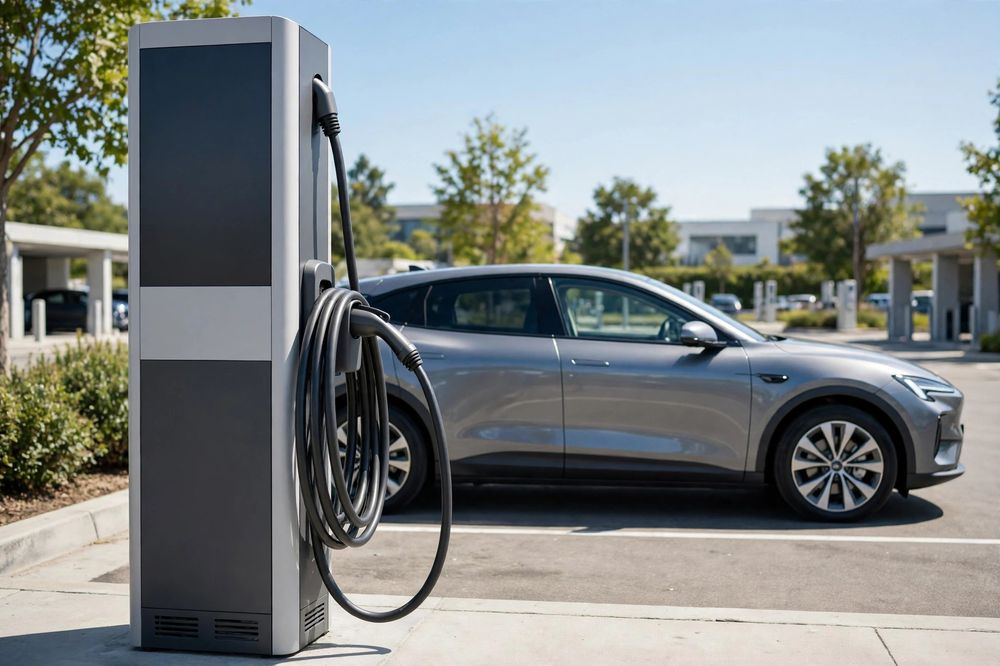
DC Fast Charger — 30–120 kW
Converts AC to DC inside the station and feeds the battery directly, bypassing the car's onboard charger — this is what makes true fast charging possible.
Charging time: a 60 kWh battery from 20% to 80% (36 kWh) takes roughly 45–60 minutes at 30–50 kW, and about 20–30 minutes at 100–120 kW. Charging slows above ~80% by design, to protect the battery.
Best for: commercial sites, fuel-station-style stops, fleets and public charging points.
30–120 kWDirect DC to batteryRepair note: power modules, cooling systems, contactors and communication boards are serviceable items; we diagnose module-level faults and replace failed modules to bring a station back online.
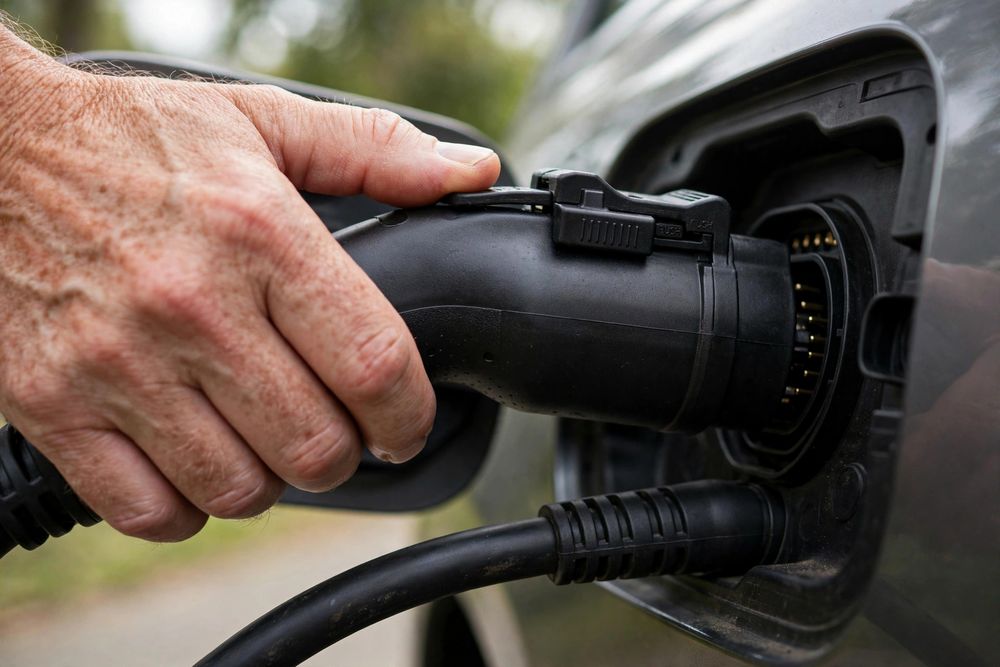
The Cable & Charging Gun
Chargers come in two designs: tethered (the cable is fixed to the charger) or socket-outlet (you bring your own cable).
The gun and cable take the most physical wear of any part of the charger: bent pins, cracked handles, worn latches and damaged insulation are the faults we see most.
A damaged gun or cable is a safety item, not a cosmetic one — it is repaired or replaced, never taped over.
Connector Types
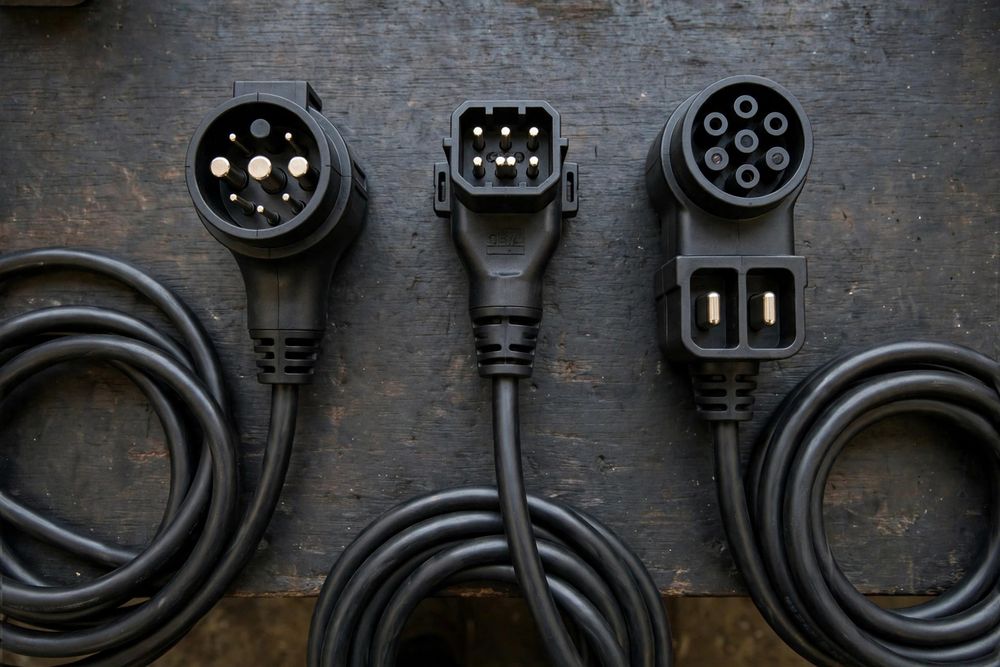
The Plug Must Match the Car
The connector is fixed by the car's inlet — a charger can only serve a car if the plug matches. We stock, repair and replace guns and cables for all five connector families below.
Type 1 (J1772)
Single-phase AC connector, common on older Japanese and American models.
Type 2 (Mennekes)
The standard AC connector for European models; supports single- and three-phase charging up to 22 kW and beyond.
GB/T
The Chinese standard — separate AC and DC inlets; fitted to Chinese-market EVs, which are increasingly common on the road.
CCS2 (Combo 2)
A Type 2 inlet with two large DC pins below it — one socket that does both everyday AC charging and DC fast charging.
CHAdeMO
A dedicated DC fast-charging connector, mainly on Japanese models such as the Nissan Leaf.
Motorcycle & E-Bike Chargers — Every Type
Chargers are not only for cars. Most of the chargers we service belong to electric motorcycles, e-bikes and scooters — and the most common cause of a damaged battery we see is the wrong charger: a unit built for one battery chemistry or voltage class used on another. Below is every bike-charger type we repair and supply, item by item, with the full-charge voltage each one must deliver — and a table at the end that makes matching charger to battery a ten-second check.
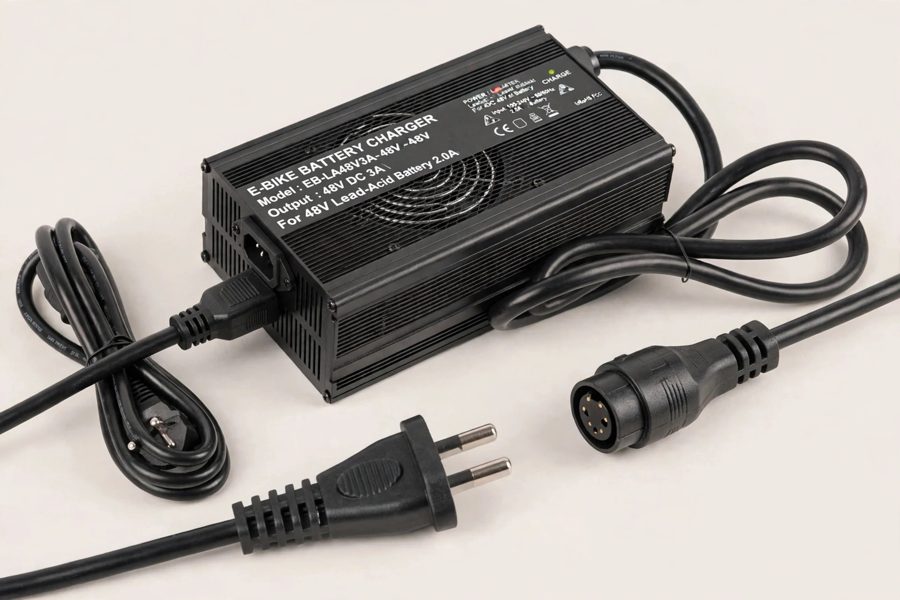
Lead-Acid E-Bike Chargers
What it is: the standard fan-cooled charger brick supplied with most electric bikes and scooters that run sealed lead-acid batteries. It charges in stages — bulk, absorption, then a low float that holds the pack full.
Battery classes: 48V, 60V and 72V packs built from 12V blocks, in the common 12Ah, 20Ah and 32Ah battery sizes. The class on the label is the pack's nominal voltage: a charger sold as "48V" actually raises the pack to roughly 58–59V at the top of the charge (about 14.4V per 12V block) before dropping back to float.
Current & time: typically 2–3A, so a full charge from empty takes about 6–8 hours — overnight charging is the normal pattern for these packs.
48V · 60V · 72V packs2–3A typicalRepair note: fan failure and dried-out capacitors are the usual faults on this class. Both are repairable — and a charger whose fan has stopped will run hot and cut out mid-charge, so it should not be ignored.
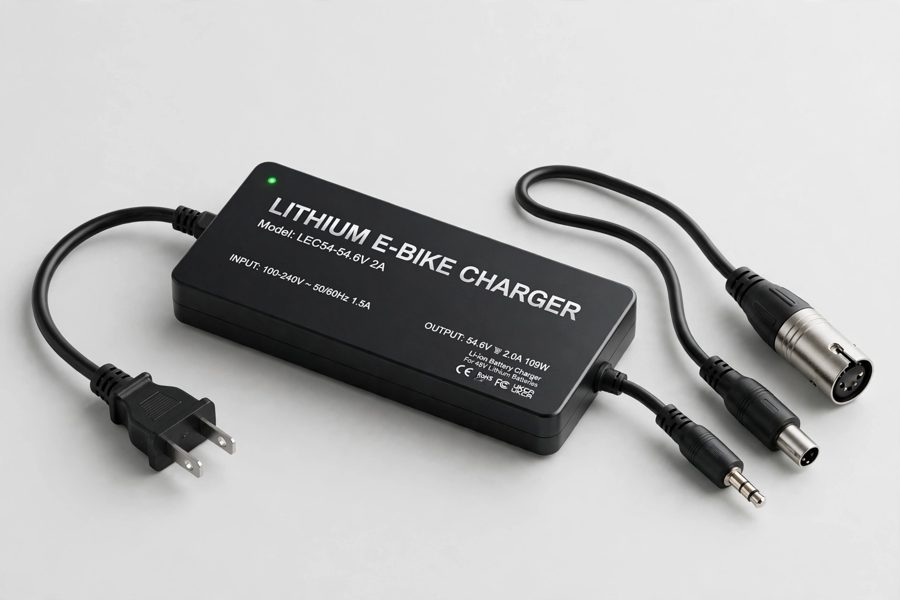
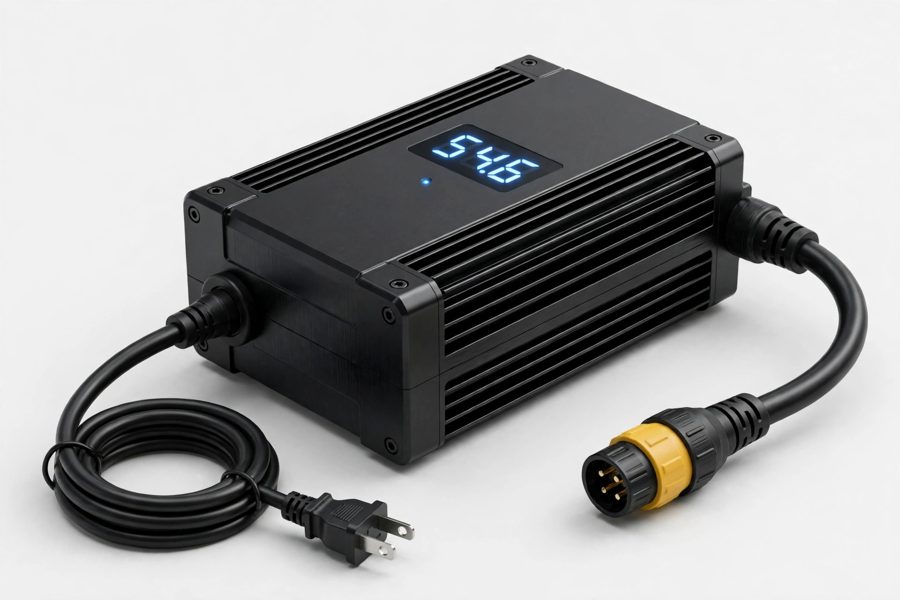
Lithium (Li-ion) E-Bike Chargers
What it is: a CC/CV charger for lithium-ion packs — constant current first, then constant voltage, then a hard stop. A lithium charger never floats; when the pack is full, charging ends.
Full-charge voltages (4.2V per cell, exact): 54.6V for a 48V pack (13 cells in series, 13S) · 67.2V for a 60V pack (16S) · 84V for a 72V pack (20S). The number on the charger must match the pack exactly.
Never mix chemistries: a lead-acid charger must never be used on a lithium pack. Its float stage holds voltage on the pack indefinitely and its peak voltage does not match the lithium pack's cut-off — the results range from a BMS that keeps tripping to genuinely damaged cells.
54.6V · 67.2V · 84VCC/CV · no floatRepair note: before anything else we meter the charger's actual output against its label. A charger delivering even 1–2V over specification is a battery killer, and output-voltage drift is one of the faults we test for on every lithium charger.
LiFePO4 Chargers
What it is: chargers profiled for lithium iron phosphate packs, which charge to 3.65V per cell — a different endpoint from Li-ion, so a Li-ion charger is not a substitute.
Full-charge voltages (3.65V per cell): 58.4V for a 48V pack (16S) · 73V for a 60V pack (20S) · 87.6V for a 72V pack (24S).
Custom packs exist: not every pack follows the standard series counts — a 23S LiFePO4 pack, for example, charges to about 84V full. So "72V" on a battery does not always mean the same charger. Always match the charger to the pack's stated full-charge voltage, never to the nominal class alone.
58.4V · 73V · 87.6V3.65V per cellRepair note: we verify both the charger's cut-off voltage and the pack's BMS behaviour together — a charger that is correct on paper can still be the wrong partner for a custom pack.
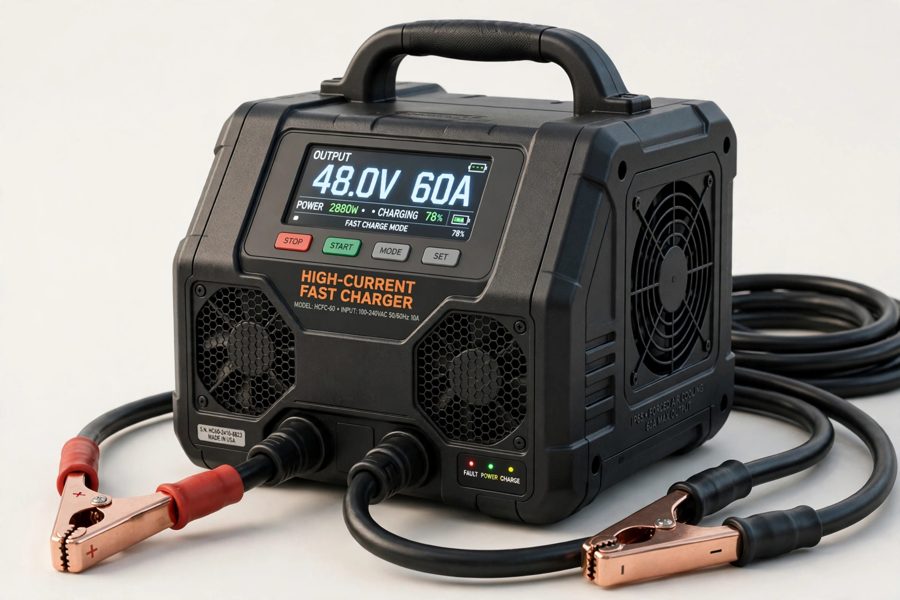
Fast / High-Current Chargers — 5A, 10A, 15A
What it is: larger fan-cooled chargers delivering 5A, 10A or 15A for bigger packs — 32Ah lead-acid sets and large lithium packs — and for commercial and delivery fleets, where a bike that charges in half the time earns its keep.
The trade-off: charge time falls sharply, but the pack runs warmer and a battery charged at maximum rate every day will age faster than one charged gently. Fast charging is a tool for when time matters, not a default — and both the pack and its connector and cabling must be rated for the current.
Heat management: these units depend on active fan cooling. Vents must stay clear, and a fan that stops is a repair-now fault, not a run-it-anyway one.
5A · 10A · 15AFan-cooledRepair note: fan and thermal faults are the most common service items on high-current chargers; we repair them and load-test at full rated current afterwards.
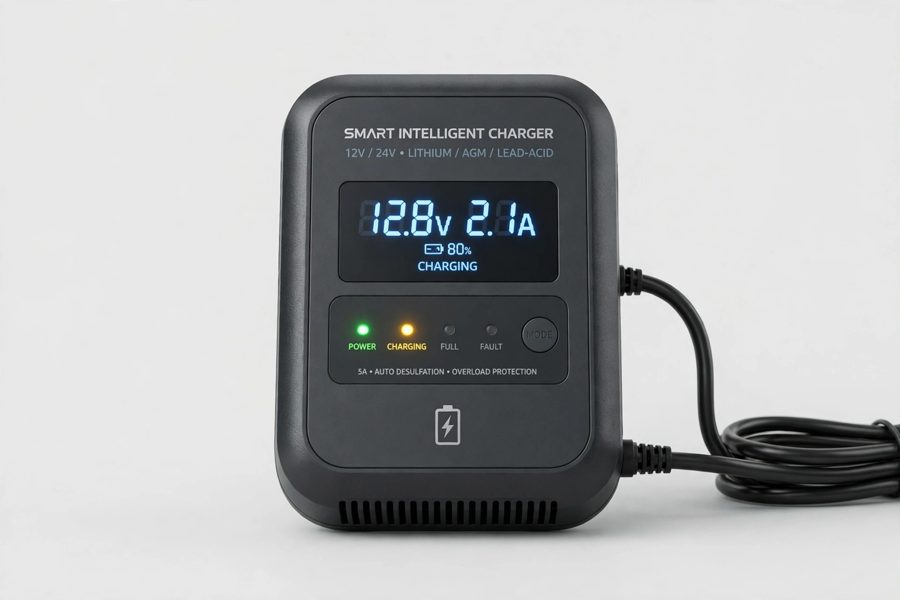
Smart / Intelligent Chargers
What it is: chargers with a controlled multi-stage profile and a display or indicator panel that shows the charging stage and reports faults, instead of a single LED that simply changes colour.
Protections: automatic cut-off at full charge, temperature monitoring and protection, and reverse-polarity and short-circuit protection — the features that make unattended and overnight charging safer.
Pulse / repair mode: many smart chargers add a pulse mode for sulphated lead-acid batteries — packs that have lost capacity after sitting discharged. It can recover some of that capacity on a sulphated pack; it is a recovery aid, not a guarantee, and a battery that has physically failed will not come back.
Multi-stageAuto cut-off · pulse repairRepair note: we service smart chargers at board level, including their sensing and display circuits, and confirm the charge profile behaves correctly on a real pack after repair.
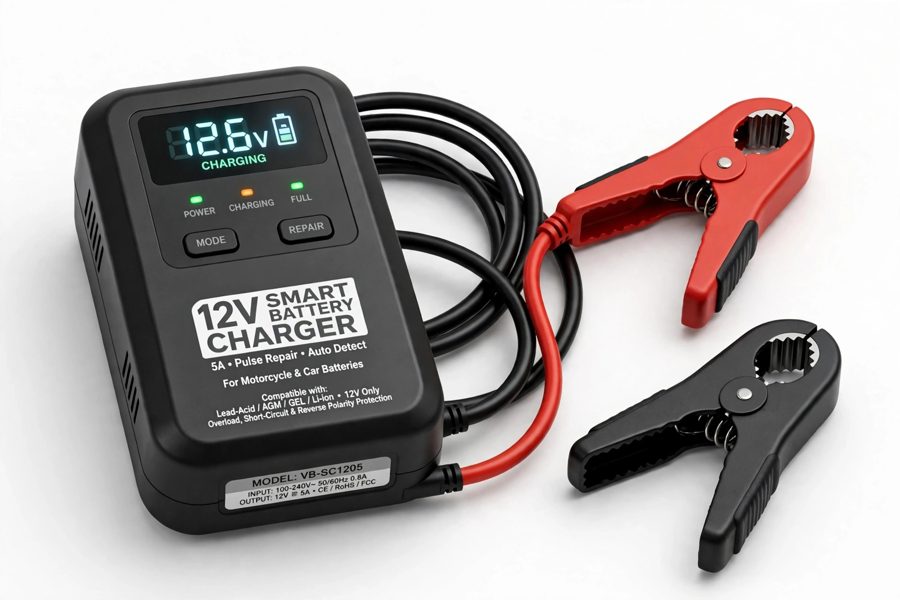
Motorcycle & Car 12V Battery Chargers
What it is: small clamp-on chargers for ordinary 12V batteries — the starter and accessory batteries in motorcycles and cars, and the same 12V blocks used in small backup systems.
Two sizes cover almost everything: 1–2A tender and maintenance chargers that keep a motorcycle battery healthy through weeks of standing, and 4–8A smart chargers that charge and then maintain a car battery. Most modern units are automatic — connect, select the battery type where the unit asks for it, and the charger manages the rest.
12V · 1–2A tender4–8A smartRepair note: the same matching rule applies here — use the mode that matches the battery, and a 12V charger is never a substitute for the 48V–72V traction chargers above, or the other way round.
Match the Charger to the Battery — Full-Charge Voltages
| Battery pack | Cells / blocks | Correct charger output at full charge |
|---|---|---|
| Lead-acid — 48V pack | 4 × 12V blocks | 48V-class charger (peaks at ≈58–59V, then floats) |
| Lead-acid — 60V pack | 5 × 12V blocks | 60V-class charger (peaks at ≈72V, then floats) |
| Lead-acid — 72V pack | 6 × 12V blocks | 72V-class charger (peaks at ≈86V, then floats) |
| Li-ion — 48V pack | 13S (13 × 4.2V) | 54.6V |
| Li-ion — 60V pack | 16S (16 × 4.2V) | 67.2V |
| Li-ion — 72V pack | 20S (20 × 4.2V) | 84V |
| LiFePO4 — 48V pack | 16S (16 × 3.65V) | 58.4V |
| LiFePO4 — 60V pack | 20S (20 × 3.65V) | 73V |
| LiFePO4 — 72V pack | 24S (24 × 3.65V) | 87.6V |
Custom packs break the pattern — a 23S LiFePO4 pack charges to about 84V, the same figure as a 20S Li-ion pack. When a pack's label states a full-charge voltage, that figure wins over every row of this table.
Common Bike-Charger Faults We Repair
- No output — dead charger: failed power stage, blown fuse or protection tripped by a mains surge. Repaired at board level where practical.
- Fan failure: the charger runs hot, cuts out mid-charge or smells of hot plastic. The fan and its driver circuit are replaced and the unit is load-tested.
- Overheating / charging that starts and stops: dried-out capacitors and dust-choked vents are the usual causes — serviced, cleaned and tested at full current.
- Burnt or melted connector: a loose-fitting plug arcs under load and destroys both plug and socket. Connector and cable are replaced with the correct type.
- Wrong-voltage damage: a charger or pack damaged by a mismatched charger — a lead-acid unit on a lithium pack is the classic case. We test the charger's real output and the battery and its BMS before either goes back into service.
Common Faults We Repair
Every fault below is diagnosed with instruments first — the same symptom can have three different causes, and only one of them is in the charger.
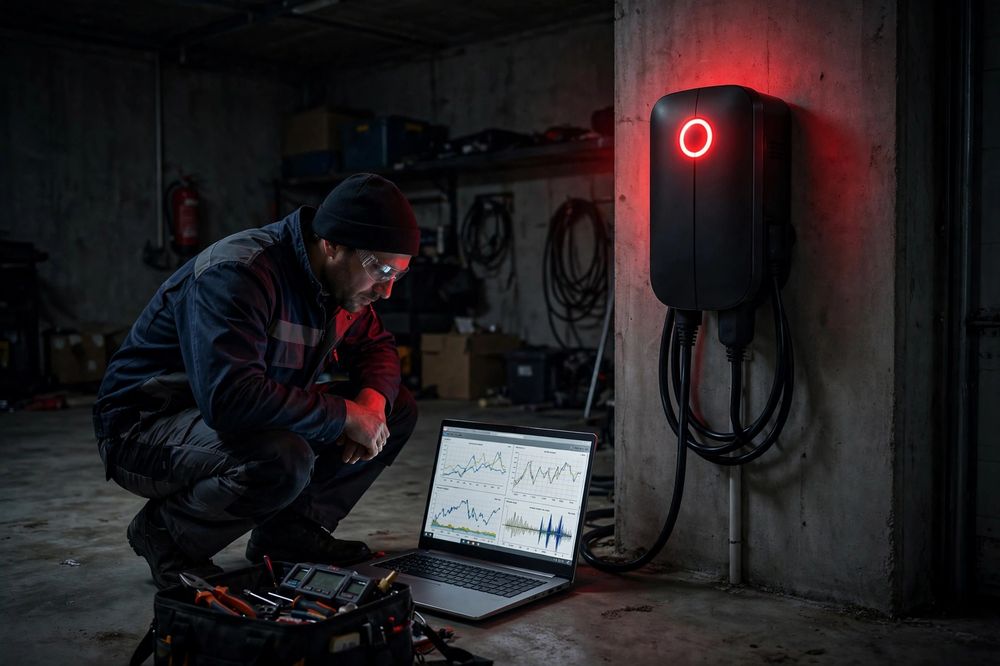
Diagnosis Before Anything Is Replaced
A red fault light is the charger reporting a problem — but it does not say where the problem is. It can be inside the charger, in the cable and gun, or in the supply and protection upstream. We test all three before a single part is ordered, so you never pay to replace a healthy component.
No Power / Dead Charger
Nothing lights up and charging never starts. Usual causes: failed power supply stage on the control board, blown internal fuse, or a supply problem upstream. Repaired at board level where practical.
Tripping Breaker
The breaker or RCD trips when charging starts — or randomly mid-charge. Causes range from an overloaded circuit to insulation breakdown in the cable or charger. We find which one before anything is replaced.
Overheating
Charger, gun or plug gets hot, or charging slows down or shuts off on thermal protection. Usually worn contacts, a loose termination, or a failed cooling fan — a fault to fix promptly, because heat damage compounds.
Cable or Gun Damage
Cracked handle, bent or burnt pins, cut insulation, cable run over or chewed. The gun and cable are replaced as a unit with the correct connector type.
Connector Lock Stuck
The car won't release the plug, or the lock never engages so charging won't start. Actuator and latch mechanisms are repaired or replaced; we also talk you through the car's manual release so you're never stranded.
Earth-Leakage Trips
The RCD trips because current is leaking where it shouldn't — moisture in the gun, damaged cable insulation, or a fault inside the charger. This is the protection system working; we trace and remove the cause, not the protection.
Communication / App Errors
Charger won't authenticate, the app shows the charger offline, scheduled charging fails, or the car and charger refuse to handshake. Firmware, network modules and control-board faults are diagnosed and corrected.
Fan / Cooling Faults
Noisy, stopped or constantly running fans. On wallboxes this causes thermal shutdowns; on DC fast chargers, cooling faults take whole power modules offline. Fans and their control circuits are replaceable items.
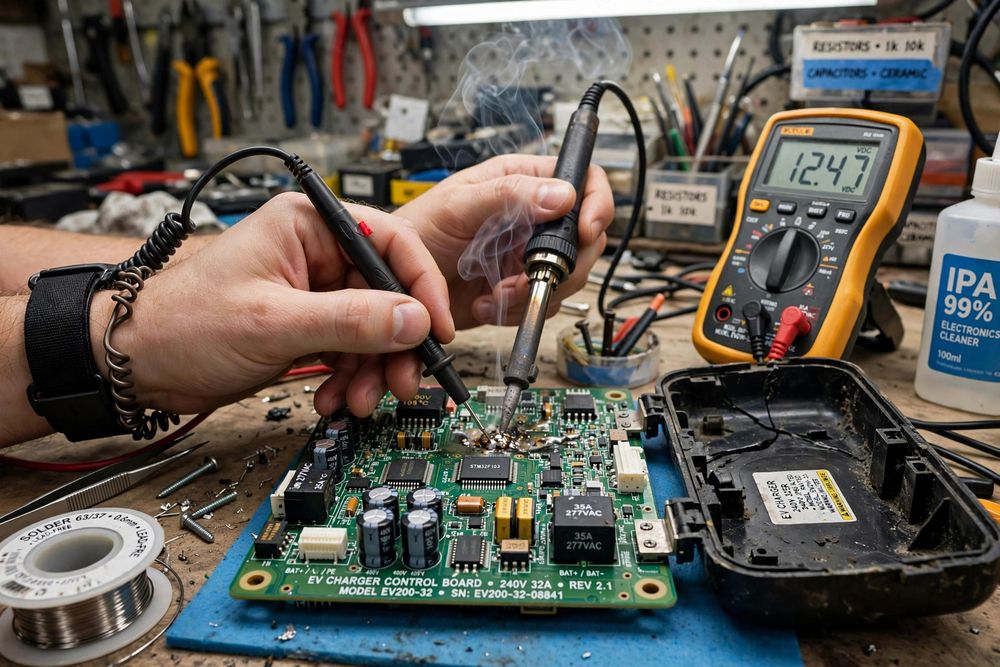
Board-Level Repair, Not Just Part-Swapping
Many charger faults live on the control board — a failed power-supply stage, a damaged relay driver, a burnt contactor coil circuit. Where it is sound practice, we repair the board at component level instead of replacing the whole unit, and safety-critical parts are always replaced with the correct rated part.
Our Repair Process — 5 Steps
Diagnosis
We test the supply, the protection devices and the charger itself with proper instruments, and read the charger's fault state. You get the actual cause — not a guess.
Board / Component Check
The charger is opened and the control board, contactors, relays and power stage are checked component by component to isolate the failed part.
Repair or Replace the Part
Failed components are repaired at board level where that is sound practice; worn or safety-critical parts (guns, cables, contactors, fans) are replaced with the correct rated part.
Load Test
The repaired charger runs a real charging session at full rated current — not just a power-on check — while temperatures and behaviour are monitored.
Safety Check
Earthing, insulation and leakage protection are tested, the fault state is cleared, and the charger is handed back only when it passes at full load.
Home Installation Requirements
A home charger is a continuous heavy load — it draws full current for hours at a time, unlike almost any other appliance. A correct installation includes all five of the following:
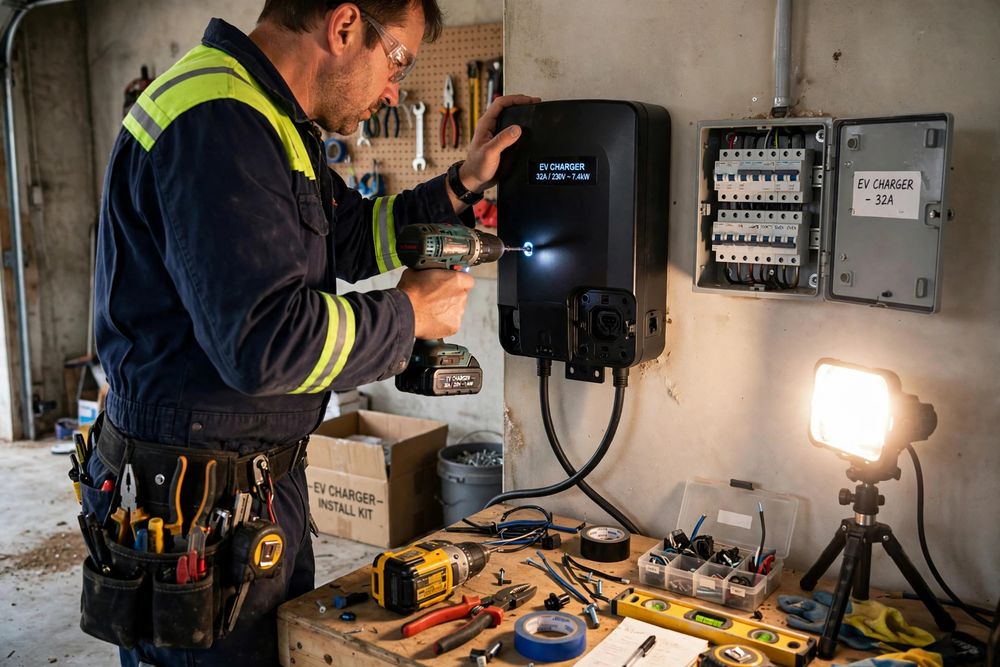
Dedicated Circuit & Correct Cable
Dedicated circuit: the charger gets its own circuit from the distribution board — never shared with sockets or other loads.
Cable size: sized for the charger's full continuous current and the length of the run — voltage drop matters on long runs. As a guide, a 7.4 kW wallbox typically needs at least a 6 mm² copper run, and larger chargers or longer runs need more. The size is calculated per installation, never guessed.
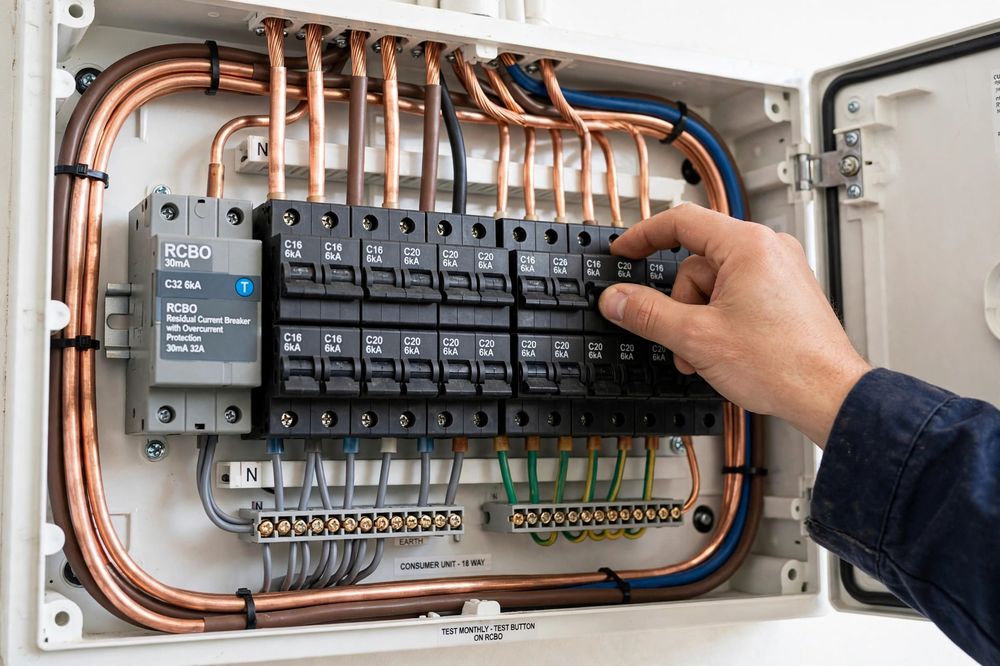
Protection, Earthing & Load Check
Protection — RCD/RCBO, Type A or Type B: every charger circuit needs residual-current protection. Type A is the minimum where the charger has built-in DC leakage detection (6 mA); where it does not, Type B protection is required, because DC leakage from an EV can blind a basic Type AC device. We fit the correct type for the charger being installed.
Earthing: a verified earth connection is mandatory — the charger's safety functions and the car's own checks depend on it. Earth resistance is tested, and improved where it falls short.
Load check: before installation we check the home's total capacity — main breaker rating, existing loads and phase balance — so the charger can be added safely, with load management fitted where the supply is tight.
Safety Notes
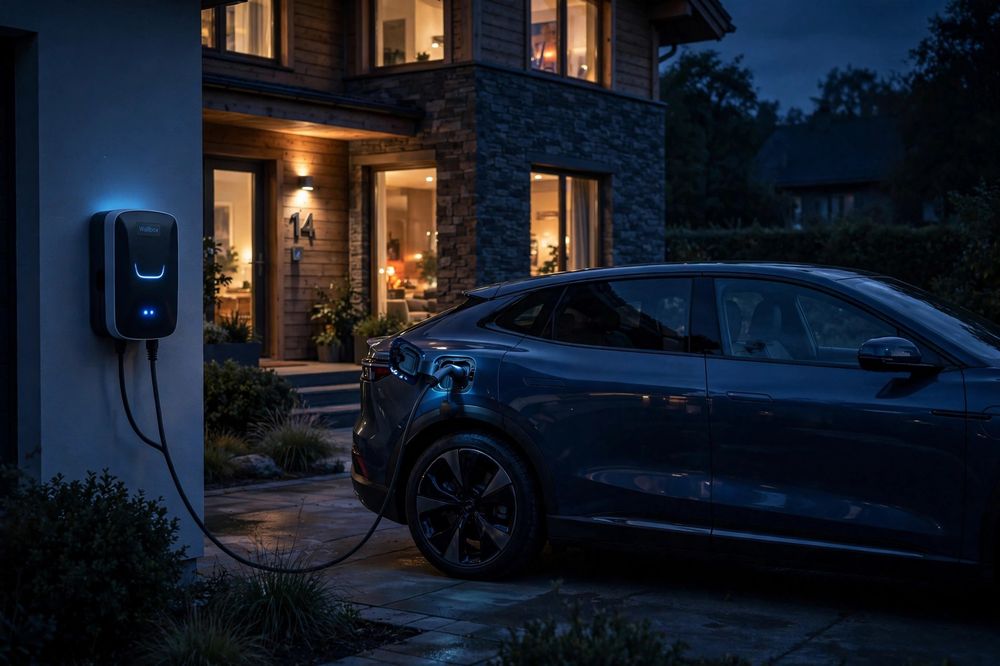
Safe Charging Is a Correct Installation
With a fixed wallbox on its own protected circuit, charging — including overnight charging — is exactly what the system is designed for. The risks appear with damaged equipment and improvised setups, covered in the notes below.
- Never charge from a damaged gun, cable or socket — heat and arcing damage escalate quickly under continuous load.
- Avoid extension reels and multi-socket adapters for regular charging; if a portable charger must be used on a household socket, the socket and circuit should be checked first, and the cable fully uncoiled.
- Keep wallbox vents clear and the unit out of standing water; report any burning smell, discolouration at the plug, or unusual heat immediately and stop using the charger until it is checked.
- Only charge with the connector type the car was built for — never force an adapter between different standards for DC fast charging.
A charger that trips protection repeatedly is reporting a fault. Do not upsize the breaker to stop the trips — that removes the protection, not the fault. Have the cause found and fixed.
Frequently Asked Questions
My charger charges much slower than it used to. Why?
Usually one of three things: the charger is derating because of heat (worn contacts, a failing fan or a hot environment), the car has reduced its own charging rate, or a supply voltage problem is limiting output. Diagnosis tells us which — most charger-side causes are repairable.
The breaker trips every time I charge. Can I just fit a bigger breaker?
No. The breaker is protecting the cable and the charger. Tripping means an overload, a failing component or leakage somewhere — fitting a larger breaker removes the protection and leaves the fault. We find and fix the cause; the breaker size stays matched to the cable.
Can you repair my charger, or does it have to be replaced?
Most faults are repairable — control boards, contactors, fans, guns and cables are all serviceable or replaceable parts. We diagnose first and tell you honestly if a unit is beyond economical repair before any money is spent on parts.
My car uses a GB/T connector. Can you service chargers for it?
Yes. We repair chargers and replace guns and cables for Type 1, Type 2, GB/T, CCS2 and CHAdeMO vehicles.
What do I need at home before a wallbox can be installed?
A dedicated circuit from your distribution board, correctly sized cable, the right RCD/RCBO protection (Type A or Type B depending on the charger), a verified earth, and enough spare capacity on your main supply. We check all of this as part of the installation — nothing is assumed.
Is it safe to charge overnight?
Yes — with a correctly installed fixed wallbox on its own protected circuit, overnight charging is exactly what the system is designed for, and scheduled off-peak charging is a feature of most wallboxes. The cautions apply to improvised setups: damaged cables, adapters and unchecked household sockets.
EV Charger Faulty — or Planning a Home Charger?
Send us your charger model and a photo of the fault on WhatsApp — we will diagnose the likely cause and give you a transparent repair or installation estimate.
Chat on WhatsApp Get a Free Quote